
Stampede at Funeral of Kenya’s Former Prime Minister Raila Odinga Kills Two

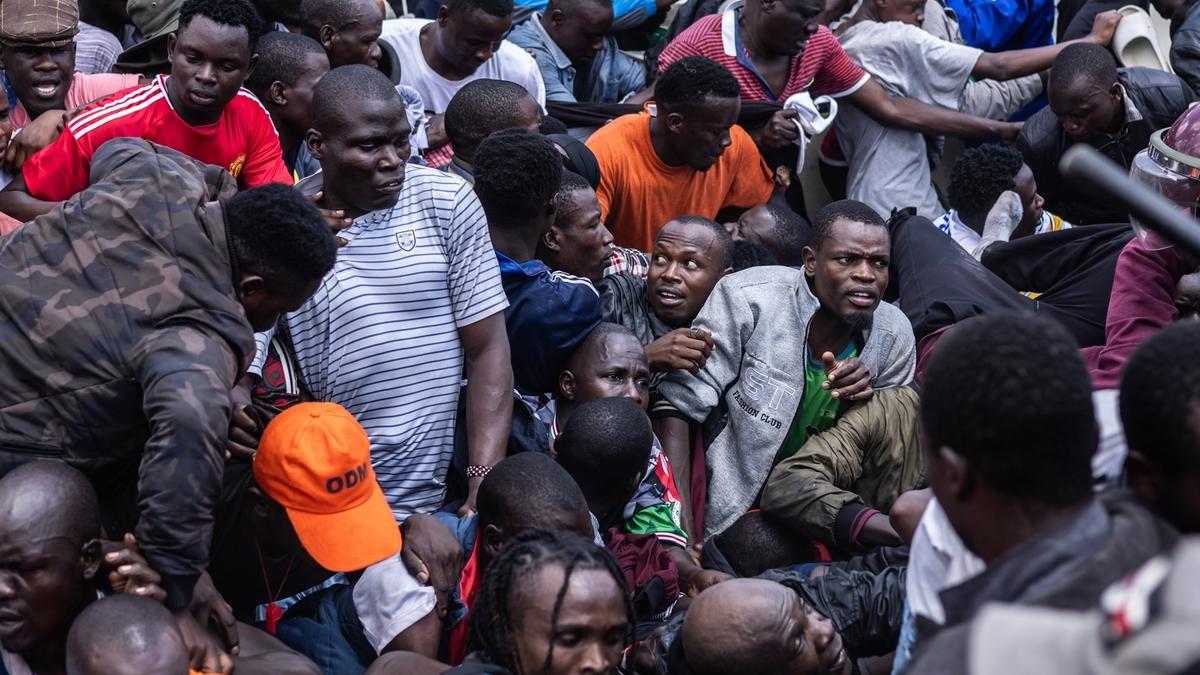
A tragic stampede broke out during the funeral of Kenya’s former Prime Minister Raila Odinga, leaving two people dead and several others injured. The incident occurred as thousands of mourners gathered to pay their final respects to one of the country’s most influential and long-serving political leaders, whose passing marked the end of an era in Kenyan politics.
According to eyewitness accounts, the stampede erupted when the crowd surged forward as Odinga’s casket was being brought into the main ceremonial ground in his hometown of Bondo, in Siaya County. Overwhelmed by the sheer number of mourners, security personnel struggled to maintain order, resulting in chaos at the entrance gates. In the confusion, several people were trampled, and two succumbed to their injuries shortly after.
Local hospitals reported treating multiple individuals for fractures, suffocation, and shock. Emergency responders, along with Kenya Red Cross volunteers, rushed to the scene to provide aid as authorities worked to restore calm. Despite the tragedy, the funeral ceremony continued later in a more subdued atmosphere, with national leaders urging peace and restraint.
Raila Odinga, often regarded as the “people’s leader,” had been a dominant figure in Kenyan politics for decades. A champion of democracy and reform, he served as Prime Minister from 2008 to 2013 following the country’s post-election crisis and power-sharing deal. His funeral drew mourners from across Kenya and beyond, including foreign dignitaries, local politicians, and thousands of supporters who viewed him as a symbol of resilience and opposition to injustice.
The Kenyan government expressed deep sorrow over the loss of lives during the ceremony. Interior Ministry officials have ordered an immediate investigation into the circumstances that led to the stampede, emphasizing the need for better crowd management during large national gatherings. “We deeply regret the unfortunate incident that marred what was meant to be a peaceful farewell to one of our nation’s greatest sons,” a government spokesperson said.
Tributes poured in throughout the day from leaders across the political spectrum. President William Ruto, in his eulogy, called Odinga “a visionary who fought tirelessly for democracy and equality.” Opposition leaders also paid homage, highlighting Odinga’s lifelong dedication to social justice and his ability to inspire millions of Kenyans across generations.
Security experts have long warned about the risks of overcrowding at large public events in Kenya, especially in rural or semi-urban settings where infrastructure and crowd control measures are limited. The incident has reignited calls for stricter safety regulations and more coordinated planning for high-profile national ceremonies.
For many Kenyans, the stampede adds a note of sorrow to an already emotional farewell. What was intended to be a moment of national unity and remembrance has instead highlighted the persistent challenges of organizing large-scale public events in the country.
As the nation mourns Raila Odinga—a man often called the father of modern Kenyan democracy—the tragedy at his funeral serves as a somber reminder of the fragility of such moments of collective mourning. The government has promised compensation and support for the families of the deceased and injured, while civil society groups have urged accountability and preventive measures to avoid future tragedies.
In the words of one mourner, “Raila fought for the lives and dignity of others all his life. It is heartbreaking that lives were lost while honoring his.”
Kenya now grieves not only the loss of a towering statesman but also the lives lost in the chaos that unfolded at his final farewell.
Comments are closed.