
Spain unveils major public investment fund to address housing crisis

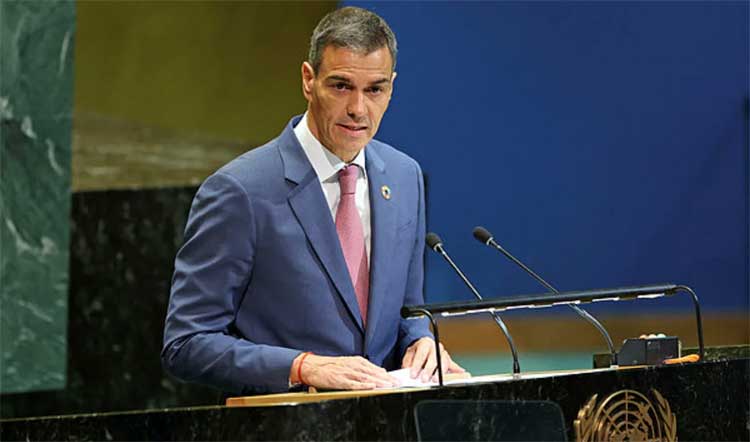
Spanish Prime Minister Pedro Sanchez on Monday unveiled a new public investment initiative aimed at raising 120 billion euros ($142 billion), positioning it as a major step toward easing the country’s long-running housing crisis.
Limited and increasingly unaffordable housing remains one of the top concerns for Spaniards, posing a persistent challenge for one of the world’s fastest-growing developed economies. The newly launched “Spain Grows” fund, first announced in January, is designed to succeed the EU’s post-pandemic recovery support that underpinned Spain’s recent economic expansion.
Sanchez said the headline figure — equivalent to roughly seven percent of Spain’s annual economic output — would combine public and private financing, beginning with an initial 10.5 billion euros drawn from European Union resources.
The fund is expected to mobilize up to 23 billion euros in combined public and private investment to boost housing supply and support the construction of approximately 15,000 homes per year, though no specific timeline for the programme was provided.
Beyond housing, Sanchez said the investment vehicle would channel resources into strategic sectors including energy, digitalisation, artificial intelligence, and security industries.
Tourism continues to play a central role in Spain’s economy, with the country welcoming a record 97 million foreign visitors last year. Spain’s GDP grew by 2.8 percent over the same period, nearly twice the eurozone average.
However, rising tourism has intensified domestic concerns, particularly around short-term rental accommodation, which many residents blame for escalating housing costs and shrinking availability.
Data from property portal Idealista shows that the average rental price per square metre has doubled over the past decade. Meanwhile, the Bank of Spain estimates that strong household formation combined with sluggish housing construction produced a deficit of roughly 700,000 homes between 2021 and 2025.
Comments are closed.