
Ship-to-ship transfers, covert routes, armed drones: How the US moved 90 million barrels of oil using Iran-style tactics

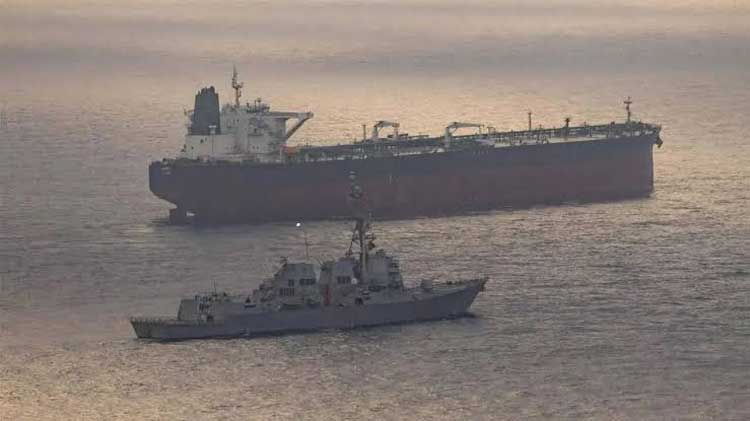
As the Strait of Hormuz remained largely closed during the recent West Asia conflict, the United States reportedly adopted a tactic long associated with Iran to keep oil exports moving and avoid potential attacks from Tehran.
According to a Reuters investigation based on shipping data and satellite imagery, the operation relied on large-scale ship-to-ship oil transfers, protected by aerial and maritime drones and coordinated under US military oversight. The strategy, which began in early May, involved at least 92 vessels and enabled crude oil and petroleum products to continue reaching international markets despite the Iranian blockade.
How the Operation Worked
With the Strait of Hormuz — a critical chokepoint through which about 20% of global oil consumption normally passes — effectively shut during the US-Israel-Iran conflict, Washington turned to an offshore transfer network centered on two locations: off the coast of Fujairah in the UAE and near Oman’s port of Sohar.
Tankers carrying oil would travel to designated meeting points before reaching the strait. Their departures were staggered, with vessels maintaining several kilometres of separation. Near the sensitive waters of Hormuz, ships reportedly dimmed lights, switched off transponders and followed pre-arranged waypoints monitored by the US military.
Once beyond waters claimed by Iran, the smaller tankers transferred their cargo to Very Large Crude Carriers (VLCCs). These ship-to-ship transfers typically took between 24 and 40 hours. The empty tankers then returned through the strait while the fully loaded VLCCs continued toward global markets.
Satellite imagery reviewed by Reuters showed the operation continuing as recently as June 11, when 17 pairs of ships were reportedly engaged in simultaneous transfers.
Borrowing a Page From Iran’s Playbook
The ship-to-ship transfer method has been used by Iran for years to conceal the origin of its oil exports and bypass international sanctions. While Tehran typically conducts transfers using a single pair of vessels at a time, the US-backed operation was carried out on a much larger scale, allowing greater protection against potential attacks and enabling higher export volumes.
Reuters estimated that at least 90 million barrels of crude oil and petroleum products moved through the offshore network between May and June. However, that remains well below the pre-conflict average of roughly 20 million barrels that normally transited the Strait of Hormuz each day.
Apache Helicopter Crash Linked to Mission
A US Army Apache helicopter shot down over the Strait of Hormuz on June 9 was reportedly connected to the oil-transfer operation. Reuters cited four sources, including a former US official, who said the helicopter was participating in the mission.
Following the incident, US President Donald Trump accused Iran of shooting down the aircraft, while Tehran maintained that any attack may have been accidental amid heightened military tensions in the area.
Satellite images from the day of the crash showed six pairs of tanker vessels clustered off Oman’s Sohar coast, highlighting the scale of the operation underway.
Hormuz Set to Reopen
The covert transfer network emerged as a temporary solution to keep energy exports flowing during the crisis. Trump has since announced that the Strait of Hormuz will reopen to global oil traffic from Friday after the United States and Iran agreed to a framework peace deal, potentially restoring one of the world’s most important energy routes.
Comments are closed.