
Sheikh Hasina Sentenced to Death for ‘Crimes Against Humanity’ in 2024 Uprising; Bangladesh Seeks Extradition from India

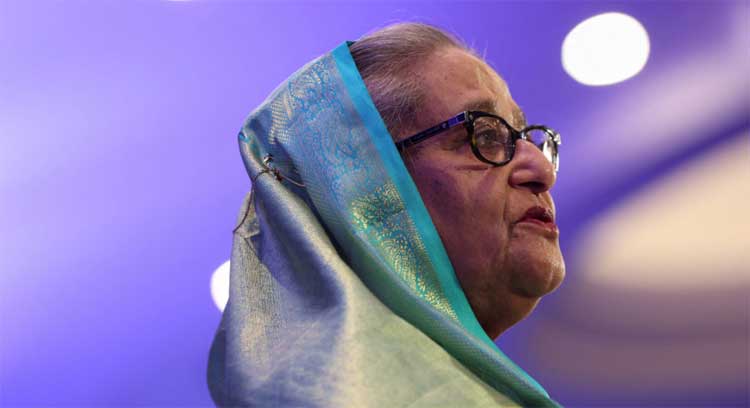
Former Bangladesh prime minister Sheikh Hasina was on Monday sentenced to death by a tribunal that found her guilty of committing “crimes against humanity” during the 2024 student uprising. The verdict — delivered while Hasina remains in exile in India — has brought relief to families of those killed in the crackdown, even as it sharply deepens political tensions in Dhaka.
Alongside Hasina, former interior minister Asaduzzaman Khan Kamal was also handed the death sentence. Former Inspector General of Police Chowdhury Abdullah Al-Mamun, who cooperated with investigators and pleaded guilty in July, received a reduced sentence of five years.
The Verdict
Announcing the judgment, Judge Golam Mortuza Mozumder said Hasina was “found guilty on three counts”:
-
inciting violence,
-
issuing orders to kill, and
-
failing to prevent atrocities committed under her command.
The tribunal initially considered a life sentence, but after additional charges were upheld, it unanimously opted for the death penalty.
“We have decided to inflict her with only one sentence — the sentence of death,” Judge Mozumder declared.
Hasina and her aides were charged with five grave crimes:
-
Orchestrating mass killings of protesters in Dhaka
-
Using helicopters and drones to fire on civilian crowds
-
The murder of student activist Abu Sayed
-
Incinerating bodies in Ashulia to destroy evidence
-
Coordinating the killing of demonstrators in Chankharpul
Reactions from Hasina, Bangladesh, India, and the UN
Hasina has vehemently rejected the charges, calling the verdict “rigged”, “politically motivated”, and delivered by a “kangaroo court”. The Yunus-led interim government, however, welcomed the ruling.
“The courts of Bangladesh have spoken with clarity that resonates across the nation and beyond. No one is above the law,” said Chief Adviser Muhammad Yunus.
Dhaka has formally requested India to extradite Hasina and Kamal, both of whom fled Bangladesh after the August uprising and were tried in absentia. Citing the bilateral extradition treaty, the foreign ministry said New Delhi is “obliged” to return the convicted leaders.
India said it had “noted” the judgment. “As a close neighbour, India remains committed to the best interests of the people of Bangladesh — in peace, democracy, inclusion, and stability,” the Ministry of External Affairs said.
The United Nations acknowledged that the verdict marked an “important moment for victims” but expressed regret over the imposition of the death penalty. The UN rights office stressed that accountability processes must “unquestionably meet international standards of due process and fair trial”.
What Happens Next?
The next steps depend heavily on India’s response to the extradition request. Bangladesh has warned that granting asylum to individuals convicted of “crimes against humanity” would be a “grave unfriendly act”.
Under tribunal rules, authorities will first move to confiscate Hasina’s properties and bring them under state control.
Hasina can still appeal the verdict — but only if she returns voluntarily or is arrested within the next 30 days. Failure to appear could lead to her being officially declared a fugitive. That would allow Dhaka to:
-
seize additional assets,
-
cancel her passport, and
-
push Interpol to issue a Red Notice.
As international pressure mounts and diplomatic negotiations loom, the political future of one of Bangladesh’s most influential leaders now hinges on decisions taken in New Delhi.
Comments are closed.