
Serbia Protests Intensify as Thousands Block Streets After Arrests at Anti-Government Rally
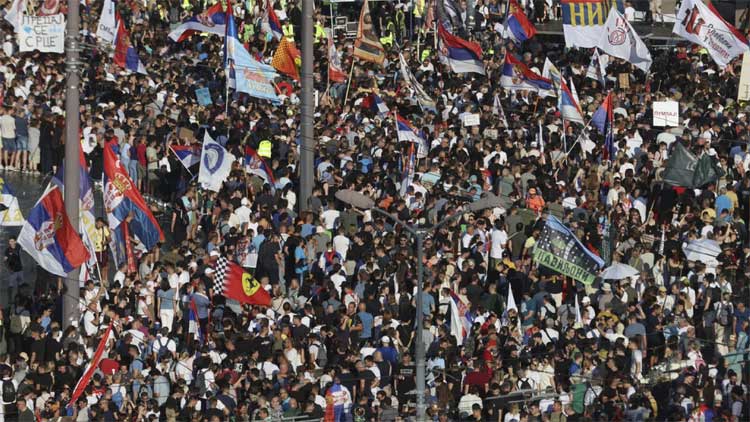
Thousands of protesters took to the streets across Serbia on Sunday, setting up blockades in response to the arrest of dozens of demonstrators following violent clashes with police at a major anti-government rally in Belgrade the day before.
In the capital, protesters used metal barricades and garbage containers to block roads and a key bridge over the Sava River. In Novi Sad, demonstrators hurled eggs at the offices of the ruling Serbian Progressive Party. Similar actions were reported in several smaller cities nationwide.
The protests erupted after Saturday’s mass rally demanding early elections, which drew tens of thousands and marked the culmination of nearly eight months of mounting dissent against populist President Aleksandar Vučić’s government. Tensions flared after the official rally ended, with riot police using batons and pepper spray while demonstrators threw rocks and bottles.
Protesters on Sunday called for the release of university students and others arrested during the rally, some of whom face serious charges including attacking police and attempting to overthrow the government. Authorities said 77 people were detained, with 38 still in custody. Prosecutors confirmed at least eight more arrests on Sunday.
Interior Minister Ivica Dačić reported that 48 police officers were injured in the clashes, while 22 protesters sought medical treatment.
President Vučić, speaking at a press conference earlier Sunday, accused the rally organizers of inciting violence and labeled some demonstrators as “terrorists.” He singled out University of Belgrade dean Vladan Đokić, who attended the protest, and warned of further arrests. “The identification of all individuals is underway,” Vučić said. “There will be more arrests.”
The protests were initially triggered by public outrage over the collapse of a newly renovated railway station canopy in Novi Sad last November, which killed 16 people. Many blamed the tragedy on corruption and negligence in state infrastructure projects.
Vučić has rejected demands for snap elections, insisting the next vote will take place as scheduled in 2027. “Serbia won. You cannot destroy Serbia with violence,” he said. “They consciously wanted to spur bloodshed. The time of accountability is coming.”
Critics accuse Vučić of steering Serbia toward authoritarianism, suppressing dissent, and fostering a climate of corruption and organized crime. While Serbia remains a candidate for European Union membership, Vučić’s administration has maintained close ties with Russia and China.
Comments are closed.