
Senate Rejects Rival Health Care Plans, Leaving 24 Million Facing Sharp Premium Hikes

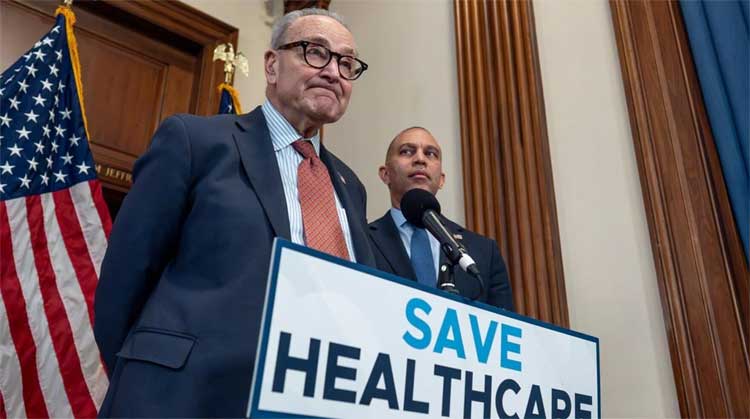
The U.S. Senate on Thursday rejected competing health care proposals from Republicans and Democrats, leaving roughly 24 million Americans at risk of substantial insurance premium increases beginning January 1, when a major federal subsidy is set to expire.
With Congress expected to adjourn for the holiday recess next week and not return until January 5, lawmakers are running out of time to avert the spike. New premiums will be finalized before they reconvene, locking in higher costs for those who depend on the Affordable Care Act’s enhanced subsidies.
In two consecutive votes split largely along party lines, each party blocked the other’s bill. The House may attempt to advance an alternative measure next week, but details have not been released — and any plan is likely to face resistance in the Senate.
“After today’s vote, the American health care crisis is 100 percent on their shoulders,” Senate Democratic leader Chuck Schumer said of Republicans. GOP leader John Thune dismissed the Democratic proposal as “a political messaging exercise,” adding that Republicans were ready to negotiate.
The impasse has left many Americans uncertain about renewing their ACA coverage. Enrollment data shows slightly fewer returning customers than at this time last year, with 19.9% renewing so far compared to 20.5% last year.
Dueling Proposals
The Republican plan, authored by Senators Bill Cassidy of Louisiana and Mike Crapo of Idaho, would have offered up to $1,500 to individuals earning below 700% of the federal poverty level — about $110,000 for a single adult or $225,000 for a family of four in 2025. The payments could not be used for abortion or gender-transition procedures and would require citizenship or immigration-status verification, conditions Democrats strongly opposed.
The Democratic bill would have extended the ACA’s COVID-era subsidies for three more years to prevent premiums from doubling on average, according to estimates from health policy group KFF.
Sixty votes were required for passage in the 53–47 Republican-controlled Senate. Four Republicans supported the Democratic plan; no Democrats backed the GOP bill.
President Donald Trump has largely stayed on the sidelines but ultimately endorsed the Cassidy–Crapo approach. At the bipartisan Congressional Ball on Thursday, Trump said Republicans and Democrats would eventually work together, but again advocated the GOP plan: “We make beautiful big payments directly to the people, and they buy their own.”
Republican payments would cover only a fraction of the deductibles for lower-tier “Bronze” or “Catastrophic” plans, which can require up to $7,500 in out-of-pocket expenses before insurance coverage begins. Basic medical services — such as ER visits costing between $1,000 and $3,000 or ambulance rides ranging from $500 to over $3,500 — can quickly overwhelm patients.
Political Stakes Rising
With the 2026 midterms approaching, many Republicans are worried about the political fallout of premium spikes hitting every state — including those that strongly supported Trump in 2024. “We can’t afford our premiums now, let alone if they would go up by 50 or 100 percent,” said GOP Senator Josh Hawley of Missouri.
A new Reuters/Ipsos poll shows 51% of Americans support extending the subsidy, including three-quarters of Democrats and one-third of Republicans.
Moderate Republican Representative Brian Fitzpatrick is leading a bipartisan House effort to extend the subsidy through 2027, aiming to gather enough support to force a floor vote despite leadership opposition.
Comments are closed.