
Senate blocks war powers resolution after two Republicans reverse course under Trump pressure

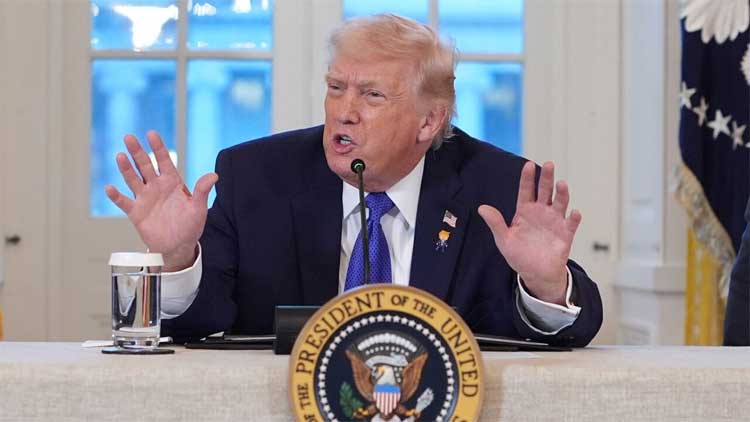
Senate Republicans on Wednesday voted to dismiss a war powers resolution that would have restricted President Donald Trump’s authority to carry out further military action against Venezuela, after two GOP senators reversed their earlier support for the measure.
Trump applied intense pressure on the five Republicans who had joined Democrats last week to advance the resolution, ultimately succeeding in blocking its passage. Sens. Josh Hawley of Missouri and Todd Young of Indiana flipped their positions, allowing Republicans to force dismissal of the bill. The Senate deadlocked 50-50, requiring Vice President JD Vance to cast the tie-breaking vote.
The high-profile vote underscored Trump’s continued influence over the Republican conference, though the narrow margin also reflected growing unease in Congress over his increasingly aggressive foreign policy posture.
Democrats triggered the debate following the surprise nighttime raid earlier this month in which U.S. forces captured Venezuelan President Nicolás Maduro.
“Here we have one of the most successful attacks ever and they find a way to be against it. It’s pretty amazing. And it’s a shame,” Trump said during a speech in Michigan on Tuesday. He also lashed out at Republicans who backed the resolution, calling Sen. Rand Paul of Kentucky a “stone cold loser” and labeling Sens. Lisa Murkowski of Alaska and Susan Collins of Maine “disasters.” All three held firm in their support for the legislation.
The president’s remarks followed terse phone calls with the senators, highlighting how the war powers vote had become politically charged amid Trump’s broader threats of military action, including his stated ambition to take control of Greenland, a semi-autonomous territory of NATO ally Denmark.
Although the legislation was unlikely to become law — it would have required Trump’s own signature — it served as a test of Republican loyalty and a measure of how much latitude the GOP-controlled Senate is willing to give the president to use military force abroad.
Two Republicans reverse course
Hawley said Trump told him the resolution “really ties my hands.” The senator said Secretary of State Marco Rubio later assured him that the administration has no plans to deploy ground troops to Venezuela and would follow constitutional requirements if future troop deployments became necessary.
“We’re getting along very well with Venezuela,” Trump told reporters Wednesday at a separate bill-signing ceremony.
Young also announced his reversal shortly before the vote, citing extensive discussions with Rubio and a commitment from the secretary of state to testify publicly before the Senate Foreign Relations Committee. Young released a letter from Rubio stating the president would “seek congressional authorization in advance (circumstances permitting)” before engaging in “major military operations” in Venezuela.
Both senators said their efforts contributed to the administration’s release of a 22-page, heavily redacted Justice Department memo outlining the legal justification for Maduro’s capture. The memo indicates the administration has no current plans for expanded military action.
“We were assured that there is no contingency plan to engage in any substantial and sustained operation that would amount to a constitutional war,” the memo stated, signed by Assistant Attorney General Elliot Gaiser.
Shifting legal rationale
Trump has offered multiple legal justifications for his actions against Maduro. The administration initially cited counternarcotics operations and wartime authorities under the global war on terror, designating drug cartels as terrorist organizations. It later characterized Maduro’s capture as a law enforcement action tied to U.S. criminal charges filed in 2020.
Paul criticized the shifting rationale, noting that officials first framed the military buildup as a drug interdiction effort before citing Venezuela’s oil reserves as justification.
“The bait and switch has already happened,” he said.
Congressional alarm grows
Lawmakers from both parties have expressed concern over Trump’s recent foreign policy rhetoric, including pledges that the U.S. will “run” Venezuela for years, threats to use force to seize Greenland, and messages encouraging Iranian protesters by saying “help is on its way.”
Efforts by senior Republicans to ease tensions with Denmark have so far failed. Danish officials said after meetings with Vance and Rubio on Wednesday that a “fundamental disagreement” over Greenland remains.
“What happened tonight is a roadmap to another endless war,” Senate Democratic Leader Chuck Schumer said after the vote.
An AP-NORC poll released this week found that more than half of U.S. adults believe Trump has “gone too far” in using the military to intervene abroad. House Democrats have introduced a similar war powers resolution and could force a vote as early as next week.
GOP leadership shuts down debate
Republican leaders moved swiftly to defuse the conflict and prevent extended debate once Hawley and Young switched positions. They argued the resolution was inappropriate because U.S. troops are not currently deployed in Venezuela.
“We’re not currently conducting military operations there,” Senate Majority Leader John Thune said. “But Democrats are taking up this bill because their anti-Trump hysteria knows no bounds.”
Democratic Sen. Tim Kaine countered that Republicans were deliberately avoiding public scrutiny of the administration’s ongoing campaign of threats and limited military actions.
“If this cause and if this legal basis were so righteous,” Kaine said, “the administration and its supporters would not be afraid to have this debate before the public and the United States Senate.”
Comments are closed.