
Scientists Test Climate ‘Time Machine’ in the Amazon as Brazil Gears Up for COP30

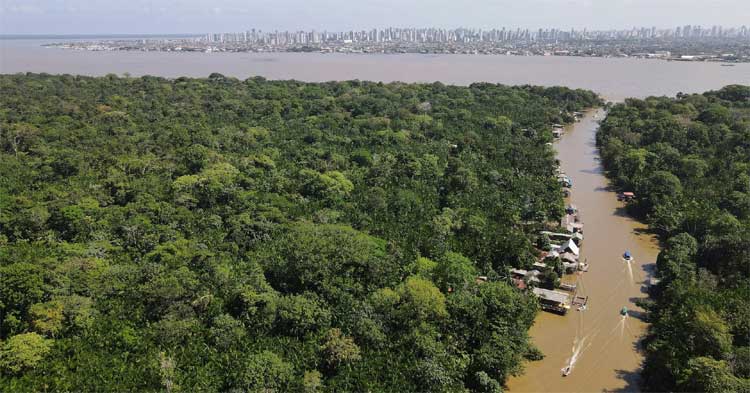
Deep in Brazil’s Amazon rainforest, scientists have built what they call a “time machine” — an ambitious experiment that pumps carbon dioxide into the forest canopy to recreate the atmospheric conditions predicted for the coming decades. The goal: to understand how the world’s largest tropical forest will respond to a changing climate, a key topic to be discussed at the upcoming COP30 United Nations climate summit in Brazil.
At the AmazonFACE project site near Manaus, six towering steel rings rise above the jungle canopy, each enclosing between 50 and 70 mature trees. After a series of baseline tests, scientists will begin fumigating three of the rings with elevated carbon dioxide levels to simulate future atmospheric conditions, while the remaining rings will serve as controls.
“We’re trying to create the atmosphere of the future,” said Carlos Quesada, coordinator at Brazil’s National Institute for Amazon Research (INPA), which is leading the project in collaboration with Universidade Estadual de Campinas.
Preserving tropical rainforests like the Amazon is seen as critical to slowing climate change. But key questions remain about how resilient these ecosystems will be as carbon dioxide levels continue to rise. At COP30, to be held from November 10–21 in Belém, near where the Amazon Basin meets the Atlantic Ocean, policymakers are expected to focus on exactly this uncertainty.
The acronym FACE stands for Free-Air CO₂ Enrichment, a technology that allows scientists to study how higher levels of atmospheric carbon dioxide affect plants in natural conditions. While FACE experiments have been conducted in temperate regions such as the United States, AmazonFACE is the first of its kind in a tropical rainforest.
“This is the first experiment of this scale in a natural tropical forest,” said forestry engineer Gustavo Carvalho, as he monitored sensors beneath the dense canopy.
These sensors collect data every 10 minutes, recording how trees absorb carbon dioxide and release oxygen and water vapor in response to shifts in sunlight, rainfall, and storms.
In later stages, researchers will artificially raise carbon dioxide concentrations within the rings to match levels projected for 2050 or 2060, creating miniature “future forests.”
“If models predict a certain amount of carbon dioxide in 2050, we’ll simulate that here,” Carvalho explained. “It’s like stepping into the future — a small patch of forest that shows us how the Amazon might respond to what’s coming.”
Comments are closed.