
Satellite imagery indicates expansion of China’s nuclear facilities in Sichuan, report says

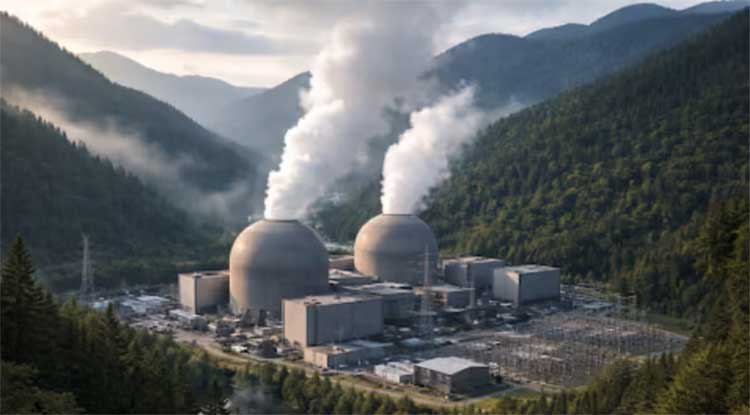
Geospatial analysis of satellite imagery captured between 2022 and 2026 points to a notable expansion of China’s nuclear-related facilities in Sichuan Province, according to a report published Sunday by The New York Times.
The assessment, based on findings shared by geospatial intelligence specialist Renny Babiarz, suggests that China’s nuclear development efforts have gathered pace in recent years, reflecting a broader shift in the country’s strategic posture.
At a site identified as Zitong in Sichuan, satellite images show newly constructed bunkers and defensive earthworks spread across a valley. Analysts highlighted a recently built complex featuring extensive piping networks, a design they say is commonly associated with installations handling sensitive or hazardous materials. Experts cited in the report believe the bunkers could be supporting high-explosives testing — a key process used to refine the chemical detonators required for nuclear warheads.
Hui Zhang, a physicist and researcher of China’s nuclear programmes at Harvard University’s Kennedy School of Government, told the newspaper that such testing is critical for ensuring precise implosion mechanisms. “This needs blast tests to perfect them,” he said after reviewing the imagery analysis.
Separate satellite observations indicate continued activity at another Sichuan facility known as Pingtong. The location, described as a double-fenced complex, features a prominent main building with a roughly 360-foot-high ventilation stack. According to the report, specialists assess that the site may be involved in producing plutonium cores — also known as warhead pits — which are central to nuclear weapon design.
Recent imagery suggests the structure has undergone upgrades, including the addition of new venting systems and heat-dispersion elements, alongside fresh construction near the primary building.
Babiarz noted that the architectural characteristics of the Pingtong installation bear similarities to comparable facilities in other nuclear-armed states, particularly those linked to warhead pit production, the report said.
Comments are closed.