

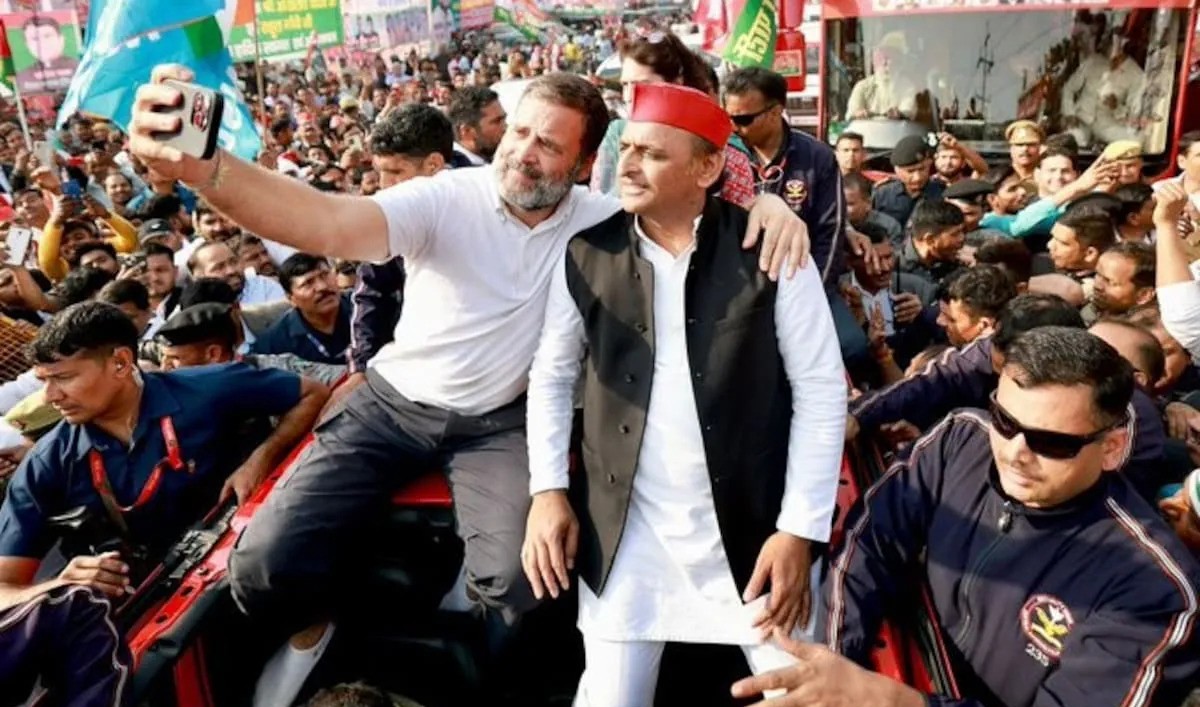
The Samajwadi Party (SP) finds itself at the center of a brewing scandal over the submission of what are claimed to be fake affidavits, exposing alleged vote fraud linked to the INDI Alliance.
The controversy centers on SP leader Akhilesh Yadav’s assertion of submitting 18,000 affidavits to the Election Commission of India (ECI) to highlight voter irregularities in Uttar Pradesh, particularly after the 2022 Assembly elections and the 2024 Lok Sabha polls. However, investigations by the Uttar Pradesh Chief Electoral Officer revealed that only 3,919 scanned copies were received, with evidence suggesting some were forged, including affidavits in the names of deceased individuals from as early as 2022. This has ignited a fierce debate about the integrity of electoral processes and the credibility of opposition claims.
Context Reveals Deep Political Rivalries
The strategic backdrop to this scandal lies in the ongoing political rivalry between the SP-led INDI Alliance and the ruling BJP, with voter manipulation allegations serving as a key battleground. The SP, part of the INDI Alliance, has accused the ECI of colluding with the BJP to rig elections, a narrative bolstered by Yadav’s presentation of receipts as proof of affidavit submission. Yet, the ECI’s findings, supported by public denials from individuals whose names appeared on the documents, point to a potential fabrication to malign the electoral body. This episode echoes past controversies, such as the 2008 cash-for-votes scandal, and is fueled by tensions over the 2024 Lok Sabha results, where the SP won 37 seats. X posts reflect a polarized public, with some decrying the SP’s tactics and others questioning the ECI’s impartiality, underscoring the contentious nature of electoral trust.
Far-Reaching Implications for Democracy and Politics
The implications of this scandal extend across economic, social, and political dimensions. Economically, the controversy could disrupt voter confidence, affecting campaign funding and local economies reliant on political stability in Uttar Pradesh. Socially, it has deepened distrust between communities, with accusations of targeted voter deletions against minorities and backward classes fueling unrest. Politically, the exposure of fake affidavits undermines the INDI Alliance’s credibility, prompting BJP leaders like Anurag Thakur to highlight over 2 lakh doubtful voters across alliance-held seats, while intensifying calls for electoral reforms. Operationally, the ECI’s request for original documents and ongoing investigations may strain administrative resources, challenging the narrative of a fair electoral system and raising questions about the opposition’s motives.
Challenges Emerge Amid Investigative Scrutiny
Significant challenges arise as the scandal unfolds. Operationally, verifying the authenticity of thousands of affidavits and managing public backlash require substantial effort from the ECI, potentially delaying resolution. Economically and socially, the focus on voter fraud could alienate segments of the electorate, with fears of job losses or displacement if evictions follow, particularly in contested constituencies. Policy risks include legal challenges from the SP or INDI Alliance, which might claim political victimization, and the possibility of stricter voter roll regulations that could disenfranchise legitimate voters. The establishment’s portrayal of this as an opposition conspiracy invites skepticism, as the lack of conclusive evidence on the scale of manipulation leaves room for doubt about both sides’ narratives.
Opportunities for Electoral Reform and Transparency
Despite the challenges, opportunities exist for positive change. Economically, a thorough investigation could stabilize investor confidence by ensuring fair elections, potentially boosting regional development. Socially, the controversy might spur community dialogues to address voter list anomalies, fostering inclusivity if handled with care. Policy-wise, this could lead to enhanced electoral safeguards, such as mandatory original affidavit submissions or digital verification systems, aligning with demands for transparency from groups like the BJP. Innovative approaches, including public audits or independent oversight, could emerge to rebuild trust. Whether this scandal prompts meaningful reform or further polarizes politics depends on stakeholder cooperation, but it highlights the urgent need to address electoral integrity.
Conclusion Rests on Unraveling the Truth
The Samajwadi Party’s alleged submission of fake affidavits has thrust the INDI Alliance into a crisis, exposing claims of vote lies that threaten democratic credibility. While the SP’s accusations against the ECI aimed to spotlight voter fraud, the revelation of forged documents has shifted scrutiny onto the opposition’s tactics. Amid operational strains and policy risks, opportunities for reform offer a path to restore trust, though the establishment’s narrative of political maneuvering warrants critical examination. The outcome—whether it strengthens electoral processes or deepens political divides—hinges on the investigation’s findings and how parties navigate this contentious issue moving forward.
Comments are closed.