
Russian Attacks Kill 3 as Diplomatic Push to End Ukraine War Gains Momentum

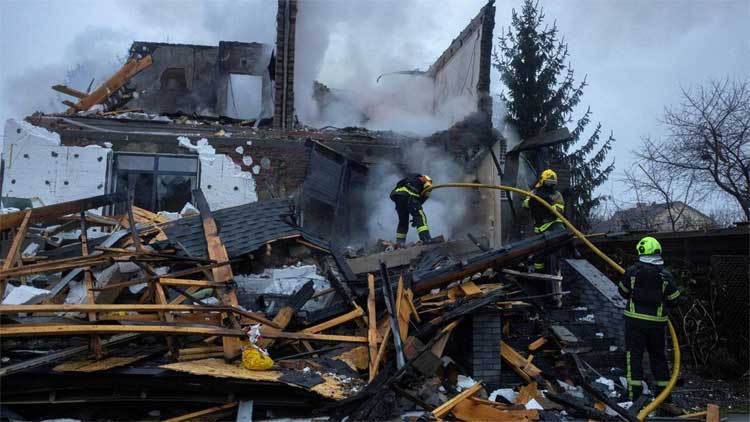
Russian drone and missile strikes in and around Kyiv killed at least three people early Saturday, officials said, as Ukrainian representatives traveled to the United States to push forward efforts to end the war.
President Volodymyr Zelensky said on X that a delegation led by national security chief Rustem Umerov was heading to the U.S. to “swiftly and substantively work out the steps needed to end the war.” After those talks, a U.S. delegation is expected to visit Moscow in the second half of next week for discussions with Russian President Vladimir Putin.
According to the Kyiv City Military Administration, two people were killed in attacks on the capital, while a woman died and eight others were injured in a combined missile and drone strike on the broader Kyiv region. Mayor Vitali Klitschko said 29 people were wounded in Kyiv, with debris from intercepted drones damaging residential buildings. Power outages were also reported in the city’s western districts.
The diplomatic push follows U.S. President Donald Trump’s release last week of a 28-point peace proposal that heavily favored Russia, prompting Zelensky to accelerate engagement with American negotiators. Alarmed by the plan’s implications, European leaders have sought to influence the negotiations to better address their security concerns.
On Tuesday, Trump said his plan had been “fine-tuned” and that he was dispatching envoy Steve Witkoff to Russia for talks with Putin. He suggested he could personally meet both Putin and Zelensky once more progress had been achieved.
This weekend, Trump administration officials were meeting Ukrainian counterparts in Florida. The talks were expected to include Secretary of State Marco Rubio, Witkoff, and Trump’s son-in-law Jared Kushner, according to a U.S. official who spoke on condition of anonymity.
On Friday, Zelensky announced the resignation of his powerful chief of staff, Andrii Yermak—also Ukraine’s lead negotiator with the U.S.—after anti-corruption investigators searched his home. The unprecedented raid inside Ukraine’s top leadership circle dealt a blow to Zelensky, threatening to disrupt Kyiv’s negotiating strategy at a time of intense U.S. pressure to reach a peace deal.
Zelensky will travel to Paris on Monday for talks with French President Emmanuel Macron. Macron’s office said the two leaders will discuss “the situation and the conditions for a just and lasting peace,” in alignment with the Geneva discussions, the American plan, and coordination with European partners.
Meanwhile, in Russia, a major oil terminal near the port of Novorossiysk halted operations Saturday after unmanned boats struck one of its three mooring points, the Caspian Pipeline Consortium (CPC) said. Andriy Kovalenko, head of Ukraine’s Center for Countering Disinformation, confirmed Ukrainian involvement, saying naval drones had destroyed one of the oil tanker berths.
Ukraine has intensified long-range drone strikes on Russian refineries and export terminals in recent months, aiming to cut off revenue Moscow relies on to sustain its war effort.
At the same time, Kyiv and its Western allies accuse Russia of attempting to cripple Ukraine’s power grid for a fourth winter in a row, depriving civilians of heat, electricity, and running water—an effort Ukrainian officials describe as “weaponizing the cold.”
An official from Ukraine’s SBU security service, speaking anonymously due to the sensitivity of the operations, said domestically produced Sea Baby naval drones were used to strike two tankers in the Black Sea—Kairos and Virat—allegedly part of Russia’s “shadow fleet” used to evade sanctions. Both ships were hit in quick succession Friday afternoon. The crews were reported safe, and the official provided video said to show the destruction of the tankers.
“The SBU continues to take active steps to curtail Russia’s financial capabilities to wage war against Ukraine,” the official told The Associated Press, adding that the drones disabled ships capable of transporting nearly $70 million in oil that would have helped Moscow skirt international sanctions.
Comments are closed.