
Russia Claims 41 Ukrainian Drones Intercepted in Major Attack on Airbases

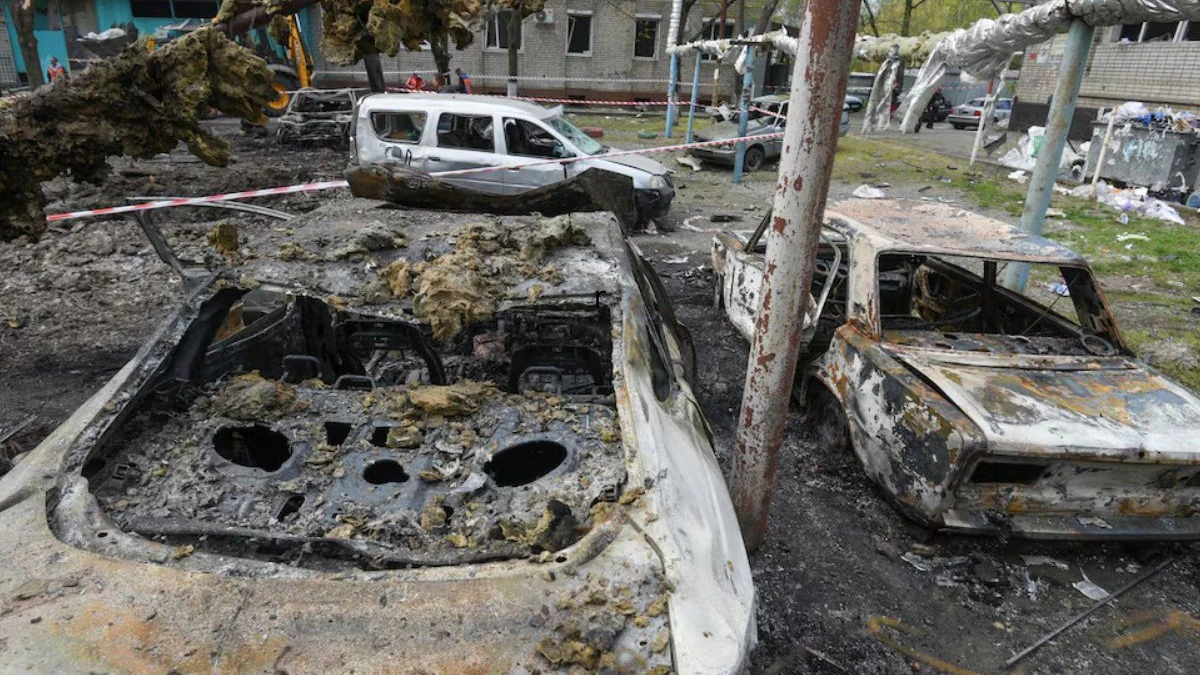
Russian Defence Ministry reported intercepting or destroying 41 Ukrainian drones in a large-scale attack targeting military airfields across five regions: Murmansk, Irkutsk, Ivanovo, Ryazan, and Amur. This incident, part of Ukraine’s Operation Spiderweb, aimed to strike Russia’s strategic bomber fleet, including Tu-95 and Tu-22M aircraft, which are critical to Russia’s long-range cruise missile campaigns and nuclear deterrence. While Ukraine claimed significant damage to 41 aircraft, Russian authorities downplayed the impact, admitting only that “several aircraft caught fire.” This article examines the conflicting narratives, the operation’s strategic implications, and the broader context of drone warfare in the Russo-Ukrainian conflict.
Details of the Incident
The Russian Defence Ministry stated that Ukraine launched a “terrorist attack” using first-person view (FPV) drones against airfields in five regions spanning three time zones. According to the ministry, air defenses repelled attacks in Ivanovo, Ryazan, and Amur, but drones struck airbases in Murmansk (Olenya) and Irkutsk (Belaya), causing fires that were later extinguished. No casualties among military personnel or civilians were reported, and the ministry claimed that some “participants in the terrorist attacks” were detained. The operation, dubbed “Spiderweb” by Ukraine, involved smuggling over 100 drones into Russia, concealed in modified cargo containers on trucks, and launching them remotely near the targeted airbases.
Ukraine’s Security Service (SBU) claimed the attack hit 41 Russian aircraft, including strategic bombers like Tu-95s, Tu-22Ms, and possibly A-50 surveillance planes, causing an estimated $7 billion in damage. Ukrainian President Volodymyr Zelenskyy described the operation as “absolutely brilliant,” noting that 117 drones were used, targeting 34% of Russia’s strategic cruise-missile carriers. Verified videos and satellite imagery from sources like Umbra Space and Maxar confirmed damage at Olenya and Belaya airbases, showing at least five aircraft hit, including four Tu-95 bombers and one Antonov cargo plane. Western estimates, including from NATO and analysts like Justin Bronk of the Royal United Services Institute, suggest 10 to 13 aircraft were destroyed, with up to 20 damaged, a figure lower than Ukraine’s claims but still significant.
Russian military bloggers, such as Rybar and Fighterbomber, acknowledged losses but disputed Ukraine’s numbers, estimating 8 to 13 aircraft damaged, including up to 12 strategic bombers. The Russian Ministry of Defense’s claim of intercepting 41 drones aligns with Ukraine’s reported aircraft hits, suggesting either a one-to-one drone-to-aircraft targeting strategy or an acknowledgment of partial defensive success. However, the ministry’s statement avoided specifying the extent of aircraft damage, focusing instead on the fires being extinguished and attacks being repelled in three regions.
Strategic Implications
The attack, executed on the eve of peace talks in Istanbul on June 2, 2025, was a bold demonstration of Ukraine’s evolving drone warfare capabilities. Key implications include:
-
Impact on Russian Air Power: The targeted aircraft—Tu-95s and Tu-22Ms—are critical for launching cruise missiles against Ukrainian cities and form part of Russia’s nuclear triad. With Russia possessing around 60 active Tu-95s and 20 Tu-160s, losing 10 to 13 strategic bombers (as per Western estimates) could significantly reduce its capacity for large-scale missile salvos. The Tu-95, no longer in production, is particularly irreplaceable, with aerospace expert Piotr Butowski noting that its value to Russia’s air force exceeds monetary estimates.
-
Vulnerability of Russian Airbases: The attack exposed weaknesses in Russia’s air defense systems, as drones were launched from trucks parked near airfields, bypassing long-range detection. The absence of hardened shelters left aircraft exposed, a recurring issue highlighted by analysts like Tyler Rogoway. The operation’s success in striking bases as far as Irkutsk (4,000 km from Ukraine) and Murmansk (2,000 km) underscores Ukraine’s ability to project power deep into Russian territory.
-
Logistical and Security Challenges: The covert smuggling of drones into Russia, hidden in wooden sheds or cargo containers, has forced Russia to rethink domestic security. Inspecting cargo across its vast territory and enhancing airbase defenses will divert resources from the frontlines, potentially weakening Russia’s invasion efforts. The attack’s psychological impact, as noted by Zelenskyy, aims to push Russia toward diplomacy by demonstrating its vulnerability.
-
Propaganda War: Both sides engaged in narrative shaping. Ukraine’s claim of 41 aircraft hit, supported by SBU videos, aims to boost morale and pressure Russia, while Russian bloggers and officials downplayed losses to maintain public confidence. NATO’s estimate of 10 to 13 destroyed aircraft suggests Ukraine’s figures may be inflated, but even conservative estimates indicate a “real dent” in Russia’s strategic aviation, per retired U.S. General Ben Hodges.
Broader Context: Drone Warfare in the Russo-Ukrainian Conflict
The June 1 attack is part of an escalating drone war, with both sides leveraging low-cost, commercially available FPV drones and advanced long-range systems. Ukraine has targeted Russian military and energy infrastructure, including oil refineries (e.g., Sochi on August 3, 2025) and electronic warfare plants (e.g., Penza on August 2, 2025), to disrupt logistics and morale. Russia, in turn, has intensified drone and missile strikes, launching a record 472 drones on Ukraine on June 1, 2025, alongside seven missiles. Ukraine’s air force reported intercepting 183 drones and 17 missiles overnight into August 2, 2025, indicating robust but strained defenses.
Ukraine’s use of decoy drones, like the Rubaka, alongside heavier Liutyi drones, mirrors Russia’s Shahed campaign, where decoys overwhelm air defenses to protect destructive payloads. The introduction of Russia’s jet-powered Geran-3 drones, capable of 800 km/h, further complicates Ukraine’s counter-drone efforts, highlighting the rapid evolution of drone technology in the conflict. Ukraine’s reliance on domestic drone production, with $2.5 billion allocated in 2024–2025, and support from allies like the UK and Germany, has made it a leader in drone innovation, as noted by the Atlantic Council.
Critical Analysis: Conflicting Claims and Systemic Issues
The discrepancy between Ukraine’s claim of 41 aircraft hit and Russia’s report of 41 drones intercepted suggests both sides are exaggerating for propaganda purposes. Satellite imagery and NATO estimates confirm significant damage but lean toward 10 to 13 aircraft destroyed, indicating Ukraine’s figures may include damaged but repairable planes. Russia’s admission of fires but not losses aligns with its pattern of minimizing setbacks, as seen in earlier incidents like the 2022 Engels airbase attack. The detention of alleged “participants” hints at Russian concerns about internal security lapses, possibly involving local collaborators.
The operation underscores systemic flaws in Russia’s airbase security, particularly the lack of hardened shelters and inadequate short-range defenses against FPV drones. Ukraine’s ability to smuggle drones over 18 months and launch them from within Russia exposes intelligence gaps, as Russian bloggers criticized senior officials like Viktor Afzalov and Sergei Shoigu for operational failures. Conversely, Ukraine’s success risks escalating Russian retaliation, as seen in the intensified strikes on Kharkiv and Kherson following the attack. The timing, just before peace talks, suggests a strategic move to strengthen Ukraine’s negotiating position, though the talks yielded no ceasefire.
Future Outlook
The attack’s success will likely prompt Russia to bolster airbase defenses, possibly dispersing bombers to remote locations, which could limit their operational tempo. Ukraine’s continued drone strikes, including on energy infrastructure like the Sochi oil depot on August 3, 2025, indicate a strategy to sustain pressure on Russia’s military and economic assets. However, Russia’s development of advanced drones like the Geran-3 and its vast resources suggest the drone war will intensify, challenging Ukraine’s air defenses and Western support.
To counter such threats, Russia may invest in electronic warfare and mobile air defenses, while Ukraine could refine its decoy tactics and expand domestic drone production. The attack’s $7 billion estimated cost to Russia, though contested, highlights the economic asymmetry of drone warfare, where cheap drones can destroy irreplaceable assets. As both sides adapt, the conflict’s reliance on drones will continue to reshape modern warfare, with implications for global security, as noted by the Combating Terrorism Center at West Point.
The Russian Defence Ministry’s claim of intercepting or destroying 41 Ukrainian drones on June 1, 2025, during Operation Spiderweb reflects a partial acknowledgment of a significant Ukrainian drone attack on its strategic airbases. While Ukraine’s claim of hitting 41 aircraft may be inflated, verified evidence confirms damage to at least 10 to 13 strategic bombers, dealing a blow to Russia’s air power. The operation highlights Ukraine’s innovative use of smuggled FPV drones and exposes Russia’s vulnerabilities in airbase security. As drone warfare evolves, both sides face escalating challenges, with Ukraine’s audacious strikes forcing Russia to rethink its defensive posture. The incident, set against stalled peace talks, underscores the strategic and symbolic weight of drone operations in the Russo-Ukrainian conflict, with far-reaching implications for modern warfare.
Comments are closed.