
RSS Marks 100 Years: Honoring Companions, Contributors, and Supporters

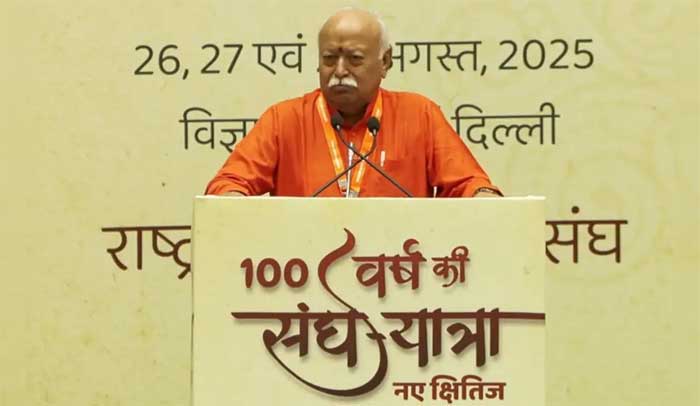
The Rashtriya Swayamsevak Sangh (RSS) has completed a century of work, a journey sustained by countless companions, contributors, and ordinary citizens whose support has made this mission possible. Over the years, the organization has faced immense challenges, yet unwavering public trust and participation have shaped its growth.
In its early years, young karyakartas traversed the country driven by devotion to the nation. Leaders such as Appaji Joshi, Dadarav Parmarth, Balasaheb and Bhaurao Deoras, Yadavrao Joshi, and Eknath Ranade, under Dr. K.B. Hedgewar’s guidance, took Sangh work as a lifelong sacred duty. The organization’s progress has consistently mirrored society’s recognition and encouragement, much like Swami Vivekananda’s belief that the wisdom of the people transcends language or formal education.
From the start, the support of ordinary households—and especially the contribution of mothers and sisters—has been central. Figures like Dattopant Thengadi, Deendayal Upadhyaya, and Eknath Ranade drew inspiration from the Sangh, founding several social organizations, while women leaders such as Mausiji Kelkar and Pramila Tai Medhe, through the Rashtra Sevika Samiti, strengthened the mission.
Over decades, the Sangh has raised issues of national importance—Hindu unity, social harmony, national security, democracy, and cultural preservation—often with society’s active support. Notable milestones include the Hindu awakening movement in Meenakshipuram, the founding of the Vishwa Hindu Parishad in 1964 with spiritual leaders’ participation, and the World Hindu Conference in Udupi, all reinforcing the principle that “no Hindu can ever fall from grace.” The organization has consistently earned the blessings of saints and societal leaders, whether advocating cow protection, cultural preservation, or other causes.
Even in difficult times—such as post-Independence bans or during the Emergency—both ordinary citizens and respected figures stood by the Sangh. Mothers and sisters often carried the burden of sustaining its work, ensuring continuity through crises.
As the RSS celebrates its centenary, swayamsevaks aim to engage every household, across cities and villages, inviting broader societal participation in national service. With collective effort, the Sangh envisions a smoother and more successful journey ahead for India, moving toward holistic development.
Comments are closed.