
Romantic Travel Is Evolving — And Singles Are Redefining The Experience

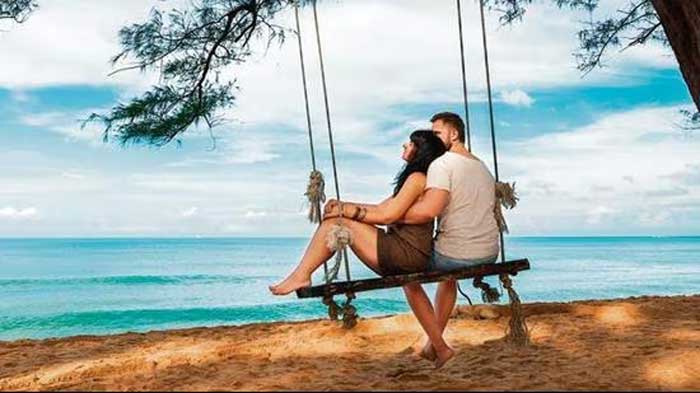
Romantic travel has long been packaged as a predictable fantasy: rose petals, candlelit dinners, sunset views, and, invariably, two people. But that script is quietly being rewritten — not by hotels or tour operators, but by travellers themselves.
Elaine Villatoro knows this shift well. Each time the Brazilian travel creator mentioned her solo trip to the Seychelles, she was met with the same puzzled response: “Isn’t that a honeymoon destination?” Tired of the reactions, she began joking, “Yes, I love myself so much that I decided to take myself on a honeymoon.”
What began as a clever retort eventually felt like the truth. Over nine days of island-hopping across Mahé, Praslin, and La Digue, Villatoro found that romance had little to do with companionship and everything to do with reclaiming something deeply personal.
Months earlier, a panic attack during a dive in Brazil had forced her rescue from 18 metres underwater. In the Seychelles, she chose to dive again.
“I wasn’t going to let stress take away something I loved,” she says. Completing that dive became the most intimate moment of her journey. Romance, in this case, was about trust — not in another person, but in herself.
This reframing is becoming increasingly common. Across destinations and life stages, travellers are redefining romantic experiences as something far more fluid: moments of reconnection, stillness, memory, or even solitude.
“Guests aren’t asking for honeymoon packages as much as they are asking how to slow down,” says Abhinav Trivedi of The Kumaon in Uttarakhand. Instead of rigid itineraries, travellers seek emotional space — forest walks, quiet mornings, long silences — experiences that allow them to define meaning on their own terms.
For some, romance is deeply tied to remembrance.
Ruchika Baid, Managing Director of Sunday Design & Coast To Coast, associates Milan with her late husband, Gautam. Their trips always ended at the Mandarin Oriental bar, where Gautam would order his favourite wine without ever glancing at the menu.
Years after his passing, Baid returned alone.
“I wanted to see if I could hold the city differently now,” she says. Yet each evening, she found herself back at the same bar. The staff recognised her, placing the familiar wine before her. Lifting her glass slightly, she would whisper, “This one’s for you, Gautam.”
Here, romance lived not in novelty, but in continuity — in honouring a bond that transcended presence.
Not all romantic connection, however, is romantic in the conventional sense.
Writer Nimisha Tomar discovered this on a Spiti Valley road trip with her friend Samriddhi Malve. “There’s a lot of romance in platonic relationships,” she reflects. What made the journey special was the absence of pressure — the freedom to seek solitude, make new friends, or simply exist without expectation.
Solo travellers, too, are embracing spaces traditionally coded for couples.
On a trip to Kerala, AI research scientist Shubhangi Bajpai booked candlelit dinners and dressed up solely for herself. In Fort Kochi, she cycled at dusk, parked near the Chinese fishing nets, and lingered over chai by the water.
Couples surrounded her, briefly noticeable, quickly irrelevant.
“The romance,” she says, “was in being comfortable doing these things on my own.”
Industry observers note that such travellers are reshaping hospitality itself. Solo guests are among the fastest-growing segments, prompting hotels to design for introspection and personal rituals rather than pre-packaged romance.
The broader travel landscape reflects this desire for slower, more immersive experiences. Many travellers now prioritise the stay itself over sightseeing, seeking properties that offer atmosphere, reflection, and emotional resonance.
Couples, meanwhile, are redefining romance in quieter, more personal ways.
Goutami Talati Chawla recalls celebrating her wedding anniversary learning deep-sea diving in Sri Lanka. During their final dive, her husband Mrinal drew hearts in the ocean sand and later handed her a heart-shaped rock he had found underwater.
“It was a very small thing,” she says. “But it made me feel incredibly special.”
Grand gestures endure, but meaning increasingly lies in intimacy rather than extravagance.
Ultimately, romantic travel today is less about who accompanies you and more about how you experience the world. It appears in acts of courage, moments of memory, shared silences, and solitary joy. It lives in diving past fear, raising a glass to someone remembered, cycling unfamiliar streets at dusk, or simply learning to savour your own company.
Romance, it seems, is no longer confined to a honeymoon suite. It is wherever travellers find connection — with others, with places, and often, with themselves.
Comments are closed.