
Rohingya refugees rally in Bangladesh camps, demand safe return to Myanmar

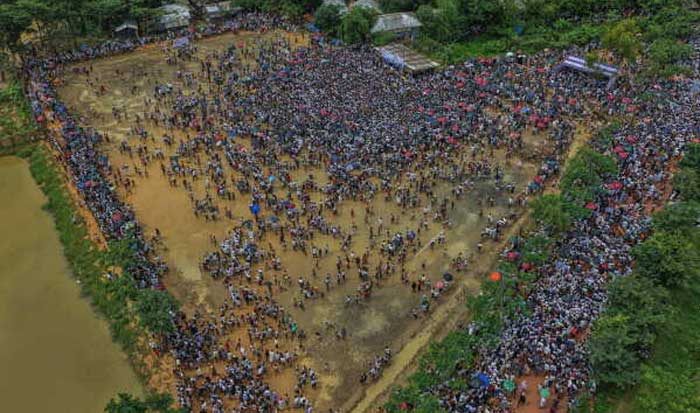
Tens of thousands of Rohingya refugees living in camps in Bangladesh rallied Tuesday, demanding a safe return to their home state in Myanmar, nine years after fleeing a brutal military crackdown.
The demonstrators urged the international community to help ensure security in Rakhine state as they marked the “Ninth Anniversary of Rohingya Genocide Day.”
More than 1 million Rohingya refugees now live in sprawling camps around Cox’s Bazar in southeastern Bangladesh. Most fled Myanmar in 2017 after the military launched a crackdown in Rakhine state following attacks by a Rohingya insurgent group.
Bangladesh has twice attempted to begin repatriation efforts, but none of the refugees agreed to return, citing security concerns. Dhaka has said it will not force anyone to go back.
The International Court of Justice held hearings in January in a case accusing Myanmar of genocide against the Rohingya. During the three-week proceedings, the court examined evidence and testimony related to mass killings, sexual violence and the destruction of villages. Myanmar has rejected the genocide allegations, saying its military campaign was a legitimate counterterrorism operation.
The 2017 crackdown forced more than 700,000 Rohingya to cross into Bangladesh, joining over 300,000 refugees who had arrived in earlier waves of violence.
Security in Rakhine has deteriorated further in recent years, with the Arakan Army fighting Myanmar government forces.
“Whether it is the Arakan Army or the Myanmar military, as long as they continue playing this double game, the situation in Arakan, or Rakhine, will not become safe,” Rohingya refugee leader Sayed Ullah said.
Earlier this month, Myanmar’s military-backed government said more than 300,000 Rohingya refugees in Bangladesh were former residents of Rakhine and would be allowed to return once security conditions improve.
Bangladesh has disputed Myanmar’s figures and criticised its refusal to recognise the refugees as Rohingya, saying its use of the term “Bengali” seeks to deny their identity.
Comments are closed.