
Rising Taiwan: The Global Crucible of Microchips and Geopolitics

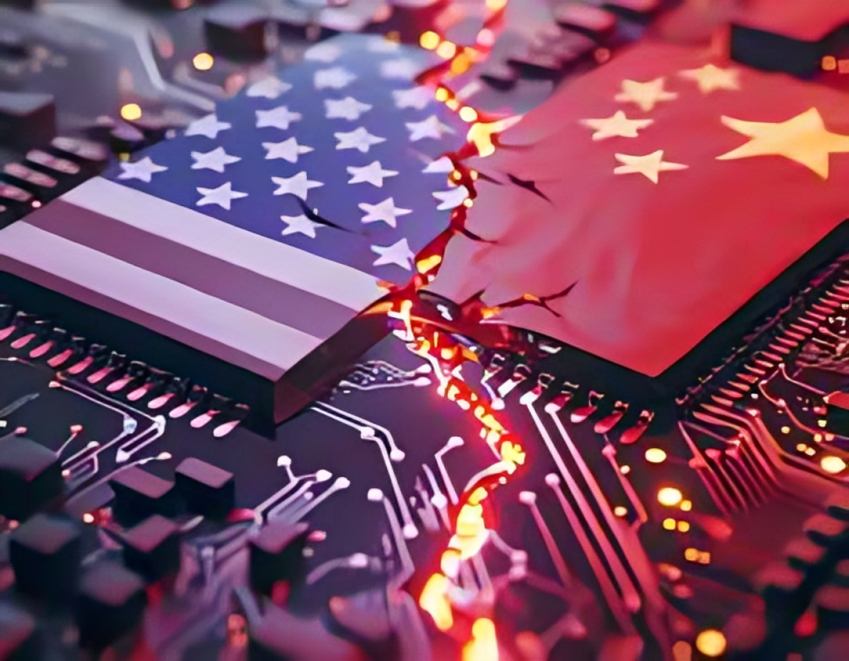
Taiwan has emerged as a pivotal player in the global economy and geopolitics, largely due to its dominance in the semiconductor industry, often referred to as its “Silicon Shield.” The Taiwan Semiconductor Manufacturing Company (TSMC), the world’s leading chip foundry, produces over 60% of global semiconductors and 90% of the most advanced chips, powering everything from smartphones to fighter jets. This critical role places Taiwan at the heart of U.S.-China tensions, as both superpowers vie for technological and strategic supremacy. With escalating geopolitical risks in the Taiwan Strait, Taiwan’s semiconductor prowess shapes global supply chains, economic security, and military capabilities. This article explores Taiwan’s rise as a microchip powerhouse, the geopolitical implications of its dominance, challenges to its position, and strategies to ensure resilience, with a special note on key stakeholders impacted by its role.
Taiwan’s Semiconductor Dominance
Taiwan’s semiconductor industry, spearheaded by TSMC, has transformed the island into an indispensable node in the global economy:
-
Market Leadership: Founded in 1987 by Morris Chang, TSMC produces 60% of the world’s semiconductors and 92% of advanced chips (7-nanometer or smaller), supplying tech giants like Apple, Nvidia, and AMD. Its market capitalization reached $492.96 billion in June 2022, surpassing major global firms.
-
Technological Edge: TSMC’s advanced manufacturing processes, including 3-nanometer and planned 2-nanometer chips by 2025, outpace competitors like Samsung and Intel. Its focus on foundry services—manufacturing chips designed by clients—has made it a linchpin for fabless companies.
-
Economic Impact: The semiconductor sector accounts for a significant portion of Taiwan’s GDP, with TSMC alone consuming 7.2% of the island’s power output by 2022. Taiwan’s chips are integral to industries ranging from consumer electronics to automotive and defense.
Taiwan’s strategic focus on semiconductors began in 1974 with government-backed technology transfers from RCA, followed by sustained investment in infrastructure and talent development. The Taiwanese government’s policies, including tax incentives and cybersecurity measures, have bolstered the industry’s growth.
Geopolitical Significance: The Silicon Shield
Taiwan’s dominance in semiconductors has created a “Silicon Shield,” a term describing how its critical role in global supply chains deters military aggression, particularly from China, which claims Taiwan as a renegade province:
-
Strategic Asset: TSMC’s chips are vital for both U.S. and Chinese technology sectors, making Taiwan’s stability crucial. A Chinese invasion or blockade could disrupt 60% of global chip supply, causing economic devastation estimated at $1 trillion annually in the first few years.
-
U.S.-China Rivalry: The U.S. relies on TSMC for advanced chips, with 13% of global chip production in 2019, down from 37% in 1990. U.S. export controls, initiated under the Trump administration and expanded by Biden, have targeted Chinese firms like Huawei, cutting them off from TSMC’s supply to curb China’s technological rise.
-
Global Dependence: Taiwan’s chips power 5G networks, AI, quantum computing, and military applications, making it a focal point for nations like Japan, Germany, and the EU. In 2021, the U.S., Germany, and Japan appealed to Taiwan to address a global chip shortage, highlighting its influence.
However, some analysts, like Matthew Pottinger, argue the Silicon Shield is not foolproof, as China’s actions may not align with rational economic calculations, increasing the risk of conflict.
Corporate and Policy Responses
Taiwan’s semiconductor dominance has prompted global efforts to mitigate supply chain vulnerabilities:
-
TSMC’s Global Expansion: To diversify risks, TSMC is investing $100 billion in new fabrication plants in Arizona, supported by the U.S. CHIPS and Science Act, and a multibillion-euro facility in Dresden, Germany, with partners like Bosch and Infineon.
-
U.S. Policy: The U.S. has implemented export controls and invested $52 billion through the CHIPS Act to boost domestic chip production, reducing reliance on Taiwan. However, replicating Taiwan’s expertise and scale remains challenging.
-
China’s Ambitions: China has invested $150 billion (2014–2030) to develop its semiconductor industry, with firms like SMIC achieving 7-nanometer breakthroughs. However, U.S. sanctions and technological gaps hinder China’s self-sufficiency.
-
Allied Cooperation: The “Chip 4” alliance (U.S., Taiwan, Japan, South Korea) and platforms like the Quadrilateral Security Dialogue (QUAD) aim to enhance supply chain resilience and counter Chinese influence.
These efforts reflect a global race to secure chip supplies amid rising tensions in the Taiwan Strait.
Broader Implications
Taiwan’s role as the “global crucible” of microchips has profound implications:
-
Economic: A disruption in Taiwan’s chip supply, whether by conflict, blockade, or natural disaster, could halt production of smartphones, cars, and military equipment, setting the global economy back decades.
-
Geopolitical: Taiwan’s chip dominance amplifies its strategic importance, influencing U.S. defense commitments and China’s reunification calculus. Some U.S. policymakers, like Rep. Seth Moulton, have suggested destroying TSMC’s facilities to prevent Chinese capture, though this idea sparked controversy in Taipei.
-
Technological: Taiwan’s leadership in advanced chips drives innovation in AI, 5G, and IoT, but its concentrated production creates vulnerabilities that rivals exploit through industrial espionage and talent poaching.
Challenges
-
Geopolitical Risks: Escalating tensions in the Taiwan Strait, including Chinese military exercises simulating blockades, threaten supply chain stability. A quarantine scenario by 2027 could severely disrupt TSMC’s operations.
-
Supply Chain Concentration: Taiwan’s 90% share of advanced chip production creates a single point of failure, exacerbated by environmental challenges like droughts and power shortages.
-
Talent and Security: China’s recruitment of Taiwanese engineers and cyberattacks targeting TSMC pose ongoing threats, despite Taiwan’s strengthened cybersecurity measures.
-
Diversification Limits: Building alternative chip production facilities is capital-intensive and time-consuming, with new fabs costing $10 billion and taking years to match Taiwan’s expertise.
Path Forward
To ensure resilience and maintain Taiwan’s pivotal role:
-
Strengthen Alliances: Expand the “triad” cross-platform model (Chip 4, QUAD, GAMS) to coordinate geopolitical risk assessments and supply chain diversification.
-
Diversify Production: Incentivize TSMC and others to expand manufacturing in the U.S., Europe, and Japan, while maintaining Taiwan’s core capabilities.
-
Enhance Cybersecurity: Bolster Taiwan’s defenses against industrial espionage and cyberattacks to protect intellectual property and production continuity.
-
Global Cooperation: Foster multilateral frameworks like the World Semiconductor Council to address supply chain vulnerabilities and reduce reliance on Taiwan.
-
Domestic Resilience: Address Taiwan’s internal challenges, such as power consumption and water shortages, through sustainable infrastructure investments.
Special Note: Key Stakeholders Impacted
┌────────────────────────────────────────────────────────────┐
│ Special Note: Key Stakeholders Impacted by Taiwan’s         │
│ Semiconductor Dominance                                     │
│------------------------------------------------------------│
│ - Tech Companies (e.g., Apple, Nvidia, AMD): Rely on TSMC   │
│   for advanced chips critical to smartphones, AI, and IoT.  │
│ - Automotive Industry: Depend on Taiwanese chips for        │
│   vehicle electronics, with 1,000–3,500 chips per car.      │
│ - Defense Sectors (U.S., Allies): Use TSMC chips for        │
│   missiles, avionics, and military AI applications.         │
│ - Global Governments (U.S., EU, Japan): Seek to secure      │
│   chip supplies and counter China’s technological rise.     │
│ - Taiwanese Economy: Benefits from semiconductor-driven     │
│   GDP growth but faces risks from geopolitical tensions.    │
└────────────────────────────────────────────────────────────┘
Comments are closed.