
Rishabh Pant’s Reluctance Leads to Akash Deep’s Nightwatchman Role in Lord’s Test

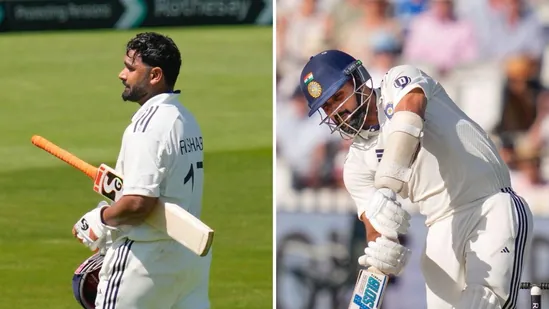
during Day 4 of the third Test of the Anderson-Tendulkar Trophy at Lord’s, India sent pacer Akash Deep as a nightwatchman ahead of vice-captain Rishabh Pant, sparking debate after Deep’s quick dismissal. Former Indian spinner Ravichandran Ashwin revealed on his YouTube channel that Pant’s reluctance to bat in the final 30–40 minutes of a day’s play, famously stating “main nahi jaa raha batting karne” (I am not going out to bat), drove the decision. With India chasing 193 and ending the day at 58/4, the move to protect Pant, a key batter, raised questions about strategy and execution. This article decodes India’s nightwatchman tactic, Pant’s aversion to batting late, and its implications for the Lord’s Test.
Background of the Incident
India, led by Shubman Gill, entered Day 4 of the Lord’s Test needing 193 runs to win and take a 2-1 lead in the five-match series. England, bowled out for 192 in their second innings, set a modest target, but India’s chase faltered early, slipping to 53/3 with over 20 overs left. After Gill’s dismissal, the team opted to send Akash Deep, a lower-order pacer, as a nightwatchman instead of Pant, their in-form No. 5 batter. Deep faced 14 balls, supporting KL Rahul (33*) before Ben Stokes dismissed him in the final over, clean-bowling him with a full delivery after setting him up with a bouncer. India ended the day at 58/4, needing 135 more runs with Rahul and Ravindra Jadeja at the crease.
Ashwin’s revelation on his YouTube channel, ‘Ash ki Baat,’ provided context for the decision. He recounted Pant’s history of avoiding batting late in the day, citing a 2023 Test in Mirpur against Bangladesh, where Pant refused to bat after early wickets fell while chasing 140, leading to Axar Patel and Jaydev Unadkat being sent as nightwatchmen. A similar incident occurred in November 2024 against New Zealand, with Mohammed Siraj sent in to shield Pant. Ashwin noted, “Rishabh does not like batting in the last 30-40 minutes of the day. That’s why they sent Akash Deep.”
Strategic Rationale and Criticism
The nightwatchman strategy, common in Test cricket, involves sending a lower-order player, typically a bowler, to face the final overs of a day to protect a specialist batter from difficult conditions or potential dismissal. Deep’s role was to shield Pant, India’s most dynamic batter, who had scored a century (134) in the first Test at Leeds and 55* in India’s first innings at Lord’s despite a finger injury. The decision, approved by head coach Gautam Gambhir and the team management, aimed to preserve Pant for Day 5, given his ability to dominate attacks, as evidenced by his match-defining 89* in Brisbane in 2021.
However, the move drew scrutiny. Deep’s dismissal, just two balls before stumps, exposed another specialist batter, Jadeja, negating the strategy’s purpose. Fans and analysts, as seen in X posts, questioned the decision, with @DoctorLFC noting Deep’s role in protecting Rahul but acknowledging its risk. Criticism intensified over KL Rahul giving Deep the strike in the final over, with @ShastryNagendra arguing Pant should bear responsibility for requesting the nightwatchman. Others, like @Spenses01, clarified that Deep was sent to protect Pant, not Rahul, but his early dismissal increased pressure on India’s middle order.
Ashwin defended the tactic, stating, “It is about protecting your best batter, yes. But when you send a batter like Akash Deep and then he gets out, it puts you in even more of a situation.” He highlighted the trade-off: while the nightwatchman aims to absorb pressure, a quick dismissal can destabilize the batting side.
Pant’s Batting Philosophy and Context
Pant’s reluctance to bat late in the day aligns with his aggressive, high-risk batting style, which thrives on disrupting bowlers’ rhythm. Described by ESPNcricinfo as a “no-fear, no-brakes” batter, Pant often charges seamers early and avoids conventional defense, making him vulnerable in defensive situations like the final overs under fading light or on bowler-friendly pitches. His discomfort in such scenarios was evident in a 2018 Southampton Test, where he scored a 29-ball duck trying to play defensively against Moeen Ali, vowing “never again” to let bowlers dictate terms.
In the Lord’s Test, the pitch offered occasional movement, especially under cloud cover, and England’s pacers, Jofra Archer and Chris Woakes, were expected to exploit the new Dukes ball in the morning. Pant’s finger injury, which had kept him off the field briefly, may have further influenced his reluctance, though he batted earlier in the match. Ashwin’s anecdotes suggest Pant’s stance is consistent, prioritizing freshness for the next day over facing late pressure.
Performance of Akash Deep
Akash Deep, a rising star from Bihar, was a logical choice for the nightwatchman role after his stellar performance in the second Test at Edgbaston, where he took 10 wickets (4/88 and 6/99), earning praise for his incisive seam movement. His inclusion over Jasprit Bumrah, rested for workload management, proved a masterstroke, and he retained his spot at Lord’s alongside Bumrah’s return. Deep’s personal resilience, amid his sister’s cancer diagnosis revealed during IPL 2025, added emotional weight to his role, with Pant noting the team’s support while emphasizing privacy.
As a nightwatchman, Deep’s task was to survive the final overs, but Stokes’ tactical nous—using a short ball to draw a fielder before delivering a full-length stump-breaker—outfoxed him. Despite the failure, X posts like @pitre_rohit emphasized Deep’s intent to shield Pant, highlighting his role in the team’s broader strategy.
Broader Implications
The nightwatchman decision reflects India’s cautious approach under Gill and Gambhir, prioritizing key players like Pant for match-defining moments. Pant’s form, with two centuries in the series (252 runs at Headingley and 55* at Lord’s), makes him critical to India’s chase of 135 on Day 5, especially with the pitch assisting spinners later. However, the strategy’s failure to protect the middle order, coupled with Rahul facing criticism for exposing Deep, underscores the risks of such tactics in tight chases.
The incident also highlights Pant’s unique approach to Test cricket, where his aggressive style—praised by Sachin Tendulkar for its “clever” paddle sweeps and by Greg Chappell as “reinventing the game”—clashes with the defensive demands of late-day batting. His reluctance could prompt discussions about team strategy, especially in high-stakes series like the Anderson-Tendulkar Trophy, where India aims to build on their 336-run win at Edgbaston.
Comments are closed.