
Revolutionizing Indian Railways: NITI Aayog’s Strategy for Non-Fare Revenue Growth

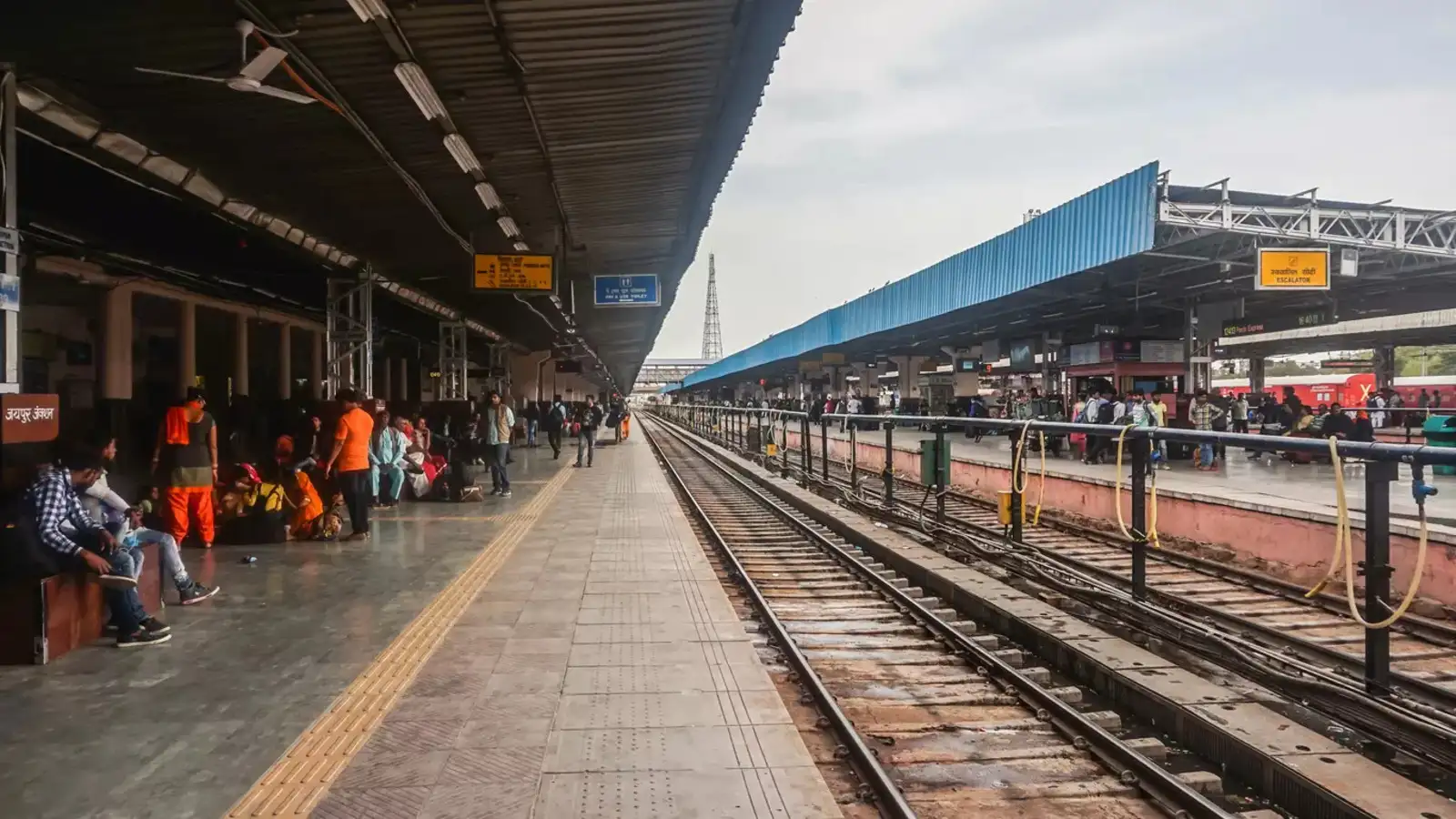
Indian Railways, the lifeline of India’s transportation network, faces a critical challenge in achieving financial sustainability. While it generates substantial revenue from freight and passenger services, its non-fare revenue (NFR) remains a mere 3% of total earnings, significantly lower than global benchmarks like Germany’s Deutsche Bahn (34%) and Japan Railways (30%). In response, NITI Aayog, India’s premier policy think tank, has initiated a comprehensive study to explore innovative strategies for boosting NFR in 2025. This article delves into the objectives, potential strategies, and implications of this initiative, framed through the lens of Needonomics—a consumption model prioritizing essential needs over wants—to ensure sustainable economic growth for Indian Railways.
The Need for Non-Fare Revenue Enhancement
Indian Railways, with its vast network of over 68,000 route kilometers and 1.4 billion annual passengers, is a cornerstone of India’s economy. However, its heavy reliance on freight (65%) and passenger fares (30%) limits its financial flexibility. In FY 2024-25, Indian Railways earned ₹686.86 crore from NFR, a modest increase from ₹588.07 crore in FY 2023-24, yet this constitutes only 3% of its total revenue of ₹2.56 lakh crore. In contrast, global railway systems generate 10-34% of their revenue from non-fare sources, leveraging assets like real estate, advertising, and digital services.
NITI Aayog’s initiative, announced in July 2025, aims to address this gap by commissioning a six-month study to identify and evaluate actionable strategies for maximizing NFR. The study aligns with NITI Aayog’s vision of efficient resource utilization and accelerated economic growth, seeking to reduce Indian Railways’ dependence on traditional revenue streams and enhance its financial self-sufficiency.
Current Non-Fare Revenue Streams
Indian Railways’ existing NFR sources include:
-
Advertising: Revenue from advertisements on trains, platforms, and bridges, contributing a significant portion of NFR.
-
Land Monetisation: Earnings through the Rail Land Development Authority (RLDA), which generated ₹1,371.03 crore in FY 2024-25 from land and redevelopment projects.
-
Commercial Spaces: Income from parking slots, kiosks, and ATM installations at stations.
-
Waste-to-Revenue Initiatives: Revenue from scrap sales and e-auctions.
-
Innovative Schemes: Programs like the New Innovative Non-Fare Revenue Ideas Scheme (NINFRIS), introduced in 2018, which promotes ideas such as LED digital walls, robotic massage chairs, and Body Mass Index kiosks at stations.
Despite these efforts, the low contribution of NFR highlights underutilized assets and missed opportunities, prompting NITI Aayog to explore new avenues and optimize existing ones.
NITI Aayog’s Strategic Approach
NITI Aayog’s study, as outlined in its 14-page Expression of Interest (EoI) document, will conduct a data-driven analysis to propose strategies for boosting NFR. Key focus areas include:
1. Asset Monetisation
Indian Railways owns vast land banks and infrastructure assets, which remain underutilized. The study will explore monetizing these through:
-
Land Leasing and Development: Developing commercial complexes, hotels, and office spaces on railway land, similar to successful airport privatization models. The RLDA’s ₹1,371.03 crore contribution in FY 2024-25 indicates significant potential for scaling up.
-
Station Redevelopment: Transforming 50 high-potential stations into economic hubs via public-private partnerships (PPPs), inspired by global examples like Japan’s station-centric commercial zones. This includes retail spaces, food courts, and entertainment zones.
-
Digital Assets: Leveraging digital platforms for advertising, such as LED screens and Passenger Reservation System (PRS) ticket displays.
2. Public-Private Partnerships (PPPs)
PPPs are central to NITI Aayog’s strategy, mirroring the success of airport modernization. By involving private operators in station redevelopment and service delivery, Indian Railways can access capital and expertise while sharing revenue. For instance, private entities could operate premium services like Vande Bharat trains or develop smart stations with Wi-Fi hotspots and CCTV surveillance.
3. New Revenue Streams
The study will identify untapped areas, including:
-
Solar Energy: Installing solar panels on railway land and station rooftops to generate and sell renewable energy, supporting Indian Railways’ net-zero target achieved in 2025.
-
Tourism: Promoting rail-based tourism packages, such as heritage train journeys (e.g., Palace on Wheels) and scenic routes, to attract domestic and international tourists.
-
Logistics and E-commerce: Partnering with e-commerce giants like Amazon to use railway stations as last-mile delivery hubs, capitalizing on the projected rise in online retail penetration from 4.7% in 2019 to 10.7% in 2024.
-
Digital Services: Expanding Wi-Fi services, introducing app-based ticketing ads, and monetizing data analytics from passenger traffic.
Needonomics and Consumer Wisdom in Railway Services
The Needonomics framework, which emphasizes need-based consumption, is highly relevant to Indian Railways’ NFR strategy. By focusing on services that meet essential consumer needs—such as affordable connectivity, clean stations, and sustainable operations—Indian Railways can enhance its appeal while generating revenue. For instance, offering premium Wi-Fi services or eco-friendly tourism packages aligns with consumers’ growing preference for value-driven and sustainable experiences, as noted in McKinsey’s 2025 Consumer Report.
Consumer wisdom, or street economics, also plays a role. Passengers are increasingly tech-savvy, using platforms like X to share feedback on railway services. This social influence, modeled by the Friedkin-Johnsen framework, can drive demand for enhanced station facilities or tourism packages. However, the rise of counterfeit railway tickets and unauthorized vendors highlights the need for robust digital ticketing systems and ethical partnerships, aligning with Needonomics’ call for responsible consumption.
Economic and Ethical Implications
Boosting NFR could transform Indian Railways’ financial landscape, reducing its reliance on government subsidies and fare hikes. The ₹1.48 lakh crore allocated for railway infrastructure in Budget 2025, coupled with NFR growth, could fund modernization projects like the ₹2.45 trillion Mumbai-Ahmedabad High-Speed Rail Corridor. Additionally, increased NFR would create jobs in construction, retail, and tourism, contributing to India’s projected $100 billion FDI inflow by 2030.
Ethically, the focus on solar energy and sustainable tourism aligns with India’s environmental goals, while PPPs must ensure transparency to avoid exploitation of public assets. Needonomics encourages prioritizing initiatives that benefit passengers and communities, such as affordable station amenities and ethical advertising practices, over profit-driven models that could alienate users.
NITI Aayog’s initiative to boost Indian Railways’ non-fare revenue in 2025 marks a pivotal step toward financial sustainability and modernization. By leveraging asset monetisation, PPPs, and innovative streams like solar energy and tourism, Indian Railways can reduce its dependence on fares while enhancing passenger experiences. Framed through Needonomics, this strategy aligns with consumer demand for value-driven, sustainable services, fostering economic growth and ethical practices. As Indian Railways transforms into a dynamic, self-sufficient entity, the interplay of consumer wisdom, strategic partnerships, and innovative revenue models will redefine its role in India’s economic landscape
Comments are closed.