
‘Respect Sensitivities’: AAIB Responds to US Media Report on Air India Crash

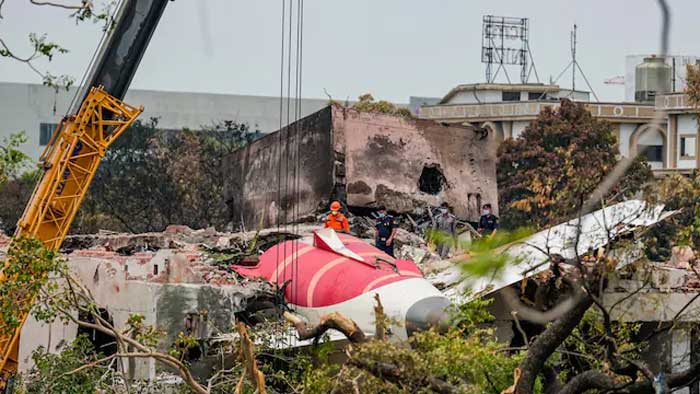
India’s Aircraft Accident Investigation Bureau (AAIB) on Thursday cautioned against speculation over the cause of the recent Air India crash in Ahmedabad, saying it was “too early” to draw conclusions while the investigation remains ongoing.
The statement came a day after The Wall Street Journal published a report citing cockpit voice recordings and early U.S. assessments, which suggested that the aircraft’s captain may have inadvertently cut off fuel supply to both engines just seconds after takeoff.
“Essential to respect the sensitivity of family members of deceased passengers, crew, and others who died on the ground due to the plane crash,” the AAIB said in its official response.
The bureau, which operates under the Ministry of Civil Aviation, emphasized that any updates will be released only when deemed necessary.
“AAIB will publish updates on the Air India plane crash that have technical or public interest value as and when required,” it noted.
Rejecting the premature theories gaining traction, the agency reiterated that only a final report would provide verified causes and recommendations:
“It’s too early to reach any definite conclusions on the Air India plane crash; the probe is still not complete,” AAIB said, adding, “Refrain from spreading premature narratives.”
What Did the WSJ Report Claim?
According to The Wall Street Journal, cockpit audio recordings revealed that First Officer Clive Kunder asked Captain Sumeet Sabharwal shortly after takeoff why he had cut fuel flow to the engines. Sabharwal reportedly denied doing so.
The WSJ cited sources familiar with preliminary assessments by U.S. officials, who are involved in the investigation due to American-manufactured aircraft components. The report pointed to the possibility of human error in the moments after liftoff on June 12, when the crash killed 260 people, including 19 on the ground.
The AAIB’s own preliminary findings, released on Saturday, also noted that one pilot questioned the other about the fuel cutoff — though it stopped short of identifying who said what.
The Journal further reported that Kunder, who was piloting the aircraft at the time, appeared surprised that both engine fuel switches had moved to the “cutoff” position just seconds into the climb.
The report added that the aircraft briefly attempted to restart the engines after the switches were returned to “run,” but by then it had already lost critical altitude and speed.
U.S. pilots who reviewed the AAIB’s early report told the WSJ that it was unlikely Kunder — managing the plane’s initial climb — would have moved the fuel switches himself, suggesting another cause was more plausible.
As investigators continue piecing together the chain of events that led to the fatal crash, the AAIB stressed that speculation at this stage could undermine public understanding and disrespect the victims.
Comments are closed.