

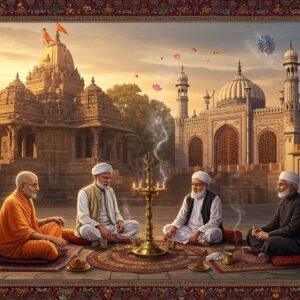
India’s religious television landscape reflects a vibrant tapestry of faith, culture, and commerce. With over 22 operational spiritual channels, this sector has emerged as a significant force, catering to the nation’s diverse religious communities and their deep-rooted spiritual inclinations.
A Diverse Spiritual Ecosystem
India’s religious channels span a wide array of faiths, mirroring the country’s pluralistic ethos. Hinduism dominates with channels like Aastha TV, Sanskar TV, and SVBC (Sri Venkateswara Bhakti Channel), offering devotional programs, live temple rituals, and spiritual discourses. South Indian languages feature a mix of Hindu and Christian channels, notably Malayalam channels like Athmeeya Yathra and Shekinah News TV, which cater to Christian audiences. Islam and Sikhism are represented through Urdu and Punjabi channels, while Jainism has dedicated platforms like Jinvani Channel and Paras TV. Other religions, including Buddhism, are served through limited outlets like Lord Buddha TV, though many smaller faiths rely on online platforms due to the absence of dedicated satellite channels.
Historical Context and Growth
The proliferation of religious channels traces back to the early 2000s, with Aastha TV’s launch in 2000 marking a turning point. The rise of Direct-to-Home (DTH) services and digital platforms has fueled this growth, enabling channels to beam content globally, reaching 160 countries in some cases. This expansion is driven by audience demand, particularly among the elderly and rural viewers who tune in daily for morning prayers, astrology, and mythological series. The sector’s growth also reflects a cultural shift, with younger audiences, including those in their 20s, increasingly turning to spirituality amid modern life’s stresses.
Economic and Cultural Dynamics
Far from being purely altruistic, these channels operate as a commercial enterprise. Revenue primarily stems from godmen and spiritual leaders who pay for airtime, with estimates suggesting 80% of income comes from such sources, while ads contribute only 20%. A 20-minute slot can cost between Rs 1.5-3 lakh per month, depending on popularity and viewership. This model has turned spiritual leaders into corporate-like figures, complete with media managers and slick websites. However, concerns linger, with some channels flagged for anti-national content, highlighting the need for regulatory oversight.
Impact and Challenges
Religious channels play a dual role, fostering spiritual engagement while reinforcing community identity. They offer a platform for cultural preservation, broadcasting traditional treatments like Ayurveda and live festive events. Yet, their focus on specific faiths can deepen segregation, as viewers often limit social circles to their religious communities. The absence of educational channels addressing basic subjects like math or science contrasts sharply with this growth, raising questions about media priorities. Additionally, the lack of HD feeds for most channels and the dominance of Hindi and South Indian languages limit accessibility for non-Hindi regions like Bengal or Marathi-speaking areas.
Future Outlook
As India’s spiritual market expands, religious channels are poised to evolve, potentially integrating more digital content and addressing diverse linguistic needs. Their ability to adapt while navigating commercial pressures and regulatory scrutiny will shape their influence. For a nation where 93% of the population identifies with a religion, these channels remain a vital, if complex, part of the media landscape.
Comments are closed.