
Rahul Gandhi Sparks Controversy After Claiming India’s Armed Forces, Bureaucracy, and Corporates Dominated by Upper Castes

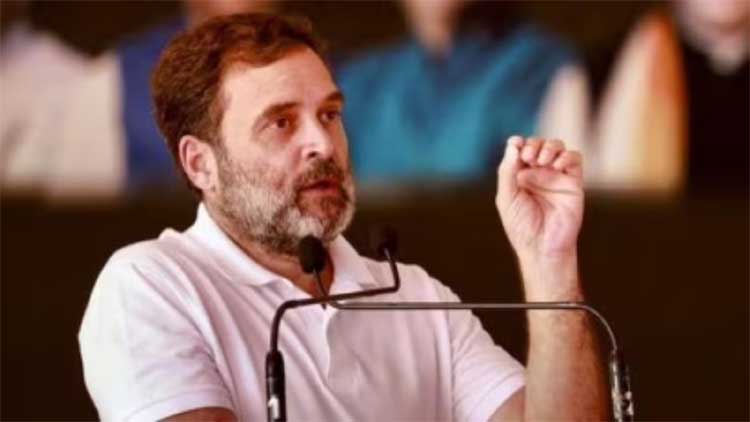
Indian opposition leader Rahul Gandhi has stirred a political storm after claiming that India’s armed forces, corporate sector, and bureaucracy are overwhelmingly dominated by upper-caste communities, leaving Dalits, backward classes, and minorities underrepresented.
Speaking in Bihar’s Kutumba, a constituency reserved for Scheduled Castes, Gandhi said that “90% of India’s population” — including Dalits, OBCs, Adivasis, and minorities — have little to no presence in top positions across key national institutions. His remarks came during the final day of campaigning for the first phase of the Bihar assembly election, set for November 6.
“Take out the list of the 500 biggest companies and look for Dalits, Extremely Backward Classes, Mahadalits, minorities, or Adivasis — you won’t find anyone. All of them come from the 10% population,” Gandhi said, referring to the so-called “savarna” or upper-caste groups.
He added: “All the bank wealth goes to them. All the jobs go to them. They have control over the bureaucracy, judiciary, and even the army. The 90% population — you will not find them anywhere.”
Backlash Over Army Remarks
Gandhi’s comments drew sharp criticism from the ruling Bharatiya Janata Party (BJP), which accused him of attempting to divide the armed forces along caste lines.
“Rahul Gandhi now wants to divide even our Armed Forces on caste lines!” BJP spokesperson Pradeep Bhandari posted on X (formerly Twitter). “The Indian Army, Navy, and Air Force stand for Nation First — not caste, creed, or class. Rahul Gandhi hates our brave armed forces!”
Andhra Pradesh minister Satya Kumar Yadav called Gandhi’s statement “a new low,” adding: “By dragging the Indian Army into his casteist tirade, he has insulted one of the world’s most professional and apolitical forces.”
Mumbai BJP spokesperson Suresh Nakhua went further, saying: “In his hate for PM Modi, he has crossed into hating India.”
Push for a National Caste Census
Gandhi reiterated his demand for a nationwide caste census, saying such data is essential for ensuring fair representation and upholding constitutional equality. The Congress leader has made “social justice” and “anti-caste” politics a central theme of his recent campaigns, particularly in Bihar, where his party is allied with the Rashtriya Janata Dal (RJD) — a party with strong support among backward classes and Muslims.
The Numbers Behind Gandhi’s Argument
Bihar’s 2023 caste survey — the first in decades — found that upper castes make up just over 15% of the state’s population, while Extremely Backward Classes (EBCs) constitute 36%, Other Backward Classes (OBCs) 27%, Scheduled Castes nearly 20%, and Scheduled Tribes about 2%. Muslims account for nearly 18% of Bihar’s population.
At the national level, no official caste-based breakdown exists for the armed forces or the higher judiciary. However, government data presented in Parliament shows that between 2018 and 2022, only 4% of judges appointed to Indian high courts were from Scheduled Castes or Scheduled Tribes, 11% from OBCs, and just 5% from minority communities.
While the government maintains there is no reservation policy in higher judicial appointments, it says it has urged the judiciary to improve social diversity.
A Broader Political Message
Analysts say Gandhi’s latest comments underscore his effort to position the Congress as a champion of marginalized groups ahead of key state and national elections. However, by invoking the armed forces — an institution seen as above politics — Gandhi may have handed his opponents fresh ammunition in the ongoing political battle.
For the Congress, the challenge now lies in framing the controversy as part of a larger debate on representation — without appearing to question the neutrality of the country’s most respected institutions.
Comments are closed.