Rahul Gandhi Set to Drop ‘Hydrogen Bomb’ Allegations on Electoral Malpractice at Delhi Press Conference

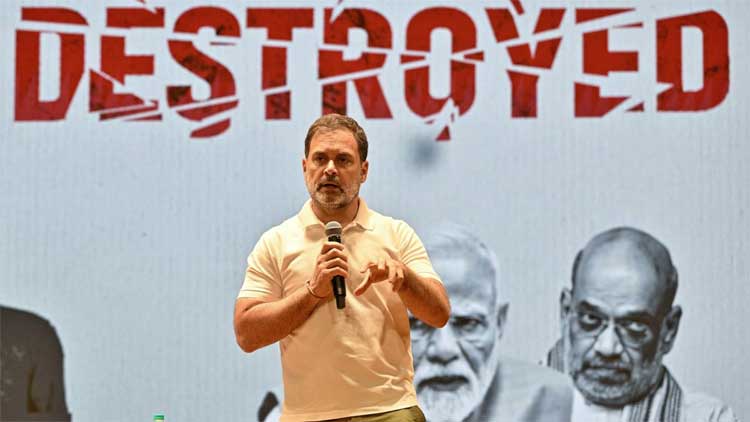
All eyes will be on the Congress headquarters in New Delhi on Wednesday at 12:00 p.m., where Congress MP and Leader of the Opposition in the Lok Sabha Rahul Gandhi is expected to make what he has called a “historic” disclosure on alleged electoral fraud — a revelation he has dramatically termed a political “hydrogen bomb.”
The announcement comes after weeks of mounting suspense. Gandhi has repeatedly hinted at possessing explosive evidence of large-scale manipulation of voter rolls, first teasing the disclosure on September 1 at the conclusion of his 16-day “Voter Adhikar Yatra” in Bihar. At the rally, he described the initial revelations made in Bengaluru’s Mahadevpura constituency as merely an “atom bomb,” suggesting a much bigger exposé was in the pipeline.
Background: The Yatra and the Charge of “Vote Theft”
The “Voter Adhikar Yatra” — a Congress-led campaign from August 17 to September 1 — was positioned as a grassroots mobilisation drive to raise awareness about alleged disenfranchisement and irregularities in the ongoing Special Intensive Revision (SIR) of electoral rolls. The party claims its data teams uncovered cases of mass deletions, duplicate voter entries, and targeted removal of names from backward and minority communities.
Gandhi has since framed the issue as one tied to constitutional rights and social justice, accusing the ruling Bharatiya Janata Party (BJP) of “destroying democracy” and attempting to undermine reservation, education and employment guarantees for the marginalised.
High Stakes, High Suspense
The Congress has not disclosed the nature of the documents or data Gandhi intends to release, but party officials say Wednesday’s briefing will contain “verifiable and system-level evidence” — including voter-roll audits, official correspondence and digital trails.
The political stakes are clear: if the allegations are backed by credible documentation, they could force the Election Commission of India (ECI) — and possibly investigative agencies — to respond. If not, critics are likely to dismiss the event as theatrical escalation ahead of upcoming state and national elections.
Key Questions Ahead of the Briefing
1. Will there be verifiable evidence?
Observers will look for primary-source material — scanned EC records, authenticated datasets, or expert forensic analysis — rather than narrative claims alone.
2. How will institutions respond?
Immediate reactions from the ECI, the Union government or courts could determine whether the story escalates into a legal battle or fizzles into political rhetoric.
3. How far will Congress take this?
The party’s framing — whether it seeks a judicial probe, a parliamentary intervention, or street-level mobilisation — will shape the next phase of the confrontation.
A Political Setup for Maximum Impact
Gandhi’s recurring use of nuclear metaphors has been a calculated messaging strategy — one that has generated huge media traction and rattled political opponents. BJP leaders have already dismissed the “hydrogen bomb” language as “propaganda panic,” while some election officials have urged the Congress to submit its findings formally instead of staging them publicly.
Yet the anticipation surrounding the event — heightened by wall-to-wall TV programming, social media countdowns and a hypercharged election atmosphere — suggests the Congress leader has succeeded in creating a moment of high public expectation.
The press conference will be livestreamed across major Indian news networks and platforms, including Congress’s official YouTube and X (formerly Twitter) accounts. International observers should expect rapid developments — including potential fact-checking, data verification efforts and legal responses — within hours of Gandhi’s disclosure.
Comments are closed.