
Quad Condemns Pahalgam Terror Attack, Raises Alarm Over China’s Military Aggression in Indo-Pacific

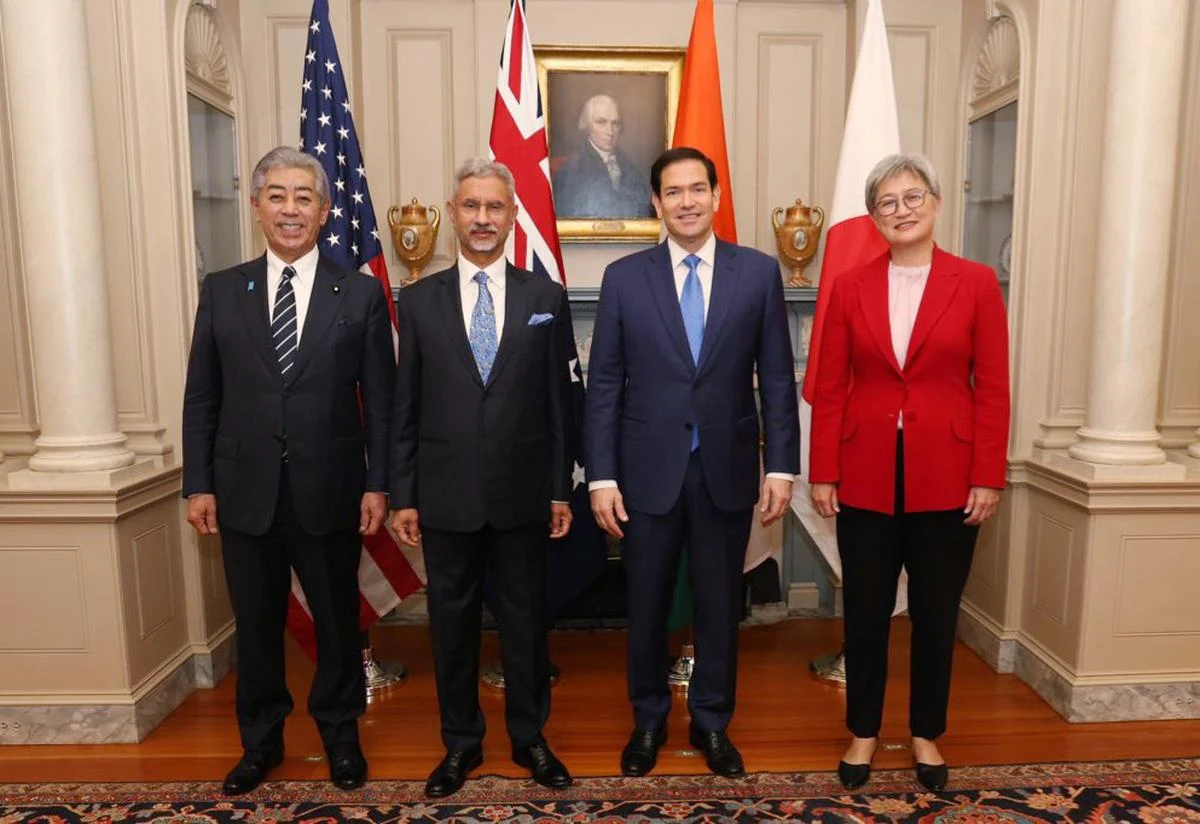
In a strong display of unity, the Quadrilateral Security Dialogue (Quad) comprising India, the United States, Japan, and Australia jointly condemned the recent terror attack in Pahalgam, Jammu & Kashmir, which claimed the lives of several Indian security personnel and civilians. The grouping also expressed deep concern over China’s growing military assertiveness in the Indo-Pacific, signaling a renewed push for regional stability and rule-based international order.
The statement came after the conclusion of a high-level Quad ministerial meeting held in Tokyo, which saw the participation of foreign and defence ministers from the four member nations.
Solidarity with India on Terrorism
The Quad nations unequivocally condemned the Pahalgam attack, terming it “a heinous act of terror” and reaffirmed their solidarity with India in its fight against cross-border terrorism. “We stand with the people of India in this moment of grief and strongly denounce those who sponsor and carry out such cowardly acts,” read the joint statement.
The leaders emphasized the importance of coordinated intelligence sharing and counterterrorism cooperation among Quad countries to tackle transnational terror threats. The incident has once again brought global attention to the persistent threat of terrorism in Kashmir, and India’s long-standing concerns regarding safe havens across its borders.
Rising Tensions in the Indo-Pacific
Apart from terrorism, the Quad voiced serious concerns about China’s increasingly provocative military posture in the South China Sea, Taiwan Strait, and the broader Indo-Pacific region. The ministers pointed to a pattern of coercive behavior, maritime incursions, and militarization of disputed areas by Beijing, which they said undermines regional peace and sovereignty.
“Any attempt to unilaterally alter the status quo through force or coercion is unacceptable,” the statement warned, in a clear reference to China’s recent naval drills and airspace violations near Taiwan and contested waters around the Philippines and Vietnam.
Call for a Free, Open, and Inclusive Indo-Pacific
The Quad leaders reiterated their commitment to ensuring a free, open, inclusive, and resilient Indo-Pacific, governed by international law. They emphasized strengthening maritime domain awareness, upholding freedom of navigation, and protecting critical sea lanes that are vital to global commerce.
Japan’s Foreign Minister stated, “The Indo-Pacific must remain free from aggression and intimidation. The rules-based order is not optional—it is essential.”
Expanded Cooperation in Technology and Security
Alongside defence matters, the Quad also discussed expanding cooperation in cyber security, critical technologies, climate resilience, and disaster response. New initiatives were announced to improve joint naval exercises, satellite tracking systems, and undersea surveillance to counter grey-zone warfare tactics.
The meeting also laid groundwork for an upcoming Quad Summit later this year, likely to be hosted in Canberra, Australia.
The Quad’s strong condemnation of the Pahalgam terror attack and its firm stance against China’s military assertiveness underscores the grouping’s evolving role as a regional security bloc. As threats from both state and non-state actors escalate, the Quad’s unified voice is being seen as a powerful counterbalance in a rapidly changing geopolitical landscape.
Comments are closed.