
Putin’s India Visit in 2025: Strengthening Ties Amid U.S. Tariff Tensions

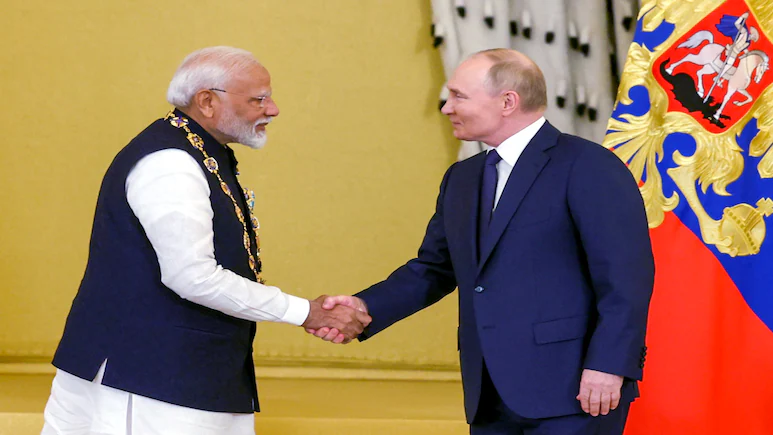
Russian President Vladimir Putin is set to visit India by the end of 2025, as confirmed by National Security Adviser Ajit Doval during his Moscow visit on August 7, 2025. This announcement, reported by Interfax and other outlets, comes amid escalating trade tensions between India and the United States, following President Donald Trump’s executive order imposing a 50% tariff on Indian imports due to India’s continued purchase of Russian oil. The visit, part of the annual India-Russia summit, underscores the deepening strategic partnership between New Delhi and Moscow, even as India navigates a delicate balance with Washington. This article examines the context, objectives, and implications of Putin’s visit, set against the backdrop of U.S.-India trade frictions and global geopolitical dynamics as of August 7, 2025.
Context of the Visit
The announcement of Putin’s visit follows a period of heightened U.S.-India trade tensions. On August 6, 2025, Trump signed an executive order imposing an additional 25% tariff on Indian goods, raising the total to 50%, effective August 28, 2025. This follows an initial 25% tariff imposed on August 7, 2025, targeting India’s import of Russian oil, which constitutes over 35% of India’s energy imports. The U.S. claims these purchases undermine sanctions against Russia amid the Ukraine conflict, now in its fourth year. India has countered that its energy procurement is driven by national interest and market dynamics, with Foreign Ministry officials labeling the tariffs “unfair, unjustified, and unreasonable.”
Doval’s Moscow visit, where he met Russian Security Council Secretary Sergei Shoigu, aimed to strengthen bilateral defence and energy ties. He described past India-Russia summits as “watershed moments” and expressed excitement for Putin’s upcoming trip, noting that dates are “almost finalized.” The visit, initially misreported as occurring in late August, is now confirmed for late 2025, marking Putin’s first trip to India since the Russia-Ukraine conflict began in 2022.
Objectives of Putin’s Visit
Putin’s visit is expected to advance the India-Russia strategic partnership, focusing on:
-
Defence Cooperation: India and Russia have a robust defence relationship, exemplified by the $5.43 billion S-400 missile system deal signed in 2018, with three squadrons already delivered. Discussions will likely explore further acquisitions and joint development, aligning with India’s Atmanirbharta (self-reliance) goals.
-
Energy Security: With Russia as India’s top oil supplier since Western sanctions in 2022, the visit will aim to secure stable energy flows. Bilateral trade reached $65 billion in 2023–24, largely driven by oil imports, and both nations aim to hit $100 billion by 2030 using national currencies.
-
Trade and Investment: India seeks a balanced trade relationship by increasing exports to Russia, currently at $4 billion compared to $60 billion in imports. Initiatives like the Vladivostok-Chennai maritime corridor will be prioritized.
-
Geopolitical Strategy: The visit will reinforce India’s non-aligned stance, balancing ties with Russia against U.S. pressures. Discussions may cover the Ukraine conflict, with India advocating dialogue, as seen in Prime Minister Narendra Modi’s 2024 visits to Moscow and Kyiv.
U.S.-India Trade Tensions
The backdrop of Putin’s visit is the escalating U.S.-India trade war. Trump’s tariffs, affecting 55% of India’s $86.5 billion exports to the U.S., target sectors like textiles, gems and jewellery, and seafood, potentially reducing India’s GDP growth to 6% in 2025–26. Trump has also threatened secondary sanctions on Russian oil buyers unless Moscow halts the Ukraine war by August 8, 2025, a deadline India dismisses as unrealistic.
India’s defiance, articulated by Modi’s vow to protect national interests, reflects frustration with U.S. demands, especially since Washington previously encouraged India to buy Russian oil to stabilize global markets. Posts on X highlight a trust deficit, with users like @ItsShubhangi noting Trump’s rejection of India’s trade concessions as a misstep targeting agriculture, a red line for New Delhi.
Geopolitical Implications
Putin’s visit underscores India’s strategic autonomy:
-
India-Russia Ties: The summit will reinforce a decades-long partnership, with Russia as a key defence and energy supplier. Modi’s 2024 Moscow visit, where he received Russia’s highest civilian honor, and Putin’s acceptance of India’s invitation signal mutual priority.
-
U.S. Relations: The tariffs strain India’s role as a U.S. partner in the Quad, countering China. India’s refusal to align fully with U.S. positions in the Asia-Pacific, as noted on X, could shift regional dynamics.
-
BRICS and Multilateralism: Brazil’s proposal for a BRICS discussion on tariffs, involving India, China, and Russia, suggests a coordinated response to U.S. pressure, potentially strengthening India’s multilateral leverage.
Challenges and Opportunities
The visit faces challenges:
-
U.S. Pressure: Further tariffs or sanctions could complicate India’s economic strategy, forcing a reevaluation of Russian oil reliance.
-
Domestic Backlash: Indian exporters, facing a 40–50% export drop, demand government action, which could limit concessions to Russia.
-
Geopolitical Balancing: India must navigate U.S. and Russian expectations while maintaining ties with China, where Modi is scheduled to visit on August 28, 2025.
Opportunities include:
-
Defence Innovation: Collaboration on projects like Agnishodh at IIT Madras could extend to Russia, enhancing indigenous defence capabilities.
-
Economic Diversification: India can leverage Russia’s market to offset U.S. tariff losses, aligning with Atmanirbharta goals.
-
Diplomatic Influence: India’s neutral stance on Ukraine positions it as a mediator, as seen in Modi’s 2024 Kyiv visit, enhancing its global stature.
Conclusion
Vladimir Putin’s planned visit to India by the end of 2025, confirmed on August 7, 2025, by Ajit Doval, marks a pivotal moment in India-Russia relations amid U.S.-India trade tensions. As the U.S. imposes a 50% tariff on Indian goods over Russian oil purchases, India’s strategic partnership with Russia offers a counterbalance, reinforcing defence, energy, and trade ties. The visit, part of the annual India-Russia summit, will navigate complex geopolitical currents, from the Ukraine conflict to BRICS coordination. By prioritizing strategic autonomy and economic resilience, India aims to turn U.S. pressure into an opportunity for Atmanirbharta, ensuring its interests remain paramount in a turbulent global landscape.
Comments are closed.