
Priyank Kharge’s Call to Ban RSS: Politics of Distraction or Ideological Stand?

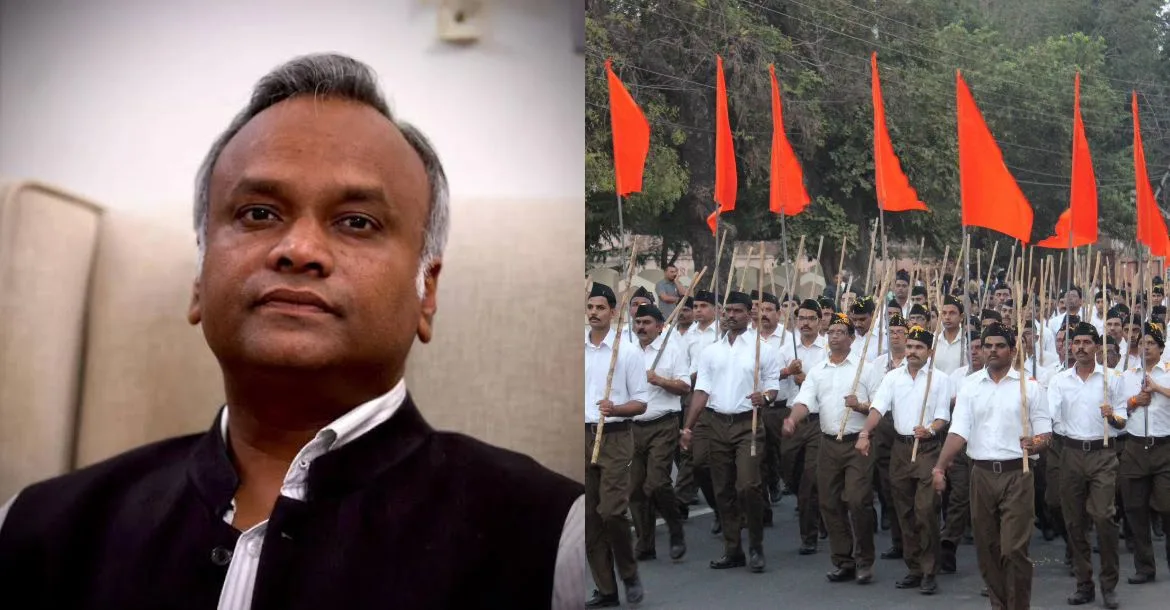
Karnataka Minister and senior Congress leader Priyank Kharge has sparked a fresh political storm by calling for a ban on the Rashtriya Swayamsevak Sangh (RSS), labelling it a “threat to the constitutional fabric of India.” His remarks have ignited fierce reactions from the BJP and reignited the decades-long ideological clash between the two national parties.
While Kharge insists that the call stems from a commitment to secular and constitutional values, critics argue that it may be an attempt to distract from governance issues and consolidate a political base.
The Statement and the Backlash
Kharge, speaking at a party event in Kalaburagi, said, “If PFI could be banned for its activities, why not the RSS, which has a history of spreading communal poison?” He further accused the Sangh Parivar of “working against India’s pluralistic ethos.”
The BJP swiftly condemned the comments. Union ministers and BJP leaders across Karnataka and Delhi called Kharge’s statement divisive and irresponsible, with BJP national spokespersons accusing the Congress of reviving outdated anti-RSS rhetoric for political gains.
Political Timing and Context
The timing of the statement is significant. It comes at a moment when the Congress government in Karnataka is facing criticism over rising inflation, urban infrastructure gaps, and internal party rifts. Opposition leaders claim Kharge’s remark is a diversion tactic ahead of upcoming civic elections in the state.
However, Kharge stood by his statement, saying the Congress has always taken a clear position against “forces that challenge India’s secular democracy.”
Congress and RSS: A History of Clash
The Congress-RSS rivalry is not new. The two organisations have been at ideological odds since the post-independence period. The RSS was banned in 1948 following Mahatma Gandhi’s assassination, though the ban was later lifted. Since then, calls for a ban have periodically resurfaced, often tied to broader political dynamics.
Congress leaders such as Jawaharlal Nehru, Indira Gandhi, and Sonia Gandhi have criticised the RSS’s ideology, alleging it promotes Hindu majoritarianism. The Sangh, meanwhile, maintains that it is a nationalist and cultural organisation, and that banning it would be an attack on the democratic rights of association and expression.
Impact on National Politics
Kharge’s comment may have limited legislative consequence — the RSS is a legally permitted entity — but it carries symbolic and political weight. It could energise both camps: the BJP may use it to rally its base, accusing the Congress of being anti-Hindu, while the Congress may attempt to consolidate secular and minority support.
The debate also plays into national narratives ahead of 2026 state elections and 2029 general elections, where polarisation and ideological identity politics are expected to be prominent.
Strategic or Ideological?
Observers are divided on whether Kharge’s call is a calculated political move or a genuine ideological stance. Some see it as aligning with the Congress’s recent efforts to reposition itself as a defender of constitutional secularism in the face of the BJP’s growing ideological dominance. Others see it as a risky political gamble, especially given the RSS’s grassroots strength and wide-reaching influence through its affiliated organisations.
Priyank Kharge’s statement revives the longstanding ideological fault lines in Indian politics. Whether it strengthens the Congress’s ideological position or serves as a short-term distraction remains to be seen. What is certain is that the debate over the role of organisations like the RSS in Indian society and politics is far from over — and will likely remain a flashpoint in the country’s evolving political discourse.
Comments are closed.