
POTUS and Secretary Rubio Focus on Implementing Multifaceted Cooperation under US‑India COMPACT

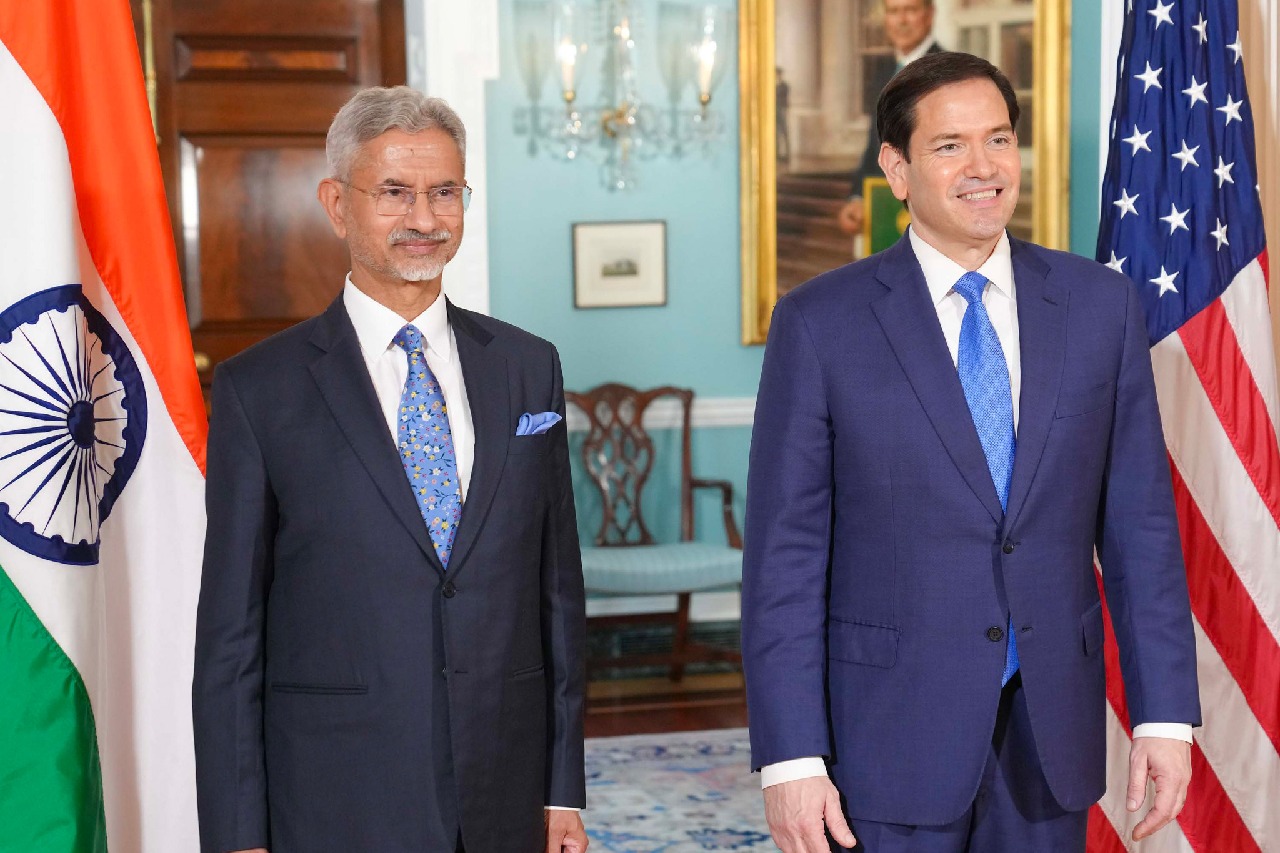
President of the United States, alongside Secretary of State Marco Rubio, held high-level discussions with India’s External Affairs Minister S. Jaishankar to implement the US‑India COMPACT — Catalysing Opportunities for Military Partnership, Accelerated Commerce and Technology. The talks, held on the sidelines of the Quad Ministerial Summit, focused on delivering actionable outcomes across defence, commerce, energy, technology, and security.
Key Areas of Cooperation
Defence & Security
A new 10-year framework under the Major Defence Partnership was advanced, with an emphasis on co-development of weapon systems, joint exercises, enhanced military interoperability, and strategic defence dialogues. This strengthens the operational alignment between the two democracies in the Indo-Pacific and beyond.
Trade & Commerce – ‘Mission 500’
Both sides reaffirmed commitment to the Mission 500 target, which aims to scale bilateral trade to $500 billion by 2030. The agenda includes tariff realignment, easing regulatory barriers, enhancing market access, and fostering investment in key industries including manufacturing, agri-tech, and digital goods.
Energy Collaboration
Energy security was a major pillar of discussion, with renewed focus on cooperation in oil, natural gas, and civil nuclear energy. Both countries committed to joint initiatives supporting India’s clean energy transition, including grid modernization, battery storage, and green hydrogen.
Technology & Innovation
Significant attention was given to technology partnerships in artificial intelligence, semiconductors, cyber security, quantum computing, and space exploration. The two sides discussed aligning innovation ecosystems and creating cross-border R&D frameworks to facilitate deeper tech exchange.
Security and Migration Cooperation
The dialogue extended to counter-terrorism, border security, illegal immigration, and narcotics control. Both leaders expressed the need to enhance joint intelligence-sharing and law enforcement collaboration under the broader Indo-Pacific security architecture.
Strategic Significance
The US‑India COMPACT was launched during Prime Minister Narendra Modi’s 2025 visit to Washington, and it represents a comprehensive, trust-based blueprint for the next decade of strategic cooperation. The plan is designed to be outcome-driven and institutionalised across departments and sectors.
At the Quad Ministerial level, the US and India reinforced shared goals of free and open Indo-Pacific, infrastructure development, supply chain resilience, and critical mineral access.
Outlook and Next Steps
Initial outcomes under the COMPACT are expected to be showcased before the end of 2025. These include new defence contracts, expanded energy infrastructure investments, a tech innovation corridor, and regulatory alignments aimed at trade facilitation.
On the economic front, the Mission 500 strategy will guide bilateral trade expansion efforts. It will be backed by focused negotiations on reducing tariffs, simplifying customs, and establishing dispute resolution mechanisms.
The latest engagement between POTUS, Secretary Rubio, and External Affairs Minister Jaishankar marks a shift from policy framework to execution and delivery. The US‑India COMPACT is emerging as the anchor for a multidimensional partnership that not only boosts economic growth but also strengthens regional and global security. With the convergence of strategic, economic, and technological interests, both nations are poised to enter a new phase of their relationship built on trust, ambition, and shared democratic values.
Comments are closed.