
PM Modi Mourns the Loss of Former Nigerian President Muhammadu Buhari

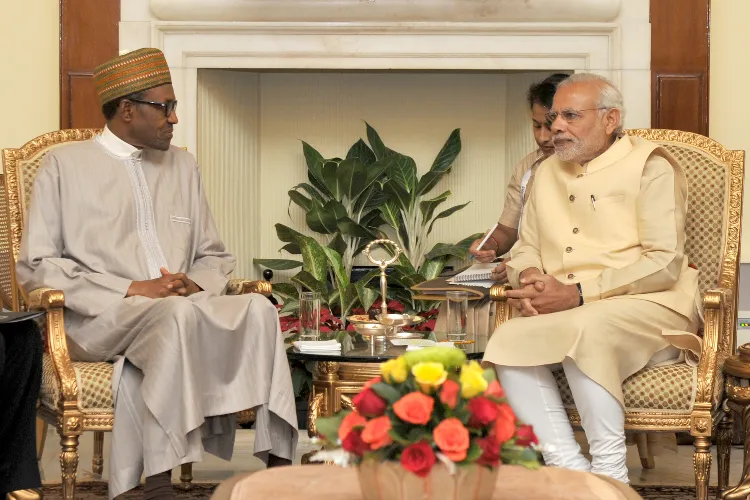
Indian Prime Minister Narendra Modi expressed profound sorrow over the passing of former Nigerian President Muhammadu Buhari, who died in London on July 13, 2025, at the age of 82. Buhari, a towering figure in Nigerian politics, served as Nigeria’s military head of state from 1983 to 1985 and as its democratically elected president from 2015 to 2023. Modi’s condolences, shared via a post on X, highlighted Buhari’s wisdom, warmth, and unwavering commitment to strengthening India-Nigeria relations. The passing of Buhari, a polarizing yet influential leader, has prompted tributes from across the globe, with Modi’s message underscoring the deep diplomatic ties between India and Nigeria.
Background of Buhari’s Passing
Muhammadu Buhari, born on December 17, 1942, in Daura, Katsina State, passed away in a London clinic following a prolonged illness, as confirmed by his spokesperson, Garba Shehu. The former president had been receiving medical treatment in the British capital, a recurring necessity during his presidency due to undisclosed health issues. Nigerian President Bola Tinubu, Buhari’s successor, announced that national flags would be flown at half-mast and directed Vice President Kashim Shettima to accompany Buhari’s body back to Nigeria for burial in accordance with Muslim rites in Katsina. The news of Buhari’s death has sparked a mix of tributes and reflections on his complex legacy, both within Nigeria and internationally.
Modi’s Condolence Message
In a heartfelt post on X, Prime Minister Modi wrote, “Deeply saddened by the passing of former President of Nigeria Muhammadu Buhari. I fondly recall our meetings and conversations on various occasions. His wisdom, warmth and unwavering commitment to India–Nigeria friendship stood out. I join the 1.4 billion people of India in extending our heartfelt condolences to his family, the people and the government of Nigeria.” This message, echoed by Indian media outlets such as The Statesman and WIONews, reflects the strong bilateral relationship fostered during Buhari’s tenure. Modi’s tribute emphasized Buhari’s personal qualities and his contributions to deepening diplomatic and economic ties between the two nations.
Buhari’s Political Legacy
Muhammadu Buhari’s political career spanned decades, marked by both military and civilian leadership. A retired Major General, Buhari first rose to prominence after the 1983 military coup that ousted President Shehu Shagari, leading Nigeria as head of state until 1985. His regime was known for its strict anti-corruption measures and the controversial “War Against Indiscipline,” which aimed to instill societal discipline but was criticized for authoritarian methods. Deposed by another coup in 1985, Buhari re-emerged as a civilian leader in 2015, becoming the first opposition candidate to defeat an incumbent president, Goodluck Jonathan, in Nigeria’s history. Re-elected in 2019, he served until 2023, handing over power to Tinubu in a peaceful transition.
Buhari’s presidency focused on combating corruption, addressing the Boko Haram insurgency, and promoting economic diversification. His administration recovered significant embezzled funds and invested in infrastructure and agricultural reforms. However, his tenure was marred by challenges, including Nigeria’s first recession in decades, persistent security issues, and criticism for slow governance, earning him the nickname “Baba Go Slow.” Despite these setbacks, Buhari retained a loyal following in northern Nigeria, where his austere lifestyle and perceived integrity resonated with the public.
India-Nigeria Relations Under Buhari
Buhari’s commitment to India-Nigeria friendship, as noted by Modi, was evident in several initiatives. During his presidency, Nigeria and India strengthened economic ties, particularly in energy, trade, and technology. Buhari’s visits to India and meetings with Modi fostered agreements on infrastructure development and cultural exchanges. His administration’s focus on agricultural reforms aligned with India’s expertise in the sector, leading to collaborations in food security. Posts on X, such as those from @mini_yoyo, highlight Buhari’s role in advancing these ties, including his handling of a $6.2 million theft scandal, which underscored his anti-corruption stance. The mutual respect between Modi and Buhari was a cornerstone of their diplomatic engagements, contributing to a robust partnership between the two nations.
Reactions to Buhari’s Death
Buhari’s passing has elicited varied responses, reflecting his polarizing legacy. Nigerian President Tinubu described him as “a patriot, a soldier, a statesman,” while former President Olusegun Obasanjo called him a “cool patriot” whose statesmanship would be missed. The African Democratic Congress (ADC) praised Buhari’s humility and integrity, praying for his soul to rest in peace. Internationally, leaders like Ethiopia’s Prime Minister and Sierra Leone’s President Julius Maada Bio expressed condolences, emphasizing Buhari’s regional influence. However, some analysts, such as Alexis Akwagyiram, noted that while Buhari’s 2015 victory marked a democratic milestone, his tenure failed to fully address Nigeria’s security and economic challenges, leaving a mixed legacy.
Social media reactions on X captured the divided sentiments. While some users celebrated Buhari’s anti-corruption efforts and democratic transition, others criticized his economic policies and handling of security issues, particularly the spread of Boko Haram and farmer-herder conflicts. These contrasting views underscore the complexity of Buhari’s impact on Nigeria.
Implications of Buhari’s Passing
Buhari’s death comes at a time when Nigeria faces ongoing security and economic challenges, many of which persisted during his presidency. His passing may prompt renewed discussions about Nigeria’s leadership and the need for effective governance to address issues like insurgency, corruption, and inflation. For India-Nigeria relations, Modi’s tribute signals a commitment to maintaining strong ties with Nigeria under Tinubu’s leadership. The return of Buhari’s body to Katsina and the national mourning period will likely focus attention on his contributions and shortcomings, shaping Nigeria’s political discourse in the lead-up to future elections.
Prime Minister Narendra Modi’s condolence message for Muhammadu Buhari reflects not only personal respect but also the deep ties between India and Nigeria forged during Buhari’s tenure. As a military ruler and later a “converted democrat,” Buhari left an indelible mark on Nigeria’s history, achieving a historic electoral victory in 2015 but facing criticism for economic and security challenges. His death at 82 marks the end of an era for Nigerian politics, with Modi’s tribute highlighting the enduring friendship between the two nations. As Nigeria mourns, the world reflects on Buhari’s legacy as a leader who navigated complex challenges with a commitment to integrity, even if his promises of change remained partially unfulfilled.
Comments are closed.