
Penny Shortage Hits U.S. as Trump’s Decision to Halt Minting Sparks Chaos for Retailers and Banks

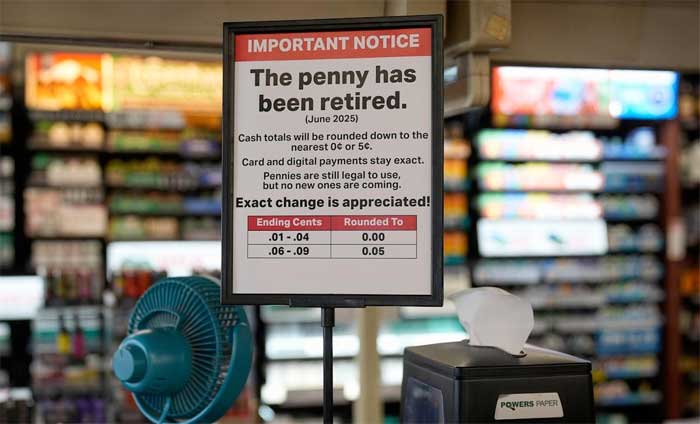
The United States is officially running out of pennies — and it’s beginning to cause real trouble for businesses and consumers alike.
Months after President Donald Trump announced the end of penny production, merchants and banks across the country are grappling with shortages that make it nearly impossible to give exact change. Banks have begun rationing what little supply they have, and some retailers are losing millions as they round down prices to avoid legal issues.
One convenience store chain, Sheetz, even launched a short-lived promotion offering a free soda to anyone who brought in 100 pennies. “It’s a chunk of change,” said Dylan Jeon, senior director of government relations with the National Retail Federation.
The shortage began in late summer and has deepened heading into the busy holiday season. Retailers and trade groups — many of whom had long supported scrapping the penny — now say the abrupt rollout, without federal guidance, has caused unnecessary disruption.
“We’ve advocated for abolishing the penny for decades. But this is not how it should have happened,” said Jeff Lenard of the National Association of Convenience Stores.
Trump announced on February 9 that the U.S. Mint would stop producing pennies, citing wasteful costs. In 2024, it cost 3.7 cents to make a one-cent coin, and 13.8 cents to mint a nickel. “Let’s rip the waste out of our great nation’s budget, even if it’s a penny at a time,” Trump wrote on Truth Social.
By June, the final batch of pennies was minted, and by August, all remaining coins had been distributed. But without a transition plan, many businesses have been left stranded.
At Guaranty Bank & Trust Co. in Louisiana, president Troy Richards said his branches ran out of pennies within two weeks of the Fed’s announcement that shipments would be curtailed. “Little did we know those shipments were already over,” he said.
In its last full year of production, the Mint issued 3.23 billion pennies, more than any other coin. Yet most of those coins end up in jars and drawers rather than recirculating. Despite that inefficiency, pennies accounted for a massive share of cash transactions — and their sudden disappearance has thrown cash-based commerce into confusion.
The Treasury Department estimates the halt will save taxpayers $56 million annually, while the Mint — which remains profitable through other coin production and collector sets — reported $182 million in seigniorage in 2024.
The shortage has been worsened by logistical bottlenecks. About one-third of the Federal Reserve’s 170 coin terminals are now closed to penny deposits and withdrawals, meaning even regions with surplus coins can’t ship them to areas facing shortages.
“As penny inventory is depleted, coin distribution locations accepting penny deposits and fulfilling orders will vary over time,” a Federal Reserve spokesperson said.
Legal constraints add another layer of complexity. In several states, rounding up cash transactions is prohibited by consumer protection laws — forcing retailers to round down instead. For large chains, that’s no small loss. Kwik Trip, a Midwest convenience store chain, said rounding down every cash transaction could cost it about $3 million this year.
A bill in Congress, the Common Cents Act, proposes rounding all cash transactions to the nearest nickel, up or down — but critics warn rounding up could unfairly burden consumers.
Other nations have handled similar transitions more smoothly. Canada, for example, phased out its one-cent coin over a yearlong period starting in 2012, and continues to redeem old coins today. The U.K.’s shift to its decimal system in the 1960s and ’70s also took years of planning.
The U.S., by contrast, eliminated the penny overnight, with no Congressional action or regulatory framework to guide banks or retailers.
“We don’t want the penny back,” said Lenard. “We just need clear direction from Washington. Otherwise, this problem is only going to get worse.”
Comments are closed.