
Paris Climate Agreement Turns 10, but World Still Off Track on Warming Goals

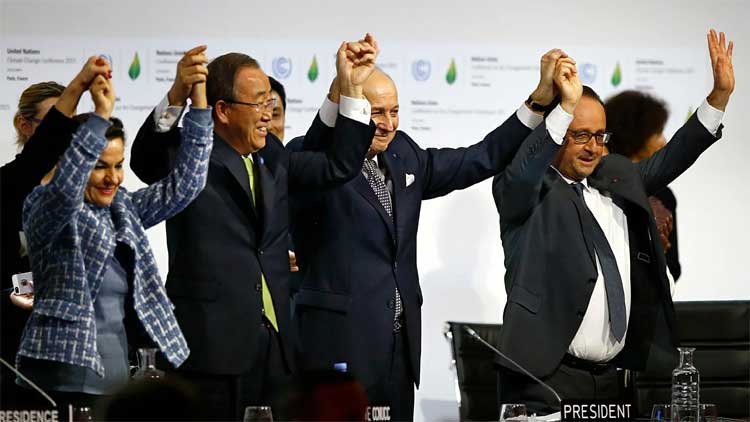
A decade after the landmark Paris Climate Agreement was signed in December 2015, the world remains far from meeting its central objective of limiting global warming, even as the impacts of climate change intensify across continents.
Adopted by 195 countries at the UN Climate Change Conference (COP21) in Paris, the agreement aimed to keep the global temperature rise well below 2°C above pre-industrial levels, with efforts to cap warming at 1.5°C. Ten years on, those targets appear increasingly out of reach.
According to the UN Environment Programme (UNEP), current projections place global temperature rise this century between 2.3°C and 2.5°C, while existing national policies could push warming to around 2.8°C. UN Secretary-General António Guterres has warned that breaching the 1.5°C threshold in the coming years is now “inevitable”.
Climate impacts are already being felt worldwide. The World Bank has warned that climate change could force up to 216 million people to migrate within their own countries by 2050 due to water scarcity, falling agricultural productivity, and rising sea levels. Europe, identified by the World Meteorological Organization as the fastest-warming continent, has witnessed devastating wildfires, floods and storms in recent years.
Extreme weather events have grown more frequent and severe. From deadly floods in Spain’s Valencia region to destructive wildfires in southern Europe and record-breaking heatwaves across France, scientists say these events are consistent with rising global temperatures and increased atmospheric moisture.
Despite the urgency, political momentum has faltered in parts of the world. During his first term, US President Donald Trump withdrew the United States from the Paris Agreement, calling it inconsistent with American interests. Climate advocates argue such moves have weakened global cooperation at a critical time.
UN experts warn that climate change could slash global GDP by 4% by 2050 and cost millions of lives if governments fail to act collectively. Recent UN reports have called for a “whole-of-society” approach, urging rapid transformation of energy, food and industrial systems to curb emissions and protect ecosystems.
Environmental groups marked the agreement’s tenth anniversary with protests in Paris, accusing world leaders of prioritising fossil fuel interests over climate action. Greenpeace described the past decade as one marked by rising misinformation, weakened environmental protections and missed targets.
As the Paris Agreement enters its second decade, scientists and activists alike stress that the window to prevent the most catastrophic impacts of climate change is rapidly closing. Without urgent, coordinated action, they warn, the goals set in Paris risk becoming little more than unfulfilled promises.
Comments are closed.