
Pakistan Warns of ‘Open War’ if Istanbul Talks with Afghanistan Fail

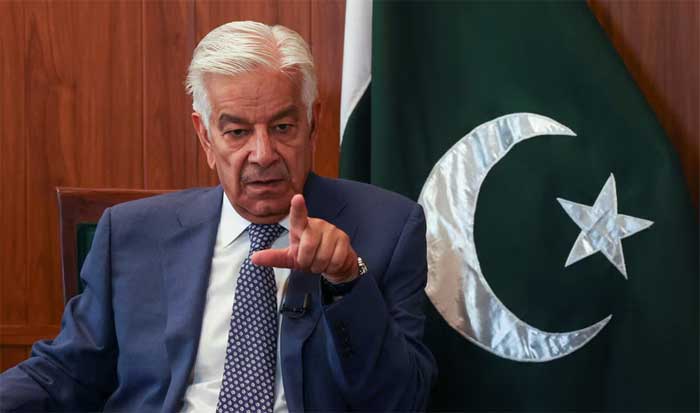
Pakistan’s Defence Minister Khawaja Muhammad Asif on Saturday warned that failure to reach an agreement with Afghanistan during ongoing talks in Istanbul could lead to “open war,” amid mounting tensions along the border.
“See, Afghanistan wants peace — but failure to reach a deal means open war,” Asif was quoted as saying by Reuters.
His remarks came as the second round of talks between Afghan and Pakistani officials began in Istanbul, Turkey, aimed at easing border hostilities and establishing a lasting ceasefire after two weeks of deadly clashes.
Border clashes escalate tensions
The recent confrontation, which left dozens dead including civilians, began after explosions in central Kabul — attacks the Taliban government blamed on Pakistan. Islamabad retaliated with strikes near the border, triggering fierce exchanges that briefly paused under a ceasefire before collapsing within days.
A second truce, brokered by Qatar and Turkey, was reached last Sunday and has largely held since.
Focus on security and border stability
At Saturday’s talks, negotiators are expected to finalize “mechanisms” for maintaining stability outlined during earlier discussions in Doha, AFP reported. The Afghan delegation, led by Deputy Interior Minister Haji Najib, arrived in Turkey on Friday, while Pakistan sent two senior security officials, according to The Express Tribune.
“The delegation of the Islamic Emirate, led by the respected Deputy Minister of Interior, Haji Najib, has departed for Turkey following the Doha agreement,” Taliban spokesperson Zabihullah Mujahid said in a post on X. “Discussions on the remaining issues will take place at this meeting.”
Afghanistan’s Taliban-led government insists on safeguarding its territorial integrity, while Pakistan demands that the talks directly confront “the menace of terrorism emanating from Afghan soil,” said Foreign Ministry spokesperson Tahir Hussain Andrabi.
Background of strained ties
The latest flare-up coincided with a rare visit by the Taliban foreign minister to India, a move seen in Islamabad as a sign of Kabul’s shifting diplomatic posture.
Pakistan, once a key backer of the Taliban regime, has seen ties fray over cross-border militancy and accusations that Afghan-based groups are targeting Pakistani forces — a charge Kabul denies.
The outcome of the Istanbul talks is being closely watched in the region, with analysts warning that failure could plunge relations between the two neighbours into a dangerous new phase of confrontation.
Comments are closed.