
Pakistan Targets 2026 Deployment of First Chinese-Built Submarine in $5 Billion Deal

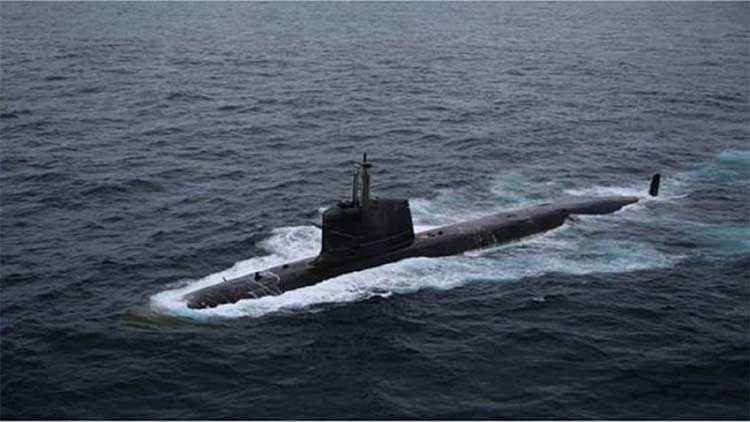
Pakistan’s navy expects to induct its first Chinese-built Hangor-class submarine into active service next year, a move that strengthens Beijing’s military footprint in the Indian Ocean and adds to Pakistan’s efforts to counter rival India.
Admiral Naveed Ashraf confirmed to China’s state-run Global Times that the eight-submarine deal with Beijing — scheduled for completion by 2028 — is “progressing smoothly.” The diesel-electric attack submarines will enhance Pakistan’s patrol and surveillance capability across the North Arabian Sea and wider Indian Ocean, he said.
The $5 billion agreement calls for four submarines to be built in China, with the remaining four assembled in Pakistan to boost domestic shipbuilding expertise. Three of the vessels have already been launched at a shipyard along China’s Yangtze River.
Ashraf praised Chinese naval hardware as “reliable, technologically advanced and well-suited” to Pakistan’s needs, adding that the navy is also exploring cooperation with China in emerging fields such as unmanned systems, artificial intelligence and electronic warfare.
The update comes months after Pakistan said its air force used Chinese-made J-10 fighter jets to shoot down an Indian Rafale jet, an incident that stirred debate among analysts over the performance of Western versus Chinese weaponry.
China remains Pakistan’s largest defence supplier, accounting for more than 60% of Beijing’s arms exports between 2020 and 2024, according to SIPRI data.
The submarine programme is part of a broader, multibillion-dollar strategic partnership that includes the China-Pakistan Economic Corridor — a 3,000 km infrastructure network linking Xinjiang to the Arabian Sea port of Gwadar. The corridor forms a key arm of Xi Jinping’s Belt and Road Initiative and offers China a direct route to Middle Eastern energy supplies, bypassing the vulnerable Malacca Strait.
India, meanwhile, operates a fleet of nuclear-powered and diesel-electric submarines sourced or co-developed with France, Germany and Russia, and is expanding its own undersea capabilities.
“This cooperation with China goes beyond hardware,” Ashraf said. “It reflects mutual trust and a shared strategic vision. Over the next decade, we expect deeper collaboration in shipbuilding, training, technology sharing and industrial development.”
Comments are closed.