
Operation Sindoor Fallout Pushed Pakistan into Constitutional, Military Reset: CDS

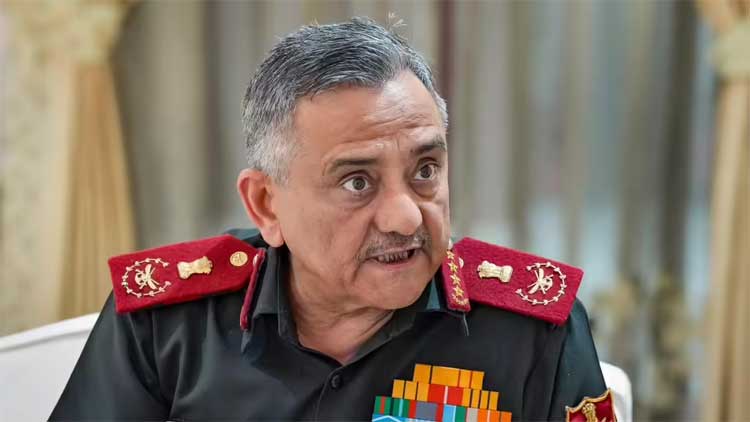
The Chief of Defence Staff (CDS), General Anil Chauhan, on Friday said Operation Sindoor forced Pakistan to rush through constitutional amendments and overhaul its higher defence organisation—an implicit admission, he said, that the operation did not go in Islamabad’s favour.
Speaking at the Pune Public Policy Festival 2026 at the Gokhale Institute of Politics and Economics (GIPE), Gen Chauhan said Pakistan’s post-operation measures, including changes to its military command architecture, exposed serious shortcomings that surfaced during the conflict. Pakistan has abolished the post of chairman of the Joint Chiefs of Staff Committee, replacing it with a chief of defence forces, and has also created a National Strategy Command and an Army Rocket Forces Command. According to the CDS, these moves have concentrated land, joint and strategic military powers in a single individual.
“This goes against the basic principle of jointness and reflects a land-centric mindset,” Gen Chauhan said, warning that such centralisation could generate internal challenges within Pakistan’s military system.
Asked whether Operation Sindoor had prompted changes in India’s own command structure, the CDS clarified that while he does not exercise direct command over the three service chiefs, his role carries operational responsibility. As the permanent chairman of the Chiefs of Staff Committee, he said decisions are taken collectively, ensuring integrated planning and execution. He added that the CDS directly oversees emerging operational domains such as space, cyber, electromagnetic and cognitive warfare, as well as special forces under the Integrated Defence Staff.
Gen Chauhan said global military strategy is undergoing a fundamental shift, with technology increasingly supplanting geography as the key driver of warfare. “Traditionally, from Panipat to Plassey, geography defined military campaigns. Today, technology is driving strategy,” he said. While future conflicts are likely to rely more on non-contact and non-kinetic means, he cautioned that traditional land warfare remains brutal and manpower-intensive, particularly along disputed borders with Pakistan and China.
“We must be prepared for both—smarter, technology-driven wars and the possibility of attritional contact warfare—while striving to avoid the latter,” he said.
The CDS said several lessons, particularly relating to higher defence organisations, were drawn from Operation Sindoor and earlier engagements such as the Uri surgical strikes, the Doklam and Galwan standoffs, and the Balakot air strike. These operations, he noted, relied on innovative, situation-specific command arrangements. “What we are now working towards is a standardised system that can be applied across all contingencies,” he said.
Expressing confidence in the progress made, Gen Chauhan said most of the groundwork for establishing joint theatre commands has been completed and voiced optimism that the integrated command structure would be in place before the revised deadline.
Comments are closed.