
Operation Sindhu: Over 4,200 Indians Safely Evacuated from Iran and Israel Amid Escalating Tensions

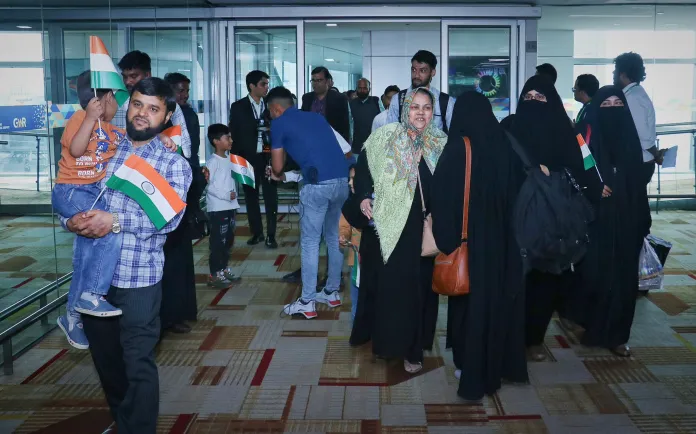
In a commendable demonstration of swift diplomacy and operational efficiency, the Ministry of External Affairs (MEA) has announced the successful evacuation of over 4,200 Indian nationals from Iran and Israel under the ongoing Operation Sindhu. Launched on June 18, 2025, the mission was prompted by intensifying regional tensions, geopolitical instability, and the closure of critical airspaces due to emerging conflict scenarios.
The Launch of Operation Sindhu
As volatile security conditions flared in parts of the Middle East—particularly in Israel and Iran—the Indian government acted promptly to ensure the safety and repatriation of its citizens stranded in high-risk zones. With major airspace corridors closed and threats escalating, the MEA, in collaboration with the Indian Air Force and commercial carriers, activated Operation Sindhu, named after the historic Indus River—a symbol of ancient India’s resilience and outreach.
The operation has since been hailed as one of the most coordinated evacuation missions in recent times, successfully bringing thousands of Indian nationals home despite challenging logistics and rapidly shifting ground realities.
Operational Scale and Diplomatic Strategy
The MEA confirmed that over 4,200 individuals—including students, professionals, pilgrims, and tourists—were safely airlifted using a combination of special chartered flights and military transport aircraft. Indian embassies in Tehran and Tel Aviv worked around the clock to compile evacuation lists, secure safe transit permits, and coordinate with local authorities.
Key elements of Operation Sindhu included:
-
24/7 Helplines and Consular Support for Indians seeking evacuation assistance.
-
Deployment of Rapid Response Teams at affected regions to manage documentation and movement.
-
Use of alternate air routes and regional staging areas due to restricted airspace over conflict-affected zones.
Government Response and Public Assurance
MEA spokesperson Arindam Bagchi emphasized the government’s “unwavering commitment to the safety of every Indian abroad”, noting that Operation Sindhu demonstrated India’s ability to respond rapidly in times of international crisis.
“The safety of Indian nationals is our top priority. Our embassies have worked tirelessly, and we thank the local governments for their cooperation during this critical time,” he said in the official statement.
India has previously conducted similar high-stakes rescue operations such as Operation Ganga (Ukraine, 2022), Vande Bharat Mission (COVID-19 pandemic), and Operation Kaveri (Sudan, 2023)—each reinforcing its global reputation for effective evacuation diplomacy.
The Geopolitical Context
The evacuation follows an escalation of hostilities in West Asia, where deteriorating diplomatic relations and military exchanges have raised global concern. The closure of international airspace over parts of Iran, Israel, and surrounding air corridors left thousands of passengers stranded and airlines rerouting.
Indian nationals, especially students and workers residing in affected zones, found themselves in a precarious situation, prompting a fast-tracked intervention by the Indian government.
Voices of Relief and Gratitude
Many evacuees, speaking to media outlets and sharing their experiences on social media, expressed immense relief and gratitude for the Indian government’s timely response.
“We were stuck in Tel Aviv with no flights in or out. The embassy’s support and the airlift made all the difference. We’re proud of our country today,” said Shreya Mehta, a student at an Israeli university.
Comments are closed.