
NTSB Chief Warns Against Speculation in Air India Flight 171 Crash Probe

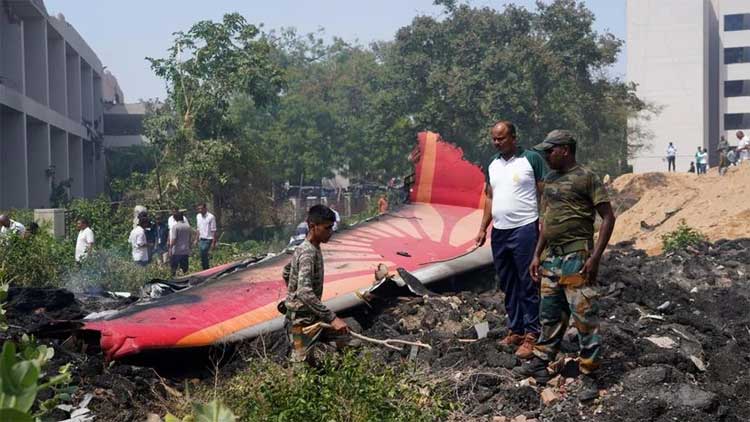
U.S. National Transportation Safety Board (NTSB) Chair Jennifer Homendy on Friday cautioned against drawing early conclusions in the ongoing investigation into the June 12 crash of Air India Flight 171, calling recent media reports “premature and speculative.”
Her remarks came after widespread coverage of the preliminary findings by India’s Aircraft Accident Investigation Bureau (AAIB), which suggested that fuel control switches on the Boeing 787-8 Dreamliner had been turned off moments after takeoff — a move that resulted in the fatal loss of engine thrust. The crash near Ahmedabad, Gujarat, claimed 260 lives.
“Recent media reports on the Air India 171 crash are premature and speculative. India’s Aircraft Accident Investigation Bureau just released its preliminary report,” Homendy said in a statement shared by the NTSB on X (formerly Twitter). “Investigations of this magnitude take time. We fully support the AAIB’s public appeal… and will continue to support its ongoing investigation. All investigative questions should be addressed to the AAIB.”
The NTSB is assisting the AAIB in the high-profile probe, while Air India and Indian aviation authorities have also urged the public to avoid speculation until the full investigation is complete.
The AAIB’s initial findings revealed that two fuel control switches were manually moved to the “cutoff” position seconds after takeoff, effectively shutting off fuel supply to both engines. Though the switches were quickly restored — within about 10 seconds — the loss of power had already compromised the aircraft’s ability to maintain altitude, leading to the fatal crash.
Cockpit voice recordings reviewed in the AAIB report captured First Officer Clive Kunder questioning Captain Sumeet Sabharwal: “Why did you cutoff?” The captain reportedly replied, “I didn’t,” denying responsibility.
In light of these findings, India’s Directorate General of Civil Aviation (DGCA) has ordered immediate inspections of fuel control systems across all Boeing 737 and 787 aircraft in Indian fleets to rule out any systemic mechanical issues.
As the investigation continues, authorities from both India and the U.S. have stressed the need for patience and factual accuracy, warning that premature narratives could compromise public trust and the integrity of the process.
Comments are closed.