
‘Not Expecting Neighbours to Do Only What’s in My Interest’: Jaishankar on Bangladesh Amid Hasina Row

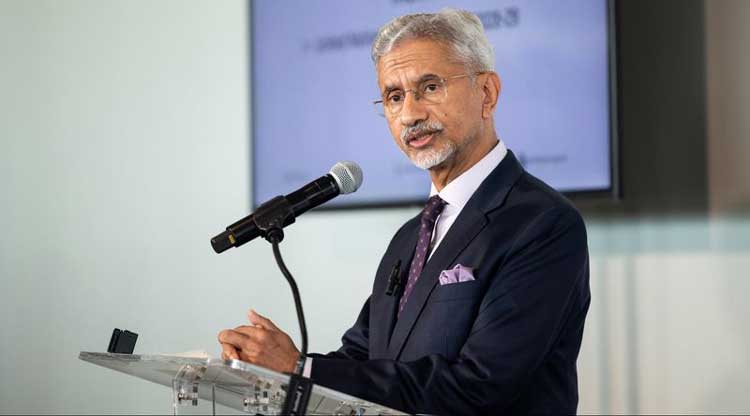
External Affairs Minister S Jaishankar on Saturday said India-Bangladesh relations can move forward if they meet the “test of mutual interest”, amid tensions over Dhaka’s demand for the extradition of former Bangladesh prime minister Sheikh Hasina.
Speaking at the Economic Times World Leaders Forum, Jaishankar said India does not expect its neighbours to act solely in New Delhi’s interest, stressing that stable bilateral ties depend on finding common ground.
Responding to a question about Bangladesh’s demand for Hasina’s extradition, Jaishankar declined to discuss the details of the matter. “For any relationship to work, it has to meet the test of mutual interest. It has to work for them, it has to work for us,” he said.
Jaishankar said both countries must recognise and respect each other’s interests. When they find a “landing point” or common ground, he added, relations can function smoothly.
India has invited Bangladesh’s Prime Minister Tarique Rahman for a bilateral visit as well as the upcoming BRICS Summit in his capacity as chair of BIMSTEC. A planned visit next week was postponed, with discussions reportedly underway to schedule it later this month or in early September.
Rahman’s visit is seen as potentially important for improving bilateral ties, which have deteriorated significantly, with Hasina’s presence in India remaining a major point of friction.
‘Pakistan unique in using terror against India’
On Pakistan, Jaishankar said the government cannot ignore public sentiment, particularly given concerns over Islamabad’s alleged use of terrorism against India.
He described Pakistan as unique because, in his view, no other country systematically and persistently uses terrorism to pressure a neighbouring country.
Asked about improving Pakistan-US ties, Jaishankar said India has developed its own relationship with Washington while noting that Islamabad and the US have a long history of engagement.
He also played down the recently signed Makkah Joint Defence Agreement involving Pakistan, Saudi Arabia and Türkiye, while stressing that India would take the pact into account in its security calculations.
“Everything counts, everything will have a weight,” Jaishankar said, adding that developments involving countries not favourably disposed towards India would be factored into New Delhi’s strategic assessment.
‘Peace on border key to good ties with China’
Jaishankar reiterated that peace and stability along the India-China border remain essential for improving overall bilateral relations.
He said the two countries had experienced a particularly difficult period between 2020 and 2024, largely because of tensions along the border. Despite their differences, India and China remain major economies with significant trade, supply-chain links and economic interaction.
“Peace and tranquillity in the border areas is a prerequisite for good relations,” he said.
Jaishankar also acknowledged reports of Indian businesspeople facing difficulties obtaining Chinese visas, saying the issue had been raised with Beijing.
He stressed that India must strengthen its own capabilities while engaging with the global economy, including China. India, he said, should deal with China confidently and “stand our ground” while building its economic and strategic strengths.
Comments are closed.