
No ‘Sticky Issues’ Left in India-US Trade Talks, Says Piyush Goyal

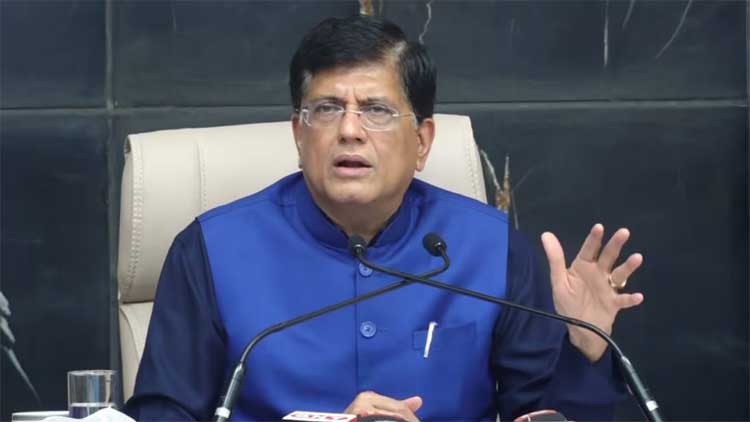
Union Commerce and Industry Minister Piyush Goyal said on Friday that India and the United States can now move towards concluding their bilateral trade negotiations, as no major unresolved issues remain.
In an interview with Hindustan Times, days after India and the European Union announced the successful conclusion of talks on a free trade agreement (FTA), Goyal said New Delhi’s trade strategy has shifted from past protectionism to confident global engagement.
“I don’t think there are any sticky issues left to be resolved. We can now look at moving towards closure,” he said on the status of talks with the US.
Goyal stressed that engagement with developed economies is essential for India’s long-term growth.
“If you want to become a developed nation, you cannot live in isolation,” he said.
EU Deal and Trade Strategy
The minister said negotiations with the EU, which began in 2022, were marked by consistent commitment on both sides. He credited renewed momentum in late 2024 to the appointment of European Commissioner Maroš Šefčovič, who played a key role in finalising the agreement.
He said sensitive issues were kept aside early in the talks, allowing both sides to focus on broader economic gains.
Goyal said the EU agreement is expected to be ratified in 2026, following legal reviews and parliamentary approvals.
On environmental regulations such as the Carbon Border Adjustment Mechanism (CBAM), he said India’s concerns had been addressed through safeguards in the agreement.
Mobility and Labour Exports
Goyal said the FTA includes provisions for skilled worker mobility, though individual EU member states retain control over migration policies.
He said European countries are keen to recruit Indian professionals because of their skills and compliance with local laws.
Benefits for Manufacturing and Exports
The minister said the EU deal would significantly boost India’s labour-intensive industries, particularly textiles.
Of India’s $35 billion labour-intensive exports, $33.5 billion will receive zero-duty access to the EU from the first day, he said.
He noted that Bangladesh had benefited earlier from preferential access, but India now enjoys similar advantages.
“With zero duties, textile exports alone can reach $40–50 billion,” Goyal said.
Negotiating from Strength
Goyal said India now negotiates trade deals from a position of confidence, backed by political stability and economic growth.
He said Prime Minister Narendra Modi has encouraged negotiators to focus on India’s long-term potential rather than current economic size.
“Today’s $4 trillion economy is not what we negotiate on. We negotiate on India’s $30 trillion future,” he said.
UK, Canada and Other Deals
Goyal described the recently concluded UK trade agreement as “fantastic” and said the EU deal was equally strong, though each agreement reflects unique conditions.
He said talks with Canada would restart under the new leadership and that both sides were keen to move quickly.
Outlook and Future Plans
On exports, Goyal said Indian businesses are increasingly exploring new markets and technologies, helping offset the impact of US tariffs.
He said the government will continue to promote manufacturing, innovation, research, startups and logistics.
Export-led growth, he said, remains central to India’s development strategy.
“No country in the world has become developed without international engagement,” Goyal said.
Comments are closed.