
NIA Chargesheets Six in Pahalgam Terror Attack, Details Pakistan’s Role Seven Months After Carnage

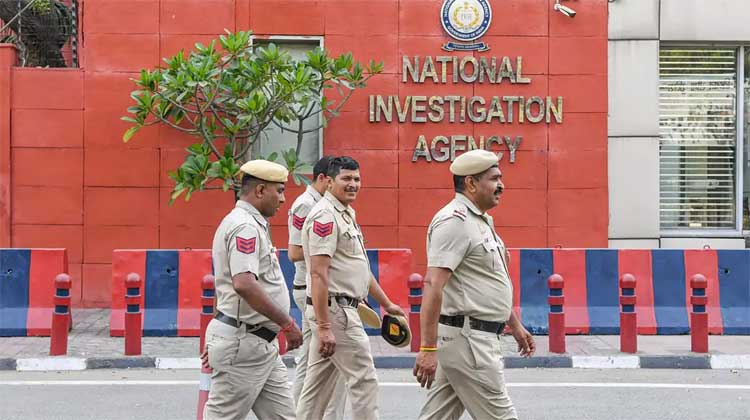
The National Investigation Agency (NIA) on Monday filed a chargesheet against six accused in the Pahalgam terror attack case, seven months after the brutal incident in Jammu and Kashmir in which 26 civilians were killed.
In its 1,597-page chargesheet, the NIA has detailed Pakistan’s involvement in the conspiracy behind the attack. Banned terror outfits Lashkar-e-Taiba (LeT) and its proxy, The Resistance Front (TRF), have been named for their roles in planning, facilitating and executing what the agency described as “religion-based targeted killings”.
The chargesheet was filed before the NIA Special Court in Jammu within the statutory 180-day deadline, calculated from the date of the first arrest on June 22.
Terrorists named in the chargesheet
Four terrorists, including Pakistan-based handler Sajid Jatt, have been named in the chargesheet. The other three accused terrorists — Faisal Jatt alias Suleman Shah, Habeeb Tahir alias Jibran, and Hamza Afghani — were killed by security forces during Operation Mahadev in the Dachigam area of Srinagar in July this year.
“LeT/TRF, along with the four above-mentioned terrorists, have been charged under relevant provisions of the Bharatiya Nyaya Sanhita (BNS), 2023, the Arms Act, 1959, and the Unlawful Activities (Prevention) Act, 1967. The NIA has also invoked provisions relating to waging war against India,” the agency said in a statement.
Local accomplices arrested
Two other accused — Bashir Ahmad Jothar and Parvez Ahmad Jothar — have also been chargesheeted. The duo was arrested on June 22, 2025, for harbouring terrorists.
According to the NIA, the two men disclosed the identities of the three terrorists who carried out the Pahalgam attack and confirmed that they were Pakistani nationals affiliated with the proscribed LeT outfit.
Details of the probe
Earlier reports indicated that the NIA questioned more than 1,000 individuals during the investigation and collected extensive technical and forensic evidence linking Pakistan-based terrorists to the attack.
The agency also recovered Aadhaar cards, photographs and Facebook IDs of certain individuals from the mobile phones of the three Pakistani terrorists who were later killed in the Dachigam forest on July 28, following a three-month-long hunt.
Investigators have further decoded multiple end-to-end encrypted communications between the three terrorists — Suleman Shah, Hamza Afghani alias Afghan, and Jibran — and their Pakistan-based handler who planned and coordinated the Pahalgam attack. These communications form a key part of the evidence cited in the chargesheet.
Fallout of the Pahalgam attack and Operation Sindoor
The Pahalgam massacre sharply escalated tensions between India and Pakistan, bringing the two neighbours to the brink of war. In response, India launched Operation Sindoor on May 7, targeting terror infrastructure across the border.
Indian forces carried out pre-dawn strikes on nine terror camps in Pakistan and Pakistan-occupied Kashmir (PoK), in which at least 100 terrorists were killed. The strikes triggered days of military escalation, including fighter jet operations, missile launches, armed drone attacks, and intense artillery and rocket exchanges along the western border.
On the night of May 9–10, the Indian Air Force struck targets at 13 Pakistani airbases and military installations. After four days of heightened hostilities, military action was halted on the evening of May 10, following an understanding reached between the two countries.
Comments are closed.