
Netanyahu Signals “Alternative Options” as Ceasefire Talks Stall and Gaza Crisis Deepens

Israeli Prime Minister Benjamin Netanyahu on Friday said his government is now considering “alternative options” to secure a hostage release and end the war with Hamas, following the withdrawal of Israeli and U.S. delegations from ceasefire negotiations in Qatar. The pause in talks has thrown the future of the long-delayed truce into deeper uncertainty.
Netanyahu’s remarks echoed those of U.S. special envoy Steve Witkoff, who said Hamas’ recent response showed a “lack of desire” to reach a deal. “Hamas is the obstacle to a hostage release deal,” Netanyahu declared. “Together with our U.S. allies, we are now considering alternative options to bring our hostages home, end Hamas’s terror rule, and secure lasting peace for Israel and our region.”
Despite the walkout, Hamas and mediation partners Egypt and Qatar insisted that negotiations are expected to resume next week. A Hamas official described the recall of the delegations as a pressure tactic, while Egyptian and Qatari officials called the pause temporary.
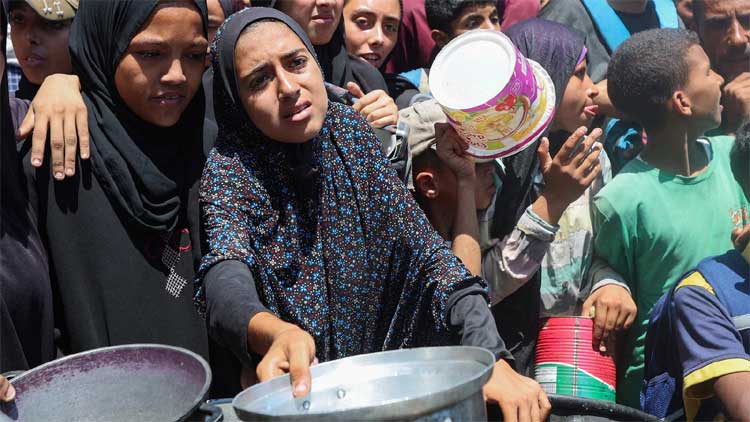
The diplomatic breakdown comes as Gaza plunges deeper into humanitarian catastrophe. Experts warn that famine is imminent, with Israel accused of severely restricting food and aid into the enclave. Deaths from malnutrition are reportedly accelerating, and charities say even their own staff are going hungry.
French President Emmanuel Macron on Thursday added to the mounting international pressure by announcing France would recognize the State of Palestine. “The urgent thing today is that the war in Gaza stops and the civilian population is saved,” Macron said.
Jordan, citing the dire conditions, has requested to carry out airdrops of food and baby formula into Gaza. An Israeli security official confirmed that the military is coordinating the operation, expected in the coming days.
In Gaza City on Friday, desperate residents queued at a charity kitchen for watery lentil soup. “We’ve been living three months without bread,” said Riham Dwas, who said she sometimes brings her children to hospitals for IV drips when no food is available. “There are many times when we don’t even have that.”
Meanwhile, an Israeli airstrike on a school sheltering displaced Palestinians in Gaza City killed at least five people, including an 11-year-old boy, according to hospital officials. Grieving families carried the bodies through the streets in a funeral procession marked by anguish and fury. “Enough!” cried Taraji Adwan, whose son and grandson were among the dead. “Stop the war… Enough, Hamas! Enough, Israel! Enough, world!”
The ceasefire talks have dragged on for weeks in Qatar with minor progress but no breakthrough. A key sticking point remains: Hamas demands a full Israeli withdrawal and permanent end to the war before it releases all hostages. Israel insists the war won’t end until Hamas is removed from power and disarmed.
The current proposal includes a 60-day ceasefire, phased release of hostages—10 alive, plus the remains of 18 others—and a boost in aid, while both sides negotiate a lasting truce. Hamas has signaled it could relinquish political control but refuses to disarm. Israel, in turn, has rejected any deal that would leave Hamas militarily intact.
Hamas is believed to be holding hostages in various undisclosed locations, including its tunnel networks, and has reportedly warned guards to kill captives if Israeli troops approach. Of the roughly 50 hostages still held in Gaza, fewer than half are believed to be alive.
Families of hostages say the diplomatic standoff is devastating. “I thought that maybe something would come when the Israeli team was in Doha,” said Yehuda Cohen, whose son Nimrod is among the captives. “And when I heard they were coming back, I asked myself: When will this nightmare end?”
Comments are closed.