
Nepal election results LIVE: Gen Z protest impact as rapper Balen Shah’s RSP wins 23 seats, leads in 95 constituencies

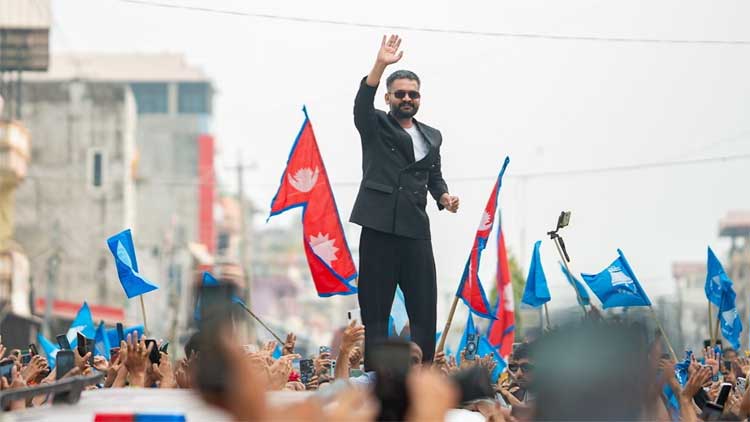
Months after thousands of young Nepalis took to the streets in 2025 to protest against the country’s entrenched political elite — a movement many described as a Gen Z–led uprising or even a “revolution” — the first parliamentary election since the unrest is producing a dramatic political shift.
The rapper-turned-politician Balendra Shah and his Rastriya Swatantra Party (RSP) have emerged as a dominant force, signalling a major challenge to Nepal’s long-standing political establishment.
RSP surges in early vote counting
According to data from the Election Commission of Nepal, the RSP has won 20 seats and is leading in 98 constituencies as counting continues in 161 of the country’s 165 constituencies, PTI reported.
Shah, who previously served as mayor of Kathmandu, is leading comfortably in Jhapa-5 — a seat long considered the stronghold of four-time prime minister KP Sharma Oli and chairman of the Communist Party of Nepal (Unified Marxist–Leninist) (CPN-UML). Shah has secured more than 15,000 votes so far, while Oli has received around 3,300 votes.
How Nepal’s votes are counted
Nepal’s lower house, the House of Representatives of Nepal, has 275 seats. Of these, 165 members are elected through direct constituency contests under the first-past-the-post system, where counting is currently underway. The remaining 110 seats are allocated later through proportional representation based on each party’s share of the vote.
Latest trends in Nepal polls
-
Rastriya Swatantra Party (RSP): 13 seats won
-
Nepali Congress: 3 seats won
-
CPN-UML: leading in 11 constituencies
-
Nepal Communist Party: 2 seats won
-
Shram Sanskriti Party: leading in 6 constituencies
-
Rastriya Prajatantra Party: leading in 1 constituency
-
Progressive Democratic Party: leading in 1 constituency
Why Gen Z is backing Balen Shah
Shah’s rise is closely tied to the youth-driven protests that rocked Nepal last year. A former rapper with a strong social media following, he built a large base among young urban voters through digital outreach, anti-establishment messaging and criticism of traditional political elites.
RSP candidate Ranju Neupane (Darshana) was also the first to win a parliamentary seat from Kathmandu-1.
60% turnout with strong youth participation
Nepal’s parliamentary election — the first since the 2025 protests — recorded about 60% voter turnout, with officials noting strong participation from young voters.
Narayan Prasad Bhattarai, joint secretary and spokesperson of the Election Commission, said the polls were held under “special circumstances” following last year’s unrest but were completed successfully with cooperation from political parties, voters, government agencies, the media and other stakeholders.
“Gen Z has been very supportive in this election. Their participation has been positive both as candidates and voters,” Bhattarai told ANI.
Background: 2025 protests that changed Nepal’s politics
The election follows months of political turmoil in 2025, when youth-led demonstrations erupted over corruption, unemployment and restrictions on social media. The protests intensified after clashes with police left 19 people — mostly students — dead.
Despite police orders, protesters continued demonstrations demanding the resignation of the government led by KP Sharma Oli. On September 12, 2025, former chief justice Sushila Karki was sworn in as interim prime minister — becoming the first woman to hold the post — after days of unrest that left at least 74 people dead and more than 2,000 injured.
The current election is widely seen as a test of whether Nepal’s Gen Z-driven political movement can translate street protests into lasting electoral change.
Comments are closed.