
Nearly 900 Million Poor Globally Face Direct Threats from Climate Hazards, UNDP Report Finds

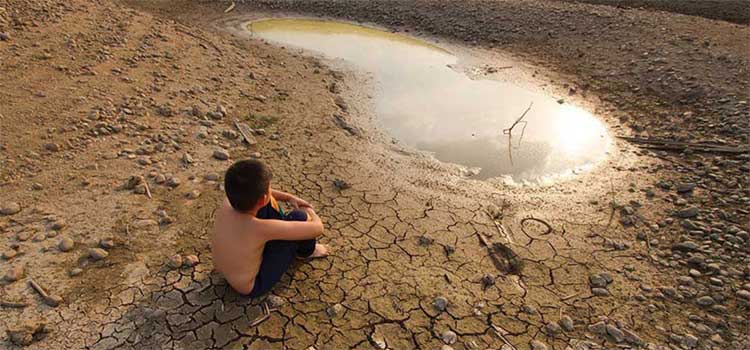
A staggering 887 million people living in multidimensional poverty—almost eight in ten of the 1.1 billion globally—are directly exposed to climate hazards such as extreme heat, flooding, drought, and air pollution, according to the 2025 Global Multidimensional Poverty Index (MPI). The report, released ahead of the COP30 climate summit in Brazil, highlights how climate change is amplifying global poverty and deepening inequalities.
The findings come from a joint study by the United Nations Development Programme (UNDP) and the Oxford Poverty and Human Development Initiative (OPHI), titled “Overlapping Hardships: Poverty and Climate Hazards”. By combining climate hazard data with multidimensional poverty measures for the first time, the report illustrates that poverty is increasingly interlinked with environmental instability.
“Our new research shows that to address global poverty and create a more stable world for everyone, we must confront the climate risks endangering nearly 900 million poor people,” said Haoliang Xu, UNDP Acting Administrator. “When world leaders meet at COP30 next month, their national climate pledges must revitalise development progress and ensure the world’s poorest are not left behind.”
Overlapping Climate Hazards
Among those living in acute multidimensional poverty—which spans health, education, and living standards:
-
651 million people face two or more climate hazards
-
309 million people are exposed to three or four hazards simultaneously
High heat and air pollution are the most widespread, affecting 608 million and 577 million poor people respectively. Flood-prone regions house 465 million, while 207 million live in drought-affected areas. Many of these individuals have limited assets and minimal social protection, exacerbating the impact of environmental shocks.
“This report shows where the climate crisis and poverty intersect most severely,” said Sabina Alkire, Director of OPHI. “Identifying the regions under the greatest strain is key to developing effective, human-centred climate strategies.”
Regional Hotspots: South Asia and Sub-Saharan Africa
-
South Asia: 380 million poor people exposed to at least one climate hazard; over 91% face two or more hazards
-
Sub-Saharan Africa: 344 million poor people affected
India, the world’s most populous country, faces rising heat extremes and worsening air pollution, disproportionately affecting low-income communities. States like Bihar, Uttar Pradesh, and Madhya Pradesh are particularly vulnerable due to inadequate infrastructure and limited access to cooling or healthcare.
Lower-middle-income countries bear the heaviest burden, with 548 million poor people exposed to at least one climate hazard and 470 million facing multiple hazards simultaneously.
Widening Inequality and Urgent Action Needed
“These burdens are set to intensify,” warned Pedro Conceio, Director of the UNDP Human Development Report Office. Rising temperatures are projected to hit regions with high multidimensional poverty the hardest, entrenching inequality further.
The report calls for:
-
Climate-resilient poverty reduction strategies
-
Strengthened local adaptive capacities
-
International cooperative finance mechanisms to protect the most vulnerable
For India and other developing nations, equitable climate finance and sustainable development policies are critical. The MPI findings underline that without decisive, inclusive climate action, climate change could exacerbate inequalities in both developed and developing countries.
Comments are closed.