
NATO Summit Opens Amid Global Crises, Marking a Crucial Test of Alliance Unity

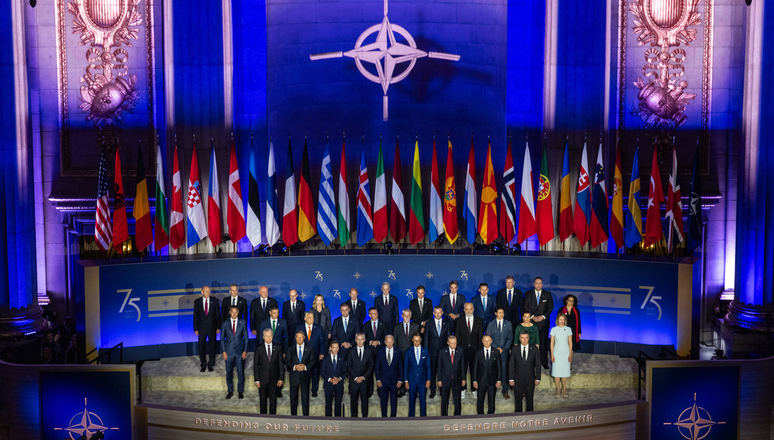
The North Atlantic Treaty Organization (NATO) opened its highly anticipated annual summit today, bringing together heads of state and defense leaders from 32 member nations. With escalating global tensions—from the prolonged Russia-Ukraine conflict to growing assertiveness by China in the Indo-Pacific—the 2025 summit is being described as a pivotal moment for the future of the alliance.
A Gathering at a Geopolitical Crossroads
The summit comes at a time when the international security environment is facing multiple, overlapping challenges. The Russia-Ukraine war has entered its third year with no signs of resolution. China’s increasing military posturing around Taiwan and maritime routes is raising alarms in both Europe and Asia. The Middle East remains volatile, while cyberattacks and disinformation campaigns continue to undermine democratic institutions globally.
“This summit is not just another meeting—it’s a test of our unity, purpose, and adaptability,” said NATO Secretary-General Jens Stoltenberg during his opening remarks.
Defense Spending and Burden Sharing
A central issue on the agenda is defense spending. While NATO has long encouraged members to spend at least 2% of their GDP on defense, only a subset of countries have consistently met this benchmark. The United States, still the largest contributor by far, is expected to push for firmer commitments from European allies.
“We must all share the responsibility of collective defense,” U.S. President Joe Biden stated, urging allies to not only meet but exceed the 2% target in response to current threats.
Germany, Poland, and the Baltic states have increased their defense budgets significantly, while others, including France and Italy, are expected to outline new spending plans during the summit.
Ukraine’s NATO Aspirations and Security Assurances
Ukraine’s future with NATO remains one of the summit’s most delicate issues. While full membership is still politically sensitive due to the ongoing war, NATO leaders are expected to announce a new framework of long-term military support, training, and security assurances.
President Volodymyr Zelenskyy is attending as a guest and is expected to push for a clearer roadmap for Ukraine’s integration.
“We are not asking for charity—we are fighting for the values of the free world. Our place is in NATO,” Zelenskyy declared in a pre-summit statement.
Rising China and the Indo-Pacific Focus
For the third consecutive year, leaders from key Indo-Pacific partners—Australia, Japan, South Korea, and New Zealand—have been invited to the summit. The move underscores NATO’s evolving strategy, which increasingly sees security threats as global rather than regional.
A draft communique is expected to label China as a “systemic challenge,” citing issues such as cyber operations, military buildup, and strategic partnerships with Russia.
New Strategic Capabilities and Cybersecurity
NATO is also expected to announce further steps to modernize its command structure, enhance cybersecurity defenses, and boost rapid response capabilities. Artificial intelligence and space-based defense systems are high on the list of emerging priorities.
A new NATO Innovation Fund, initially capitalized at €1 billion, will focus on investing in dual-use technologies in areas such as quantum computing, surveillance, and drone defense.
Political Fractures and Domestic Pressures
Despite the show of unity, internal rifts remain. The recent political instability in several member countries, including elections in Europe and leadership changes in the U.S., have raised questions about NATO’s long-term cohesion. Analysts warn that any cracks in consensus could be exploited by adversaries.
Nonetheless, NATO leaders remain firm that unity must prevail. “The cost of disunity is far higher than any disagreement we may have,” said French President Emmanuel Macron.
The 2025 NATO Summit arrives at a defining moment for the alliance. Confronted with a world increasingly shaped by geopolitical rivalry and technological disruption, NATO’s response in the coming days will send strong signals about the West’s commitment to security, democracy, and international law.
Comments are closed.