
Myanmar Military Raids Major Cybercrime Center, Detains Over 2,000 People

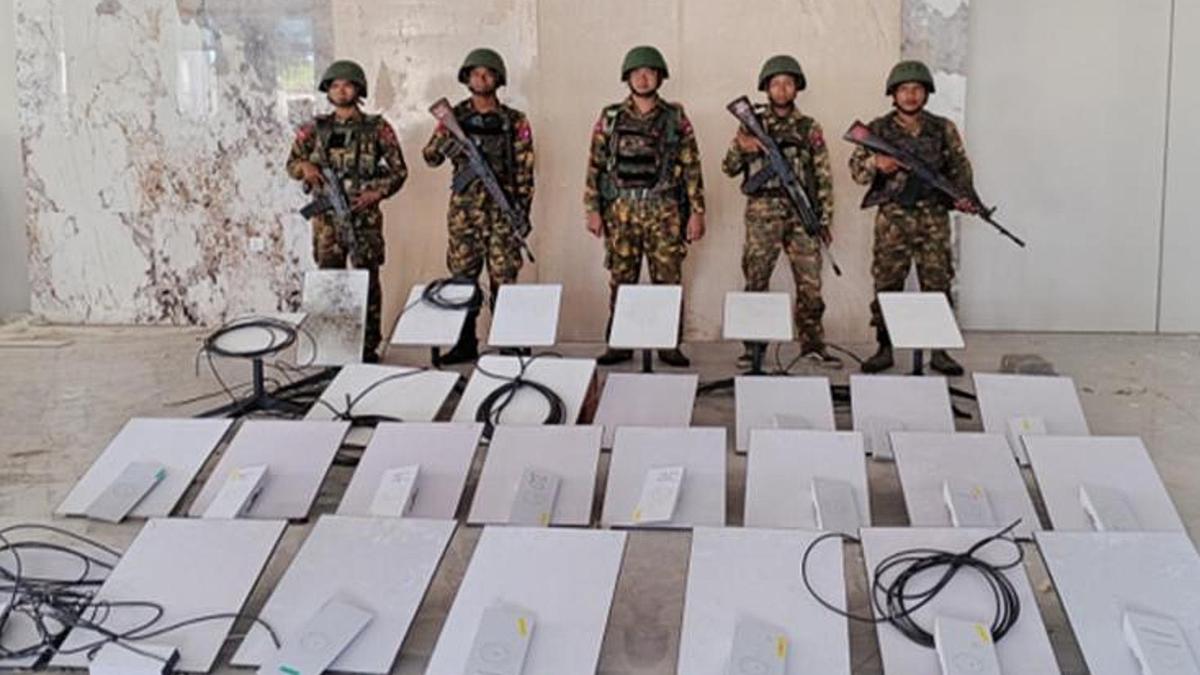
In a dramatic crackdown, Myanmar’s military authorities have raided what they describe as one of the country’s largest cybercrime hubs, detaining more than 2,000 people allegedly involved in online fraud, human trafficking, and illegal gambling operations. The large-scale operation underscores the growing concern over transnational cybercrime networks operating within Southeast Asia, many of which have turned Myanmar’s remote regions into digital crime hotspots.
The Operation: A Sweeping Crackdown
According to official statements, the raid was conducted in the northern part of the country near the border with China — a region notorious for harboring illicit online operations and scam compounds. Military and police forces reportedly stormed multiple facilities that were disguised as business parks and technology centers but were, in reality, hubs for large-scale cyber scams targeting victims across Asia and beyond.
The detained individuals include a mix of local operators, foreign nationals, and coerced workers — many of whom were allegedly trafficked into Myanmar under false promises of legitimate employment. Authorities have seized computers, mobile devices, servers, and large sums of cash during the operation.
Cybercrime in the Shadow of Conflict
Myanmar’s internal instability following the 2021 military takeover has created a law enforcement vacuum in many regions, allowing cybercrime syndicates to flourish. These groups, often backed by cross-border networks, have taken advantage of weak governance and porous borders to establish operations in remote areas, particularly in territories controlled by local militias or warlords.
These scam centers typically engage in online fraud schemes, including fake investment platforms, cryptocurrency scams, and phishing operations that target victims in countries such as China, Thailand, Malaysia, and India. Many victims lose their life savings, while trafficked workers are forced to participate under threats of violence.
Human Trafficking and Forced Labor
Reports from human rights groups have long warned that thousands of individuals from across Asia — including China, Vietnam, and even Nepal — have been tricked into working in these compounds. Once inside, their passports are confiscated, and they are forced to run online scams under strict surveillance.
The latest raid, therefore, is being seen not only as a crackdown on cybercrime but also as a humanitarian rescue operation. Among the 2,000 detainees, hundreds are believed to be trafficking victims awaiting repatriation to their home countries.
Regional Cooperation and Diplomatic Pressure
The operation comes amid increasing regional pressure, particularly from China, which has been urging Myanmar’s military leadership to curb cybercrime activities that disproportionately target Chinese citizens. Beijing has repeatedly called for stronger cooperation to dismantle scam networks operating along the China–Myanmar border.
This latest action by the Myanmar military appears to be a response to that pressure, as both governments have reportedly been coordinating to track and repatriate Chinese nationals involved in or victimized by these cybercrime rings.
Reactions and Challenges Ahead
While the raid has been welcomed by neighboring countries, analysts caution that this may only scratch the surface of a much deeper problem. The cybercrime industry in Myanmar is believed to be extensive, well-funded, and intertwined with local militias and corrupt officials. Without broader reforms, experts fear that many of these operations will simply relocate or re-emerge elsewhere.
Human rights advocates have also urged transparency in how detainees are handled, emphasizing the need to distinguish between perpetrators and victims of trafficking. “Many of those arrested are not criminals but victims trapped in a brutal system of forced labor,” one regional activist noted.
The Broader Implications
The raid sheds light on how digital crime has become one of Southeast Asia’s fastest-growing illicit economies. The combination of political instability, weak law enforcement, and rapid digitalization has created fertile ground for cyber syndicates to thrive. Myanmar’s action — though significant — will require sustained regional cooperation, judicial reform, and humanitarian support to bring long-term results.
Conclusion
The Myanmar military’s raid on a major cybercrime center and the detention of over 2,000 people marks one of the largest anti-cybercrime operations in the region’s recent history. Yet, it also exposes the tangled web of corruption, trafficking, and transnational crime that has taken root amid Myanmar’s ongoing turmoil.
As the world becomes increasingly digital, this episode serves as a stark reminder that the fight against cybercrime requires not just force, but international collaboration, justice for victims, and a commitment to rebuilding the rule of law in regions where it has long been compromised.
Comments are closed.