
Mumbai Train Blast Case Collapses After 19 Years: Bombay High Court Acquits All 12 Convicts

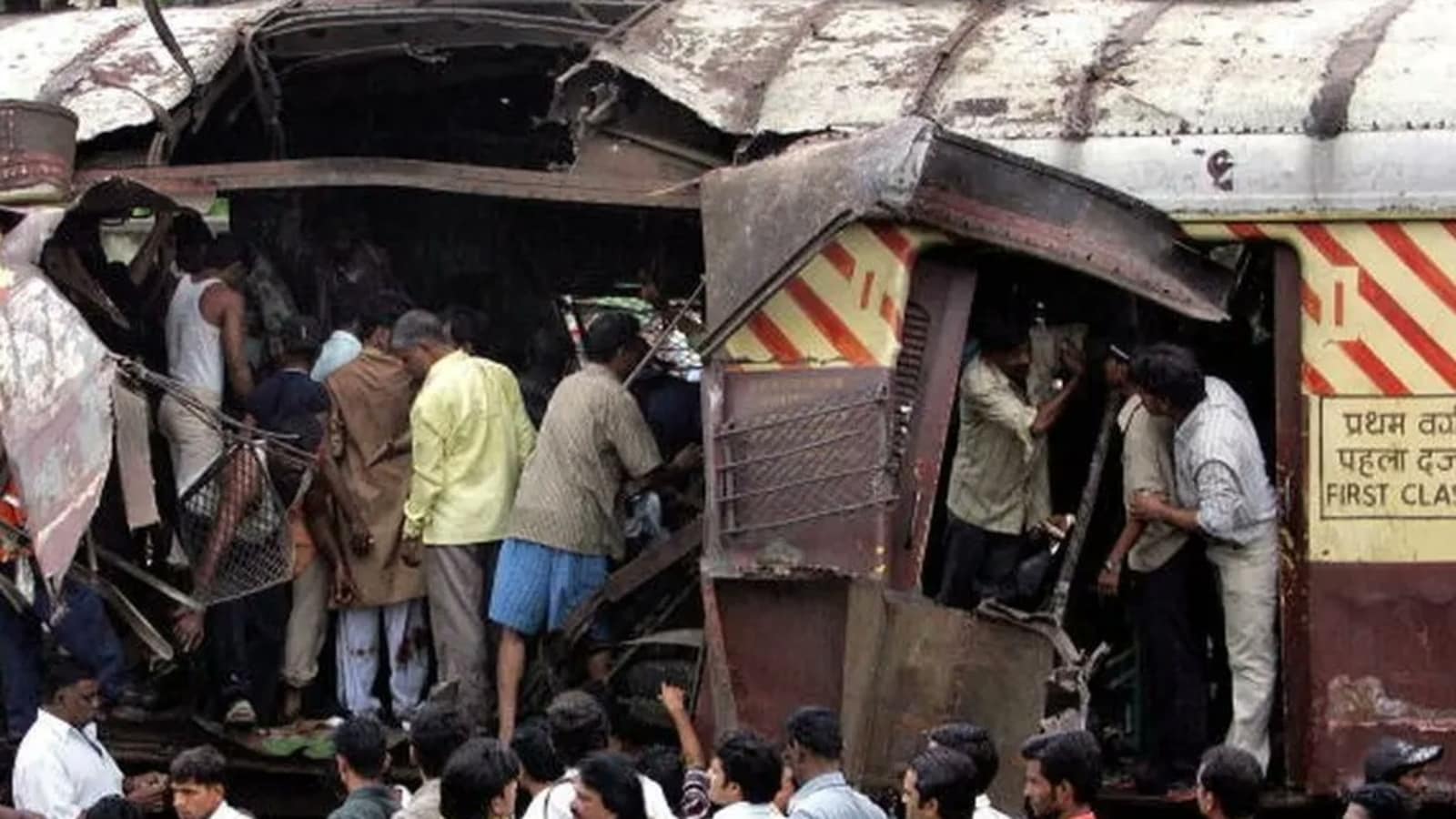
Bombay High Court acquitted all 12 individuals convicted in the 2006 Mumbai train bombings, a series of seven coordinated explosions that killed 189 people and injured over 800 on July 11, 2006. The court, led by Justices Anil S. Kilor and Shyam C. Chandak, overturned the 2015 special court verdict under the Maharashtra Control of Organised Crime Act (MCOCA), which had sentenced five to death and seven to life imprisonment, citing the prosecution’s “utter failure” to prove charges beyond reasonable doubt. This landmark ruling, delivered after 19 years of investigation and trial, has sparked widespread debate about the efficacy of India’s criminal justice system, particularly in high-profile terror cases. This article examines the case details, reasons for the acquittal, systemic failures, and broader implications for justice and security in India.
Background of the 2006 Mumbai Train Bombings
On July 11, 2006, between 6:23 p.m. and 6:29 p.m., seven bombs detonated in the first-class compartments of suburban trains on Mumbai’s Western Railway line, targeting peak-hour commuters. The blasts occurred at or near Matunga Road, Mahim Junction, Bandra, Khar Road, Jogeshwari, Bhayandar, and Borivali stations, killing 189 people and injuring approximately 824. The bombs, reportedly made with RDX and ammonium nitrate and packed in pressure cookers, were placed in black Rexine bags to amplify destruction. The Maharashtra Anti-Terrorism Squad (ATS) led the investigation, alleging involvement of the banned Students’ Islamic Movement of India (SIMI) and Pakistani operatives linked to Lashkar-e-Taiba (LeT). By November 2006, 13 individuals were arrested, with 15 others listed as absconding. In 2015, a special MCOCA court convicted 12 of the accused, sentencing Faisal Sheikh, Asif Khan, Kamal Ansari, Ehtesham Siddiqui, and Naveed Khan to death, and Mohammed Sajid Ansari, Mohammed Ali, Tanveer Ansari, Majid Shafi, Muzzammil Shaikh, Sohail Shaikh, and Zamir Shaikh to life imprisonment. One accused, Abdul Wahid Din Mohammad Shaikh, was acquitted after nine years in jail, and Kamal Ansari died of COVID-19 in 2021 while in Nagpur prison.
Bombay High Court’s Acquittal: Key Findings
The Bombay High Court’s 671-page verdict, delivered on July 21, 2025, quashed the 2015 convictions, citing critical flaws in the prosecution’s case. The court highlighted:
-
Unreliable Evidence: The prosecution relied on three main pillars—eyewitness testimonies, recovered evidence, and confessional statements—all deemed unreliable. Eyewitnesses, including taxi drivers and those claiming to have seen bomb planting, failed to provide credible identification, with some recalling details years later, which the court called “abnormal.” One witness’s testimony was discredited for appearing in multiple unrelated cases, undermining reliability.
-
Invalid Confessions: The ATS obtained confessions under MCOCA, but the court found evidence of custodial torture, rendering them inadmissible. Defense arguments, supported by medical evidence, highlighted physical and mental coercion.
-
Lack of Forensic Clarity: The prosecution failed to conclusively establish the type of explosives used or link recovered evidence, such as pressure cooker fragments, to the accused. The chain of custody for evidence was not maintained in a “sealed condition.”
-
Procedural Lapses: The court criticized the absence of proper authorization for identification parades and the prosecution’s failure to meet MCOCA’s stringent evidentiary standards, including sanction to prosecute.
The bench stated, “Punishing the actual perpetrator of a crime is a concrete and essential step toward curbing criminal activities… But creating a false appearance of having solved a case… undermines public trust and falsely reassures society, while the true threat remains at large.” The accused were given the “benefit of doubt” and ordered released unless wanted in other cases.
Systemic Failures in the Investigation
The acquittal exposed deep-rooted issues in India’s criminal justice system, particularly in terror-related investigations:
-
Hasty Investigations: Under public pressure post-blasts, the ATS detained over 400 individuals, with 13 arrests by August 2006. The court noted a bias toward assuming guilt, leading to flawed investigations.
-
Torture Allegations: Defense lawyers, including Senior Advocate S. Muralidhar and Yug Mohit Chaudhry, argued that confessions were extracted through torture, a claim supported by medical evidence and echoed by acquitted convict Wahid Shaikh, who now works as a prison rights activist.
-
Inconsistent Probes: Contradictions emerged between the ATS, which alleged Pakistani nationals planted the bombs, and the Mumbai Crime Branch, which linked the Indian Mujahideen (IM) to the attack. IM operative Sadiq Sheikh’s 2009 confession claimed responsibility, but this was not reconciled with ATS findings.
-
Delayed Justice: The trial, stayed by the Supreme Court in 2007 over MCOCA’s constitutional validity, took nine years to conclude, with appeals pending until 2024. The High Court’s expedited hearings in July 2024, involving 75 sittings and over 140 witnesses, underscored prior delays.
The court’s ruling has prompted calls for introspection, with former Pune Police Commissioner Dr. Meeran Chadha Borwankar emphasizing the need for video-recorded confessions and better training to avoid such collapses.
Reactions and Implications
The verdict elicited varied responses:
-
Families of Accused: Families, including Mohd Sajid Ansari’s, welcomed the ruling, asserting the accused were “also victims” of a “false case.” Wahid Shaikh expressed confidence in judicial fairness, despite the delay.
-
Victims’ Families and Public: Maharashtra Chief Minister Devendra Fadnavis called the verdict “very shocking,” announcing plans to appeal to the Supreme Court. BJP leader Kirit Somaiya questioned whether the 2006 investigation or the 2015 trial was flawed, reflecting public dismay over the lack of closure for victims’ families.
-
Legal Community: Defense advocate Yug Mohit Chaudhry hailed the verdict as a “sign of hope for those wrongly incarcerated,” while Public Prosecutor Raja Thakare noted it would guide future trials.
-
Social Media: Posts on X expressed shock and frustration, with users like @GargiRawat questioning the investigators’ failures and demanding accountability for the attack.
The acquittal has significant implications:
-
Judicial Trust: The ruling underscores the need for robust evidence in terror cases, but the failure to convict raises questions about justice for the 189 victims.
-
Security Concerns: With no convictions, the perpetrators remain at large, highlighting gaps in counter-terrorism efforts.
-
Policy Reforms: The case strengthens calls for a stronger National Investigation Agency (NIA), which boasts a 95% conviction rate, to train state ATS units and enhance investigations.
Challenges
-
Unresolved Justice: The lack of convictions leaves victims’ families without closure, as noted by BJP MP Kirit Somaiya, who highlighted the emotional toll on those who lost loved ones.
-
Investigation Gaps: The ATS’s failure to reconcile conflicting claims (SIMI/LeT vs. IM) and secure forensic evidence points to systemic investigative weaknesses.
-
Public Confidence: The collapse risks eroding trust in law enforcement, with social media reflecting public anger over unpunished perpetrators.
-
Legal Delays: The 19-year timeline, compounded by delays in appeals, underscores inefficiencies in judicial processes for terror cases.
Path Forward
To address the fallout and prevent future failures:
-
Strengthen Investigations: Implement video-recorded confessions, as suggested by Borwankar, and enhance forensic capabilities to meet judicial standards.
-
NIA Empowerment: Expand the NIA’s role in training state ATS units to ensure high-quality investigations, free from political interference.
-
Judicial Reforms: Streamline trial processes to reduce delays, ensuring timely justice without compromising fairness.
-
Victim Support: Enhance compensation and rehabilitation for victims’ families, addressing gaps noted in 2006, where only 174 of 1,077 victims received promised aid.
-
Public Transparency: Communicate investigative and judicial outcomes clearly to rebuild trust, countering misinformation on platforms like X.
The Bombay High Court’s acquittal of all 12 convicts in the 2006 Mumbai train blast case, 19 years after the tragedy, marks a profound failure of India’s criminal justice system. The court’s findings of unreliable evidence, coerced confessions, and procedural lapses highlight systemic flaws in the Maharashtra ATS’s investigation and the 2015 MCOCA trial. While the verdict frees individuals who spent nearly two decades in prison, it leaves the perpetrators of one of India’s deadliest terror attacks unpunished, denying closure to victims’ families. As Maharashtra plans a Supreme Court appeal, the case underscores the urgent need for robust investigations, judicial efficiency, and enhanced counter-terrorism measures to ensure justice and public safety.
Comments are closed.