
More jobs, higher incomes’: New Zealand PM backs India FTA despite foreign minister’s objections

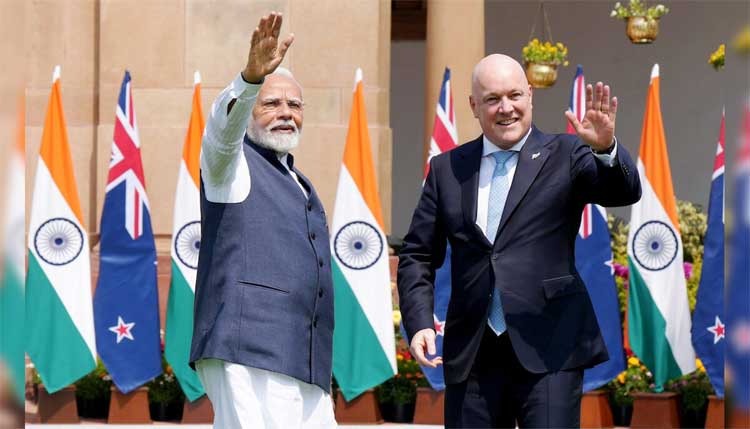
New Zealand Prime Minister Christopher Luxon on Saturday welcomed the Free Trade Agreement (FTA) with India, calling it a landmark achievement for his government, days after his foreign minister publicly criticised the deal.
Luxon said the agreement fulfilled a key election promise and would help boost economic growth. “We said we’d secure a Free Trade Agreement with India in our first term, and we’ve delivered,” he said, adding that the deal would create jobs, raise incomes and expand exports by opening access to India’s 1.4 billion consumers.
He described the FTA as part of his government’s broader agenda of “fixing the basics, building the future.”
However, the agreement has exposed divisions within New Zealand’s ruling coalition. Foreign Minister Winston Peters, who leads the New Zealand First (NZF) party, described the deal as “neither free nor fair” and said he had conveyed his concerns to India’s External Affairs Minister S. Jaishankar, while expressing respect for him.
The FTA was announced earlier this week following talks between Luxon and Prime Minister Narendra Modi. Both leaders said the agreement could double bilateral trade within five years and generate up to $20 billion in investments in India over the next 15 years. Negotiations began in March, with both sides describing the deal as a reflection of their shared political will to deepen ties.
Peters has accused the government of rushing through what he called a “low-quality” agreement. In a post on X, he said New Zealand First had urged its coalition partner not to conclude the deal hastily and instead use the full parliamentary term to secure better terms.
“National preferred doing a quick, low-quality deal over doing the hard work necessary to get a fair deal that delivers for both New Zealanders and Indians,” Peters said.
A key area of dispute is the exclusion of New Zealand’s dairy sector. Peters said the agreement failed to secure meaningful access for dairy exports, calling it “New Zealand’s first trade deal to exclude our major dairy products, including milk, cheese and butter.” He said the outcome was unfair to farmers and difficult to defend to rural communities.
Agriculture and dairy were among the most sensitive issues during negotiations. As previously reported by Hindustan Times, both sides agreed to keep these sectors outside the scope of the deal to accelerate progress.
Trade in goods and services between India and New Zealand stood at $2.07 billion in 2024, with Indian exports accounting for $1.1 billion. Pharmaceuticals were a major Indian export, while New Zealand exported forestry and agricultural products. New Zealand is currently India’s second-largest trading partner in Oceania.
Peters also raised concerns over migration and labour market provisions, claiming the deal focused heavily on easing the movement of Indian workers to New Zealand. He said the agreement introduced a new employment visa category for Indian citizens, arguing this could increase migration pressure at a time of a tight domestic labour market.
“New Zealand First looks at all proposed changes on migration from the same standpoint: do they protect the ability of New Zealanders to find meaningful employment and the integrity of our immigration system?” Peters said, adding that the India FTA failed to meet that standard.
Comments are closed.