
Merz Says EU Must Use Frozen Russian Assets to Pressure Putin

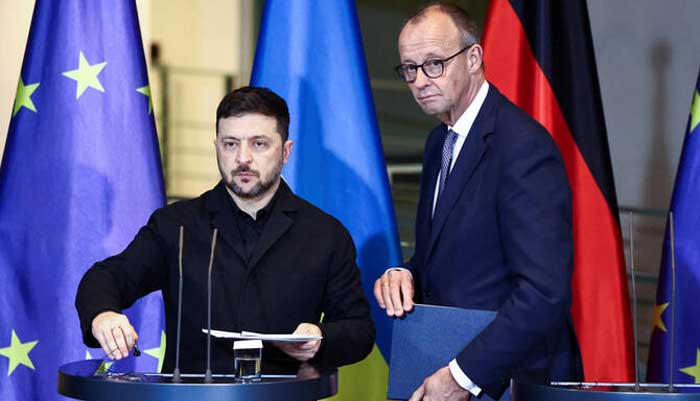
German Chancellor Friedrich Merz said on Wednesday that an EU plan to use frozen Russian assets to help fund Ukraine’s defense is crucial to increasing pressure on Russian President Vladimir Putin and bringing the war to an end.
Speaking in parliament ahead of a key European Union summit, Merz said the proposal was not only about supporting Ukraine but also about sending a strong message to Moscow. “It is about aid for Ukraine, but it is also about sending a clear signal to Russia that we will use the assets that are available here to help end this war as quickly as possible,” he said.
The European Union has outlined plans to use frozen Russian assets to mobilize around 90 billion euros ($105 billion) in loans to support Ukraine’s fight against Russia’s invasion. The loans would eventually be repaid using any Russian reparations agreed in the future.
While the proposal has strong backing from several EU member states, including Germany, it has faced resistance from others. Belgium, which is home to the international securities depository Euroclear that holds most of the frozen assets, has expressed concern over potential Russian retaliation.
Merz acknowledged these concerns, saying Germany was in talks with its partners to address them. However, he stressed that existing measures were no longer sufficient. “It is not enough for us to dry up the sources of income for the Russian war machine with further sanctions,” he said. “It is not enough for us to continue our financial support for Ukraine as before or to rely solely on political efforts toward peace negotiations.”
“We must do all of this, and we are doing so,” Merz added, “but it is clear that pressure on Putin must be increased further to persuade him to enter serious negotiations.”
The German chancellor underlined that the aim of using frozen assets was not to prolong the conflict. “We do not want to take this step to extend the war,” he said. “We want to take it in order to end the war as quickly as possible.”
Comments are closed.