Mauna Loa’s Climate Legacy Under Threat as U.S. Pulls Back Monitoring Support


More than 150 years ago, scientists uncovered the greenhouse effect, and by 1896, the first paper linking atmospheric carbon dioxide to climate change was published. Yet, it wasn’t until the mid-20th century that human fingerprints on the planet’s atmosphere became scientifically undeniable.
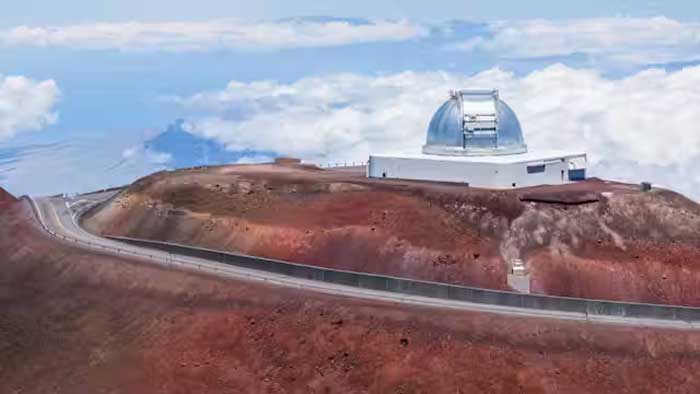
In 1956, American scientist Charles Keeling selected Hawaii’s remote Mauna Loa volcano—high above sea level and far from urban pollution—as the perfect location to measure the Earth’s atmosphere. By 1958, Mauna Loa began collecting CO₂ data, marking the birth of modern climate monitoring. The resulting “Keeling Curve,” which shows steadily rising carbon dioxide levels, became one of the clearest and most iconic indicators of human-driven climate change.
But today, this vital record is in jeopardy. Under then-President Donald Trump, the U.S. government moved to defund Mauna Loa’s operations along with the wider national greenhouse gas monitoring network—threatening the very data that underpins global climate science.
The early years of Mauna Loa data revealed something extraordinary: a visible annual rhythm in CO₂ levels. During Northern Hemisphere summers, vegetation absorbs carbon dioxide; in winters, decaying plant matter releases it—creating a seasonal “breathing” pattern of the Earth.
Soon, a more alarming trend emerged: CO₂ levels were not just cycling, they were rising relentlessly. Year after year, the baseline crept upward.
Isotopic analysis confirmed the cause—the excess carbon was of fossil origin, from burning coal, oil, and gas. Today, atmospheric CO₂ exceeds 420 parts per million—up from 320 ppm in the 1960s, a level not seen in over three million years.
Carbon dioxide has unique heat-trapping properties, making it a key driver of planetary warming. Without greenhouse gases, Earth’s average temperature would hover around -18°C. With them, it’s a livable 14°C. But excess levels risk turning a vital mechanism into a threat.
Climate monitoring like Mauna Loa’s is not just academic. It tracks the pace of change, detects whether natural carbon sinks (oceans and land) are weakening, and helps assess whether policies and technologies are actually reducing emissions.
Without continuous, high-quality measurements, it becomes difficult to forecast weather patterns, prepare for extreme events, or verify the success—or failure—of climate action.
The Trump administration’s rollback of climate monitoring efforts poses a global risk. If Mauna Loa is shut down, the scientific community will lose the longest-running, most precise record of atmospheric CO₂. Other stations—such as Australia’s Kennaook/Cape Grim in Tasmania—will become increasingly important.
Cape Grim, in operation since 1976, could help fill the void. But scientists warn that no single site can fully substitute for Mauna Loa’s unique vantage point and historical depth.
Ending climate data collection is akin to smashing the thermometer to ignore a fever. The move has prompted widespread concern from U.S. and international researchers, who stress that now, more than ever, rigorous climate observation is essential.
As the U.S. backs away, other nations may need to double down. For Australia, this is a moment to lead. Expanding atmospheric, oceanic, and land-based climate monitoring could help plug the gap left by the United States and strengthen global resilience.
Mauna Loa showed us the planet is changing—and that we’re the cause. Without it, we risk flying blind in the face of an accelerating crisis.
Exceptionally skilled Journalist possesses dogged determination to find the story and deliver it to the public. Have authored award-winning exposes and believe in protecting the confidentiality of anonymous sources even in the face of tremendous pressure. Reported on a wide variety of news topics for print and digital editions, Provided compelling coverage of both anticipated and spontaneous news for print and online media.
Comments are closed.