
Marine Heatwaves Intensify Tropical Cyclones, Driving Up Economic Losses

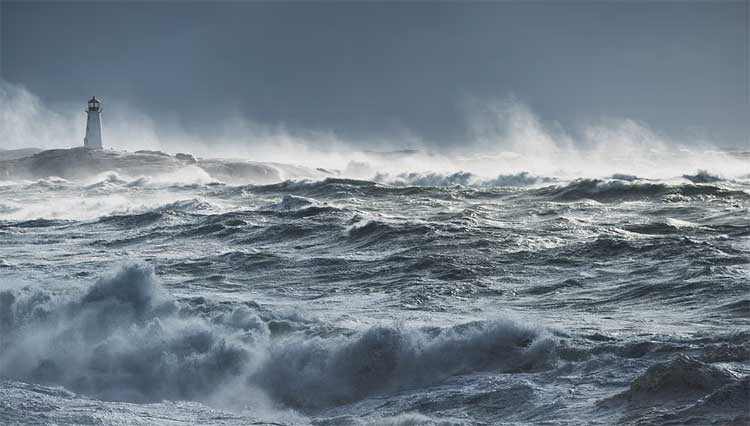
A new study has found that tropical cyclones intensifying over unusually warm ocean waters linked to marine heatwaves are becoming more dangerous—and far more costly.
Published in Science Advances on April 10, 2026, the research shows that storms undergoing rapid intensification during marine heatwaves lead to 60% more billion-dollar disasters than those without such conditions. Lead researcher Soheil Radfar from the University of Alabama noted that this trend remains significant even after factoring in coastal development and exposure.
Marine heatwaves—periods when ocean temperatures remain abnormally high for days—are becoming more frequent and intense worldwide. Analyzing 1,600 tropical cyclones (including hurricanes, typhoons, and cyclones) that made landfall since 1981, researchers found that storms passing over these overheated waters are more likely to intensify rapidly.
The findings show that more destructive storms consistently bring higher wind speeds, stronger storm surges, and heavier rainfall. Even when comparing regions with similar levels of coastal infrastructure, cyclones influenced by marine heatwaves caused significantly greater damage, indicating that their increased intensity amplifies economic losses beyond what exposure alone would predict.
Storms linked to marine heatwaves exhibited up to 20% higher sustained wind speeds and about 12% more rainfall before landfall compared to others. These conditions not only strengthen storms but also help them maintain intensity for longer durations, both before and after hitting land.
The study also highlights the complexity of storm surge impacts, which depend on multiple interacting factors such as coastal geography, tidal timing, defense infrastructure, and population density.
Notably, billion-dollar cyclones occur about 1.6 times more often when marine heatwaves are present. This is especially concerning in a warming climate, where storms are increasingly slowing down, stalling, and weakening less rapidly after landfall—prolonging their destructive impact on coastal communities.
Recent storms underscore the trend. Hurricane Milton caused an estimated $60 billion in damages and claimed 25 lives, while Hurricane Helene resulted in $55 billion in losses and 232 deaths across the US, Cuba, and Mexico. Analysis by World Weather Attribution found that Helene formed over record-warm waters in the Gulf of Mexico, with climate change playing a key role in its severity.
Experts say marine heatwaves should be more fully integrated into climate adaptation and disaster preparedness strategies. Monitoring sea surface temperature anomalies and setting alert thresholds could improve forecasts of rapid intensification.
A separate study published in December 2024 in Earth’s Future highlights the use of machine learning models that combine storm and marine heatwave data. These tools have shown improved accuracy in predicting rapid intensification events—one of the most challenging aspects of cyclone forecasting—while also reducing false alarms.
Comments are closed.