
Malegaon Blast Case: NIA Court Acquits All 7 Accused, Cites Lack of Evidence and Procedural Lapses

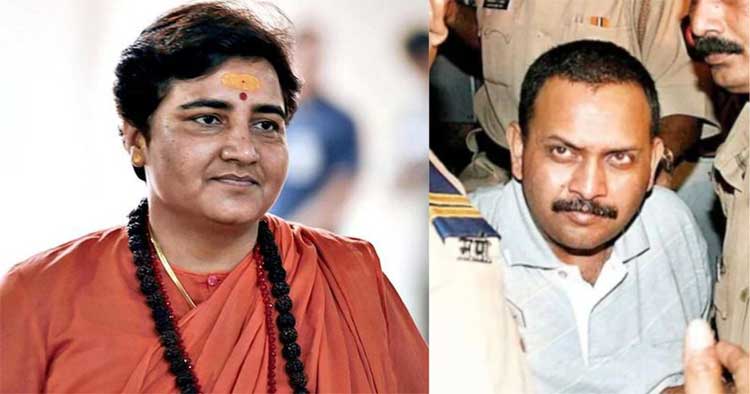
Seventeen years after a deadly blast killed six and injured dozens in Maharashtra’s Malegaon, a special NIA court on Thursday acquitted all seven accused — including BJP MP Sadhvi Pragya Singh Thakur and Lt Col Prasad Purohit — citing insufficient evidence and serious procedural lapses.
In its verdict, the court underlined that “terrorism has no religion” and ruled that convictions must be based on solid legal evidence, not perceptions or moral assumptions. “The court cannot convict anyone merely on perception and moral evidence; there has to be cogent evidence,” it observed, as reported by ANI.
Key Findings of the Court:
-
UAPA Not Applicable:
The court ruled that the stringent Unlawful Activities (Prevention) Act (UAPA) could not be applied, as sanctions for prosecution under the law were not obtained properly.
“Both sanction orders under UAPA are defective,” the court said. -
No Direct Link to Motorcycle Used:
While the court acknowledged the blast, it noted that the prosecution failed to conclusively prove the motorcycle found at the scene was rigged with explosives.
“Prosecution proved that a blast occurred, but failed to prove a bomb was placed in that motorcycle,” it stated. -
Discrepancies in Victim Records:
The court also pointed out manipulations in medical documentation, stating that “the injured were not 101 but 95,” contradicting official figures. -
No Proven Link to Abhinav Bharat:
The court rejected the prosecution’s claim that Hindutva group Abhinav Bharat was linked to the attack.
“There is no evidence that Abhinav Bharat’s funds were used for terror,” it ruled.
Compensation Ordered:
The court directed authorities to pay compensation of ₹2 lakh each to the families of the six deceased and ₹50,000 to each injured victim.
The verdict brings a controversial case to a close after years of legal wrangling, political debate, and shifting investigative narratives.
Comments are closed.