

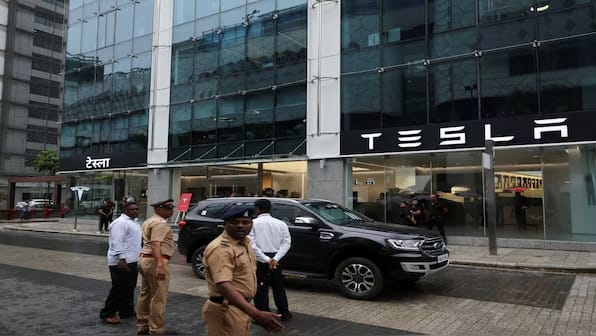
Maharashtra, one of India’s most industrialized states, is poised to lead the nation’s electric vehicle (EV) revolution, with Chief Minister Devendra Fadnavis boldly declaring it will become the “EV Capital of India.” This ambitious vision, articulated during the inauguration of Tesla’s first Experience Centre in Mumbai on July 15, 2025, is backed by a robust policy framework, significant investments, and strategic infrastructure development. With a dynamic EV ecosystem encompassing manufacturing, charging infrastructure, and research and development, Maharashtra is setting the stage to dominate India’s clean mobility landscape. This article explores the state’s comprehensive strategy, key initiatives, and the factors driving its ascent as the country’s EV hub.
A Strategic Vision for Electric Mobility
Maharashtra’s journey to becoming India’s EV capital is rooted in a clear and forward-thinking strategy. Chief Minister Fadnavis has emphasized the state’s commitment to sustainable transportation, leveraging its industrial prowess and strategic location. The inauguration of Tesla’s Mumbai Experience Centre, which serves as a showroom, delivery hub, logistics unit, and service center, marked a significant milestone in this journey. Fadnavis highlighted that Tesla’s entry into India, supported by the Union government, underscores Maharashtra’s appeal as a prime destination for global EV manufacturers. “Maharashtra will lead India’s EV industry in the near future,” he stated, pointing to the state’s dynamic policies and infrastructure development as key enablers.
The state’s vision is not limited to attracting global giants like Tesla. Domestic players such as Tata Motors, Mahindra Electric, and Ola Electric have already established significant investments in Maharashtra, with Mahindra’s Chakan plant expected to produce up to 200,000 EVs annually by 2029. Additionally, Ather Energy is reportedly setting up an EV plant in Chhatrapati Sambhajinagar, further solidifying the region’s role as a manufacturing powerhouse. These developments align with Maharashtra’s goal of ensuring that at least 10% of new vehicle registrations in the coming years are electric, with a longer-term target of 30% EV adoption by 2030.
The Maharashtra EV Policy 2025: A Game-Changer
Central to Maharashtra’s EV ambitions is the “Electric Vehicle Policy 2025,” introduced in May 2025 and effective from April 1, 2025, to March 31, 2030. This comprehensive policy, with an allocation of ₹1,993 crore, aims to accelerate EV adoption across all vehicle segments while expanding charging infrastructure and supporting manufacturing. Key features of the policy include:
-
Financial Incentives: The policy offers subsidies of up to ₹10,000 for two-wheelers, ₹30,000 for three-wheelers, ₹2 lakh for electric cars and commercial vehicles, and ₹20 lakh for electric buses. These incentives apply to 25,000 four-wheelers and 1,500 buses manufactured or sold in Maharashtra.
-
Tax and Toll Exemptions: EVs registered in Maharashtra are exempt from road tax and registration fees. Additionally, passenger EVs and buses enjoy 100% toll waivers on major expressways, including the Mumbai-Pune Expressway, Mumbai-Nagpur Samruddhi Mahamarg, and the Mumbai Trans Harbour Link (Atal Setu).
-
Charging Infrastructure Mandates: The policy mandates charging stations every 25 kilometers along state and national highways. Every government parking lot must have at least one EV charging station, new residential buildings must include community charging points, and new commercial buildings must dedicate 50% of their parking spaces to EV charging, with older commercial properties allocating 20%.
-
Viability Gap Funding: The state has committed ₹100 crore to support the installation of 1,000 DC fast chargers (50–250 kW), offering up to ₹5 lakh per unit.
The policy also emphasizes education and skill development, with the Maharashtra State Board of Technical Education introducing specialized courses in EV design, battery technology, charging infrastructure, power electronics, and energy management. By fostering a skilled workforce, Maharashtra aims to create a self-sustaining EV ecosystem.
Infrastructure and Manufacturing: The Backbone of the EV Ecosystem
Maharashtra’s strategic advantages make it an ideal hub for EV manufacturing. The state boasts major ports like Mumbai and Jawaharlal Nehru Port Trust (JNPT), robust industrial infrastructure, and dedicated automotive clusters in cities like Pune, Aurangabad (Chhatrapati Sambhajinagar), and Nashik. These cities are emerging as hotspots for EV production due to their well-connected road networks and proximity to suppliers. For instance, Toyota has signed an MoU with the Maharashtra government to establish a new greenfield manufacturing facility in Chhatrapati Sambhajinagar, further boosting the region’s EV production capacity.
As of December 2024, Maharashtra had 3,728 public charging stations, ranking second nationally after Karnataka’s 5,765 stations. The state’s aggressive push to expand this network, coupled with mandates for charging infrastructure in residential and commercial spaces, ensures that EV adoption is practical and convenient for consumers. Additionally, Maharashtra is focusing on battery production and research and development centers to create a holistic ecosystem that supports the entire EV value chain.
In FY2025, Maharashtra led the nation in EV sales across multiple segments, including e-two-wheelers (211,880 units, 18% market share), electric cars and SUVs (17,133 units, 16% market share), and e-buses (2,104 units, 24% market share). These figures underscore the state’s dominance in the EV market and its potential to drive India’s goal of 30% EV adoption by 2030.
Environmental and Economic Impacts
Maharashtra’s EV push is driven by both environmental and economic imperatives. Chief Minister Fadnavis has emphasized that the shift to EVs will significantly reduce air pollution, noting that vehicles running on petrol or diesel contribute the most to air pollution in the state. The EV Policy 2025 aims to prevent 325 tonnes of PM 2.5 emissions and 1,000 tonnes of greenhouse gas emissions by 2030, aligning with India’s clean mobility transition model.
Economically, Maharashtra’s EV initiatives are expected to create thousands of jobs and attract substantial investments. The state has already secured MoUs worth $180 billion at the World Economic Forum in Davos, a record for any Indian state. Dedicated EV parks and clusters in key industrial corridors are designed to boost large-scale manufacturing and supply chains, further strengthening Maharashtra’s position as an economic powerhouse that accounts for 14% of India’s GDP.
Challenges and Opportunities
While Maharashtra’s vision is ambitious, challenges remain. The state lags behind in electric three-wheeler sales, ranking 10th nationally in April 2025 with 1,020 units compared to Uttar Pradesh’s 28,733 units. Addressing this gap will require targeted incentives and infrastructure development for three-wheelers, which are critical for last-mile connectivity in urban and rural areas.
Moreover, while Maharashtra’s charging infrastructure is robust, ensuring equitable access in less urbanized regions will be crucial for widespread EV adoption. The state’s focus on training 10,000 women in AI through a partnership with Microsoft could be extended to EV-related skills, creating opportunities for inclusive growth.
On the opportunity front, Maharashtra’s strategic initiatives, such as the planned “Innovation City” near the Navi Mumbai Airport and the development of a “4th Mumbai” near Wadhawan Port, position the state as a global hub for technology and manufacturing. These projects, combined with the state’s green power goals—aiming to provide green energy to all major industrial corridors by 2028—enhance its appeal to investors and manufacturers.
Tesla’s Arrival: A Catalyst for Growth
Tesla’s entry into Maharashtra has been a game-changer, with the launch of its Model Y, a global bestseller known for its 15-minute charging time, 600 km range, and zero-emission performance. Chief Minister Fadnavis has invited Tesla to establish its entire EV ecosystem, including manufacturing and R&D, in Maharashtra, signaling the state’s intent to become a global EV player. The Mumbai Experience Centre, coupled with plans for four large charging hubs and 32 charging stations in the city, sets a strong foundation for Tesla’s expansion in India.
Maharashtra’s ambition to become India’s EV capital is a bold yet achievable goal, driven by strategic policies, significant investments, and a commitment to sustainability. The state’s EV Policy 2025, robust infrastructure, and partnerships with global and domestic manufacturers position it as a leader in India’s clean mobility revolution. As Chief Minister Devendra Fadnavis stated, “Maharashtra is not just manufacturing EVs—we are building an entire ecosystem”. With cities like Pune, Chhatrapati Sambhajinagar, and Nashik emerging as EV manufacturing hubs, and Mumbai leading the charge in infrastructure and innovation, Maharashtra is well on its way to redefining India’s transportation landscape. By 2030, the state aims to set a global benchmark for electric mobility, contributing to both environmental sustainability and economic growth.
Comments are closed.