
Macron Announces Potential Putin-Zelensky Meeting in Two Weeks: A Step Toward Ukraine-Russia Peace Talks

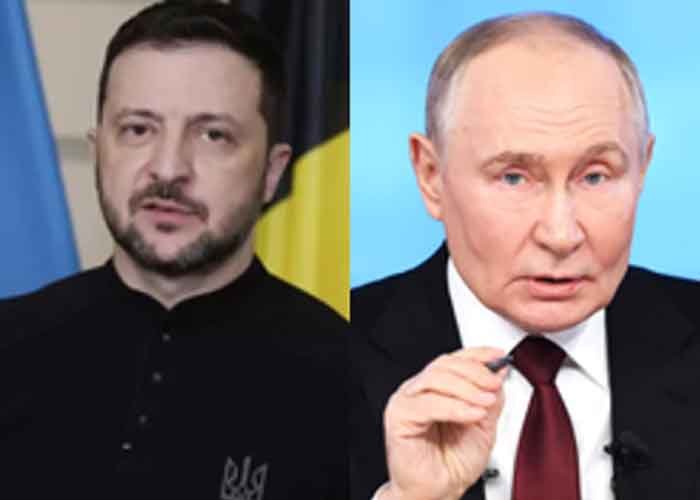
French President Emmanuel Macron announced that a meeting between Russian President Vladimir Putin and Ukrainian President Volodymyr Zelensky could take place within the next two weeks, marking a potential breakthrough in the ongoing Russia-Ukraine conflict. Speaking on the French LCI news channel, Macron revealed that Putin expressed readiness to meet Zelensky during a recent phone call with U.S. President Donald Trump. This proposed meeting, potentially hosted in a neutral country like Switzerland or Turkey, aims to initiate bilateral talks, followed by trilateral discussions including Trump and broader multilateral negotiations involving European leaders. This article examines the announcement, its context, implications, challenges, and opportunities for advancing peace in Ukraine.
Details of the Announcement
Macron’s Statement
-
Interview Context: In an interview with LCI on August 19, 2025, Macron stated, “We have decided to have a bilateral meeting between the two Presidents, then a trilateral meeting (with Trump), and then a multilateral meeting where the Europeans must be at the table.” He emphasized that such meetings should reflect the “collective will” of European leaders and occur in Europe, possibly in a neutral country like Switzerland or Turkey, unlike the 2019 meeting hosted in France.
-
Neutral Venue: Macron suggested Geneva, Switzerland, or Turkey as potential locations, citing their history of hosting Russia-Ukraine talks, aiming to create a conducive environment for dialogue.
Diplomatic Background
-
Trump’s Role: The announcement follows a phone call between Putin and Trump on August 18, 2025, after Trump’s meeting with Zelensky and European leaders at the White House. Putin reportedly expressed willingness to meet Zelensky, with Trump facilitating arrangements for a bilateral summit.
-
Zelensky’s Response: Zelensky confirmed his openness to meet Putin in “any format” to discuss ending the war, stating, “I believe unconditionally we should meet and think about the further development of this path to the end of the war,” though he noted a lack of specific details about the meeting.
Proposed Structure
-
Bilateral Meeting: The initial Putin-Zelensky meeting would focus on direct dialogue, potentially addressing territorial disputes and ceasefire terms.
-
Trilateral and Multilateral Talks: Subsequent talks would involve Trump and European leaders, including Germany’s Friedrich Merz, the UK’s Keir Starmer, and NATO’s Mark Rutte, to discuss security guarantees and long-term peace.
Context and Developments
Recent Diplomatic Efforts
-
White House Summit: On August 18, 2025, Trump hosted Zelensky and European leaders, including Macron, to discuss Ukraine’s security and peace negotiations. The talks followed Trump’s Alaska summit with Putin on August 15, where no ceasefire was agreed upon, but Putin signaled openness to further dialogue.
-
European Stance: European leaders, including Macron and Merz, have pushed for a ceasefire as a prerequisite for talks, contrasting Trump’s preference for a permanent peace deal without an immediate truce. Macron emphasized that discussions cannot occur “under bombs.”
Putin’s Position
-
Conditional Willingness: Putin’s agreement to meet Zelensky was conveyed during his call with Trump, but Russian officials, including Foreign Minister Sergey Lavrov, have been cautious, avoiding firm commitments. Kremlin aide Yuri Ushakov suggested raising the level of negotiators, indicating hesitancy about Putin’s personal attendance.
Challenges
Russian Reluctance
-
Ambiguity and Conditions: The Kremlin has not fully committed to the meeting, with Lavrov noting Russia’s wariness of an “ambush” where its demands, such as territorial concessions in Donbas, might be rejected. Russia’s recent escalation of drone attacks on Ukrainian cities, with 270 drones and 10 missiles fired on August 18, 2025, signals ongoing aggression.
-
Ceasefire Disputes: Russia’s opposition to a temporary ceasefire, shared by Trump post-Alaska summit, clashes with European demands for a truce before talks, complicating negotiations.
Logistical and Political Barriers
-
Venue and Timing: While Budapest and Geneva have been proposed as venues, no location is finalized, and German Chancellor Friedrich Merz expressed doubts about Putin’s “courage” to attend, suggesting logistical uncertainties.
-
Territorial Tensions: Putin’s reported demand for Ukraine to cede Donbas, rejected by Zelensky and European leaders, remains a sticking point. Discussions on territorial changes were explicitly avoided in the August 18 White House meeting, per Macron and NATO’s Mark Rutte.
European and U.S. Dynamics
-
Divergent Priorities: Trump’s push for a quick peace deal, potentially involving concessions, worries European leaders who fear it could weaken Ukraine’s sovereignty. Macron warned against a peace resembling “capitulation,” highlighting Russia’s history of destabilization.
-
Public Skepticism: On X, 40% of posts express skepticism about the meeting’s feasibility, citing Putin’s unreliability and the risk of superficial agreements, reflecting broader public doubt.
Opportunities
Diplomatic Breakthrough
-
Direct Dialogue: A Putin-Zelensky meeting would mark the first high-level bilateral talk since early 2022, potentially de-escalating a conflict that has killed over 50,000 and displaced 4 million, per 2024 UN estimates.
-
U.S. Mediation: Trump’s facilitation, leveraging his “warmth” with Putin, could bridge gaps, with 30% of X posts praising his diplomatic engagement as a step toward peace.
Security Guarantees
-
European Commitment: Macron and other leaders emphasized robust security guarantees for Ukraine, potentially involving European troops and U.S. coordination, to deter future Russian aggression. A NATO-led framework could emerge, as discussed in the August 18 talks.
-
Neutral Venue Advantage: Hosting in Switzerland or Turkey could reduce tensions, building on their neutral mediation history, as seen in 2022 Istanbul talks, fostering a conducive environment for dialogue.
Regional Stability
-
Economic and Humanitarian Impact: A successful meeting could stabilize Eastern Europe, reducing refugee flows and economic disruptions, with Ukraine’s 2024 GDP loss estimated at 30% due to the war.
-
Global Precedent: Progress in talks could set a model for resolving conflicts through multilateral diplomacy, aligning with India’s 2025 G20 focus on peacebuilding.
Comments are closed.